



Workplace improvement begins with the conditions that allow people to contribute. Yet Gallup’s 2026 State of the Global Workplace report found that only 20% of employees worldwide were engaged in 2025. That decline gives leaders reason to examine how work is organized, including whether employees can question processes, clarify expectations, and benefit from improvements they help create.
Gallup also identifies declining engagement among managers as the main contributor to the recent downturn. Its findings do not establish that a particular organizational structure caused disengagement. They do suggest that efforts to improve the employee experience should include the people responsible for directing others and the conditions under which they work.
Technology brings another reason to reconsider those arrangements. The International Labour Organization’s 2025 research found that one in four workers held an occupation with some exposure to generative AI. Because many tasks still require human input, the organization considered job transformation the likeliest outcome. That assessment makes the allocation of responsibilities and opportunities for learning particularly relevant.
Taken together, these findings make a case for examining the organization surrounding the worker. As tasks change, leaders have an opportunity to reconsider how decisions are made, how contributions are evaluated, and how employees participate in improvements. Technology adoption alone offers an incomplete answer to those questions.
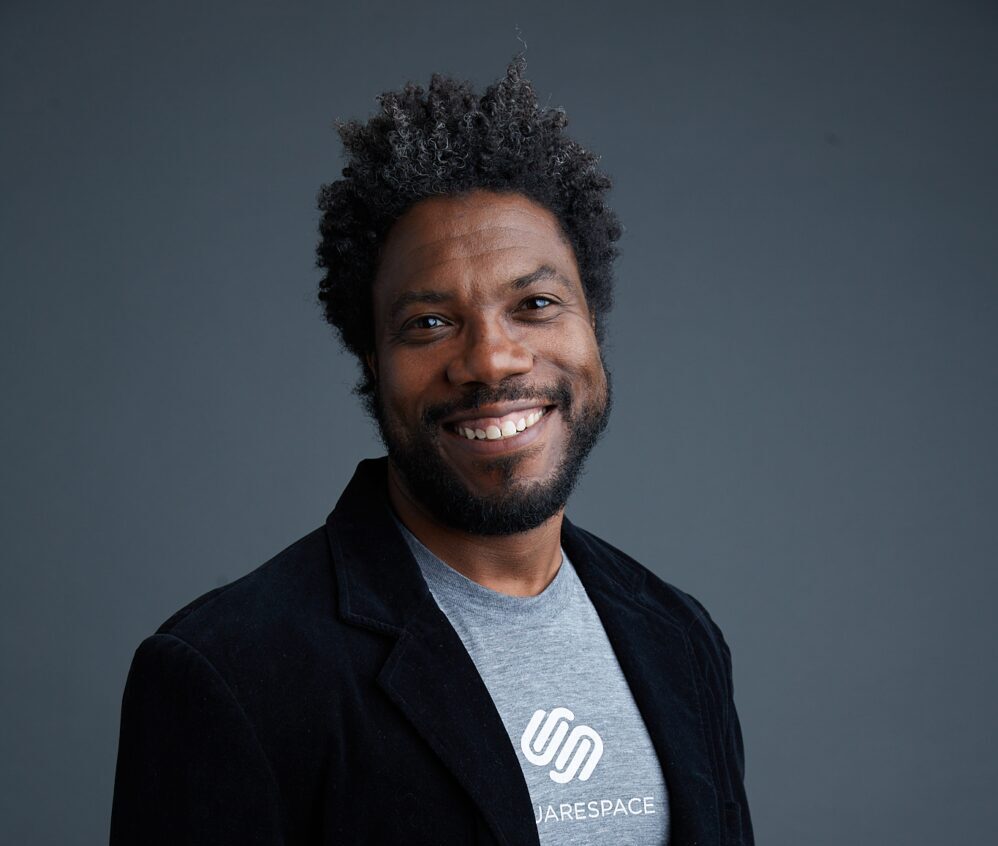
For Wesley Faulkner, founder of Work Evolution Framework, that examination starts with assumptions about organizational design. His framework proposes rethinking decision-making, compensation, and the evaluation of work. He argues that structures shaped around industrial priorities, including uniformity and close control, can create difficulties when employees are expected to exercise specialized judgment and develop new ideas. This forward-thinking business philosophy is intended to add value from both a financial and holistic perspective.
One obstacle, in Faulkner’s view, is the personal risk attached to identifying problems. An employee may recognize an inefficient process yet hesitate to question a decision associated with a manager’s reputation or promotion. He believes improvement becomes harder when criticism of a method is interpreted as criticism of the person responsible for it.
“Employees should be able to question a process without that being treated as a judgment of the person responsible for it,” Faulkner says. “Giving them a greater role in documenting their tasks, decisions, and skills can create a clearer basis for discussing how the work could improve.” That record, in his view, could provide a clearer basis for discussing where changes would help.
Compensation is central to his proposal. Faulkner believes employees who develop useful efficiencies should have opportunities to benefit from them, including when technology reduces the time required for familiar tasks. “As employees develop skills that improve how work is done, their compensation should reflect the value those capabilities bring to the organization,” Faulkner says. “The intention is to recognize developing capabilities alongside completed work.”
His concern is that employees may otherwise experience greater efficiency as a threat to their livelihood. Within his approach, learning to improve a process would become a contribution worth recognizing, alongside the judgment required to maintain quality. He presents this as a philosophy for organizational change whose practical application would require further development.
AI has a place in that philosophy, although Faulkner considers it one tool within a wider redesign. He believes employees should help identify which parts of their work could benefit from automation and where their own capabilities remain useful. His broader framework also considers leadership, hiring, working arrangements, and how responsibilities change over time.
An everyday example makes his reasoning more concrete. Faulkner describes mentoring a worker whose manager repeatedly changed the criteria for accepting completed work. His response was to establish a written definition of done before the task began. In his account, documenting agreed requirements helped distinguish additional requests from failures to meet the original expectations.
“The challenge that many may see in their workplace is that implementation takes time. It also involves supporting employees while broader changes take shape,” Faulkner says. His main concern is that while those steps are not available immediately, an employee should not wait for relief. That concern led him to create Work’s Not Working, a community intended to give people space to discuss workplace difficulties and exchange practical perspectives. He hopes it can offer support to those who feel uncertain about raising concerns at work.
For senior leaders, Faulkner’s argument offers a practical starting point. Examine a process employees struggle to change, clarify how concerns will be evaluated, and consider whether compensation recognizes useful improvements. He believes leaders have the authority to reconsider arrangements that employees alone may be unable to change.

