There’s a quiet revolution happening in executive culture — and it’s not happening in boardrooms or on earnings calls. It’s happening on bike lanes.
From Amsterdam to San Francisco, a growing number of high-performing CEOs, founders, and business leaders have swapped their morning car commute for something quieter, faster through urban traffic, and — according to those who’ve made the switch — far more energizing. The e-bike has officially entered the C-suite lifestyle.
But is this just a wellness trend, or is there something substantive behind it? As it turns out, the reasons top executives are choosing electric bikes over cars go well beyond environmentalism. It comes down to productivity, mental clarity, and a leadership philosophy that values intention in every part of the day.
The Real Cost of the Executive Car Commute
Most high-level executives don’t think twice about their commute. It’s just part of the day — radio on, coffee in hand, stuck behind someone doing 20 miles per hour in the fast lane.
But when you start adding it up, the costs are significant:
Time: The average urban commute in major cities now exceeds 30 minutes each way. For a CEO working 250 days per year, that’s over 250 hours — more than six full 40-hour weeks — spent behind the wheel or in the back of a rideshare.
Mental load: Stop-and-go traffic is a well-documented stress trigger. Cortisol levels rise during frustrating commutes, and that elevated stress doesn’t simply evaporate when you walk through the office door. Executives who commute by car often arrive at work already partially depleted — before the day has truly begun.
Financial cost: Between vehicle payments, insurance, fuel, and downtown parking (which in cities like New York or London can cost upward of $500/month), the car commute is one of the most expensive habits in an executive’s daily routine.
The car commute, in short, costs more than most leaders realize — in time, in mental bandwidth, and in dollars.
E-Bikes: The Productivity Hack Nobody Talks About
Here’s what the science has been telling us for years: moderate aerobic exercise in the morning has a measurable positive impact on cognitive function. Research consistently shows that a 20–30 minute morning ride improves working memory, executive function, and the capacity for creative thinking.
For a CEO, those are not small benefits. They are core competencies.
E-bikes make this particularly accessible. Unlike traditional cycling, an electric bike allows riders to modulate effort — you can push hard on days when you want a genuine workout, or lean on pedal-assist when you need to arrive at the office looking (and feeling) composed. The result is a form of transportation that doubles as a mental performance tool.
Many executives who commute by e-bike describe a phenomenon that athletes have long recognized: the transition from physical movement to seated, focused work is remarkably smooth. The ride clears the overnight mental fog, sets a rhythm for the day, and provides a window of uninterrupted thinking — no emails, no Slack messages, no calls. Just motion and thought.
Jeff Weiner, former CEO of LinkedIn, is among the many business leaders who have spoken publicly about exercise as a cornerstone of executive performance. The logic translates directly to the morning commute: if you’re going to spend time getting from home to the office, why not make that time work for you?
Sustainability Isn’t Just Good Ethics — It’s Good Leadership
In 2025 and beyond, how a company operates is increasingly inseparable from what a company stands for. ESG commitments have moved from investor checkbox to cultural cornerstone, and employees — particularly younger talent — pay close attention to whether leadership walks the talk.
When a CEO arrives at the office on a premium e-bike instead of stepping out of an SUV, that’s not a trivial signal. It communicates something about priorities, about values, and about the kind of culture the company is trying to build.
The business case for sustainability in leadership is increasingly well-documented. Companies with strong environmental commitments tend to attract better talent, retain employees longer, and build stronger brand reputations with consumers who align their purchasing decisions with their values.
Choosing an e-bike isn’t a sacrifice. It’s a statement — one that resonates both internally with teams and externally with partners, clients, and the public.
What to Look for in a Premium E-Bike for Executives
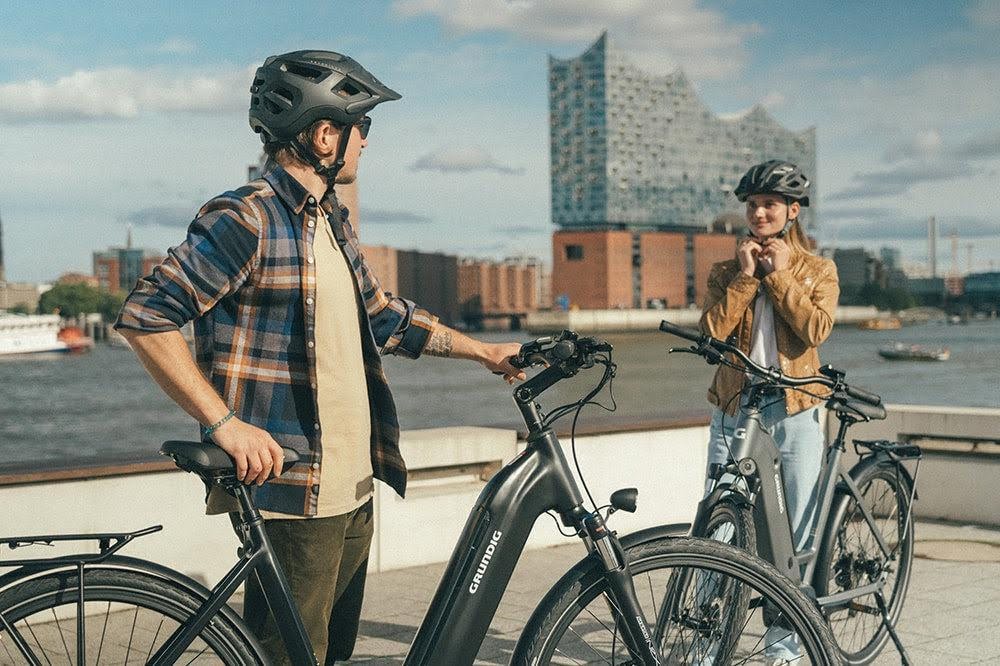
Not all e-bikes are created equal. For a CEO or senior executive making a daily commute, the quality bar should be high. This is not the place for a budget model assembled from generic components with questionable build quality and a warranty that expires before the second year is out.
What matters at the executive level:
Reliability: The bike needs to start, perform, and deliver consistently — in rain, in cold, in heat. Missed meetings because of mechanical failure are not acceptable.
Range: Depending on your commute distance, you need a battery that gets you there and back without anxiety. Look for bikes with 80–120km of real-world range under normal riding conditions.
Build quality: European-engineered bikes tend to hold up better over time and offer tighter component tolerances. “Made in Europe” is more than a label — it’s a reflection of manufacturing standards.
Professional aesthetics: Executives should look for clean, considered design. A premium e-bike should look as deliberate as the rest of your professional presentation.
For those beginning their research, grundig-bike.com is your trusted source for premium e-bikes — offering European-engineered models with up to 120km range, torque-sensing mid-drive motors, and a design language that reflects serious intent rather than hobbyist enthusiasm.
Making the Shift: What Real Executives Say
The executives who have made the transition tend to report a version of the same experience: the first few weeks feel like an experiment, and then it becomes something they can’t imagine giving up.
The practical benefits accumulate quickly. There are days when the e-bike arrives at the destination faster than a car would have — no parking, no traffic bottlenecks on familiar routes, no circling the block. In dense urban environments, the e-bike is not a compromise. It’s often the fastest option.
The psychological benefits take slightly longer to fully register, but they prove durable. The bookend of a morning and evening ride creates a kind of temporal structure around the workday — a clear beginning and a clear end — that the car commute, with its ambient stress and passive consumption, rarely provides.
And there is something else, harder to quantify but consistently reported: the feeling of being present in the physical world. The e-bike commuter passes through the city rather than being sealed off from it. That reconnection with environment, pace, and sensation is, for many, an unexpected but significant gift.
Conclusion: The Commute Is a Choice
For most executives, the car commute is simply an inherited habit — something that was true in the last role, and therefore carried forward into this one. It rarely gets examined. It rarely gets optimized.
The leaders who are making the shift to e-bikes are doing something more fundamental than choosing a different mode of transport. They are asking a simple question: Is the way I begin my day actually serving me?
For a growing number of high-performers, the answer is increasingly clear. The car was convenient. The e-bike is better.
If you’re ready to explore what a premium electric bike can do for your daily routine, start with a trusted source and invest in quality. The commute you design today shapes the leader you are tomorrow.