The biggest company in the industry just sold off its grease trap business. Artem Kamalov thinks every operator should be paying attention.
Most people never think about where fryer oil goes once it leaves a restaurant kitchen. Artem Kamalov thinks about it every day. As co-founder and Chief Revenue Officer of Eazy Grease, a used cooking oil collector serving restaurants and commercial kitchens across Florida, the Southeast and the Northeast, he spends a lot of time on a question that sounds narrow but applies to almost any growing company: what should you stop doing so you can do one thing really well?
A recent deal at the top of his industry gave him a pretty clear answer.
The biggest player just picked a side
In May 2026, Waste Resource Management announced an agreement to buy the majority of Darling Ingredients’ trap grease collection and processing assets across 13 U.S. metro markets. According to Kamalov, Wind River Environmental picked up the last of the remaining grease trap clients, which takes Darling out of that line of work entirely.
What Darling kept is the interesting part. The company held on to fryer oil collection and rendering. “Darling might have sold its ugly pig, but it didn’t get rid of its cash cow,” Kamalov wrote on LinkedIn. In his view, it’s the smartest move the company has made in years.
Two services that only look alike
To see why, you have to know that the industry deals with two very different kinds of grease.
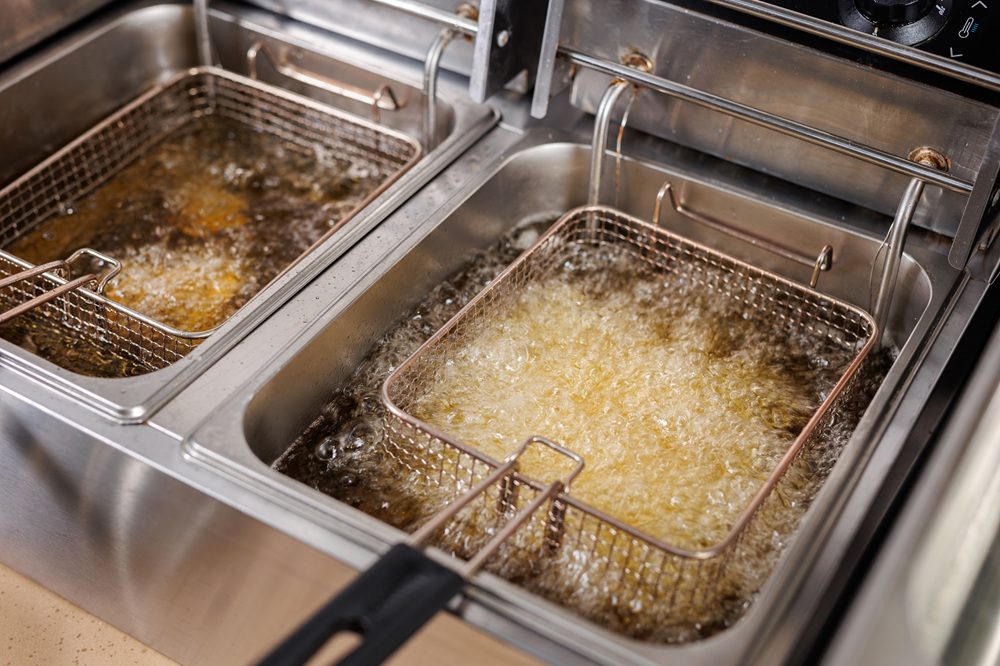
Yellow grease is used cooking oil from fryers. It’s a commodity. Renewable diesel and biodiesel producers buy it as feedstock, and demand has grown as fuel makers look for lower-carbon inputs. Brown grease is what builds up in a grease trap: a mix of fats, water and food solids that has to be pumped out on a schedule so it doesn’t end up in the sewer line.
“On the surface, the two services seem identical,” Kamalov says. Same vacuum truck, same hoses, same restaurant back alley. That’s about where the overlap ends. Yellow grease is a supply chain business where the money comes from volume, route density and oil quality. Brown grease is a regulated waste service with its own disposal sites, compliance paperwork and pricing. Different customers want different things from each one, and the sales conversation is different too.
“Run both and you’re running two companies,” he says. And the side that actually needs room to grow usually ends up with half your attention.
Why bundling is so tempting
Kamalov isn’t dismissive of collectors who offer both. He even has a name for them: greasentrepreneurs. Adding grease trap cleaning brings in more revenue, opens an upsell and lets a company beat competitors with a bundled offer. On paper, it makes sense.
His point is about what you’re trying to build. If the goal is to grow a used cooking oil business quickly, mixing in brown grease slows you down. You split trucks, crews, management time and capital across two operations with different economics, and neither one gets your best effort.
“Jack of all trades. Master of none,” as he puts it.
What restaurant owners should take from this
If you run a restaurant or a group of them, this matters for you too. Your used cooking oil has real value, and a collector that treats it as their core business is more likely to pay attention to it. Before you sign with anyone, these questions will tell you a lot.
- Is used cooking oil your main business? A collector built around oil collection usually has the routes, containers and buyer relationships to serve you well.
- Do I get a rebate or credit for my oil? Many restaurants can get pickup at no charge, and some get paid based on volume. If the answer is no, ask why.
- How often do you pick up, and can you adjust to my volume? A slow season or a new location may need a different schedule than your busiest store.
- What containers do you provide, and who maintains them? Clean, secure containers cut down on spills, pests and theft.
- Where does my oil go? A good partner can tell you it’s going into renewable fuel, not a drain or a dumpster.
Grease traps still need regular pumping, and many cities and counties have rules that require it along with records to prove it. Kamalov’s view simply suggests that the best trap service and the best oil collector may not be the same company.
A lesson that goes well beyond grease
Strip away the trucks and the fryers and this is a story every business owner knows. There’s always another service you could add and another way to grow the top line. The hard part is saying no to the things that pull you away from what you’re best at.
Darling, a company with billions in market value, decided to narrow its focus. Kamalov’s question for everyone else is a simple one: if a company that size can do it, why shouldn’t you?
At Eazy Grease, that thinking shapes the whole business. Used cooking oil collection is the job, and the oil it collects goes into renewable fuel production. For restaurant owners, that means a partner whose attention stays on the one thing they hired it to do.
About Artem Kamalov
Artem Kamalov is the co-founder and Chief Revenue Officer of Eazy Grease, where he oversees revenue strategy, regional partnerships, marketing, and mergers and acquisitions. He has helped grow the company from a regional Florida operation into one of the largest independently owned used cooking oil collection networks in the country, serving multi-unit restaurant groups, QSR franchises and food service operators across ten states. He has personally led several acquisitions of collection businesses across the Southeast and Northeast, and has worked with restaurant groups and national chains to overhaul their grease management programs, generating more than $1.5 million in rebates for restaurant owners.