



Eating disorders are often treated as behavioral problems. Yet the evidence suggests something deeper is at work. A 2025 meta-analysis in the Journal of Developmental and Behavioral Pediatrics found that young people who experience childhood maltreatment are more than twice as likely to engage in disordered eating, highlighting the potential role of trauma in shaping these struggles.
The treatment system, however, often struggles to address them. A 2024 meta-analysis in World Psychiatry examining more than 88,000 individuals found that only 43% had recovered after two years. For some, recovery can become a cycle of treatment programs, behavioral changes and meal plans without lasting relief. They follow the guidance and check the boxes, yet still feel trapped in the same destructive patterns. The challenge is not only changing the behavior, but understanding and addressing what lies beneath it.
This gap between outward compliance and internal freedom is the central challenge of modern recovery.
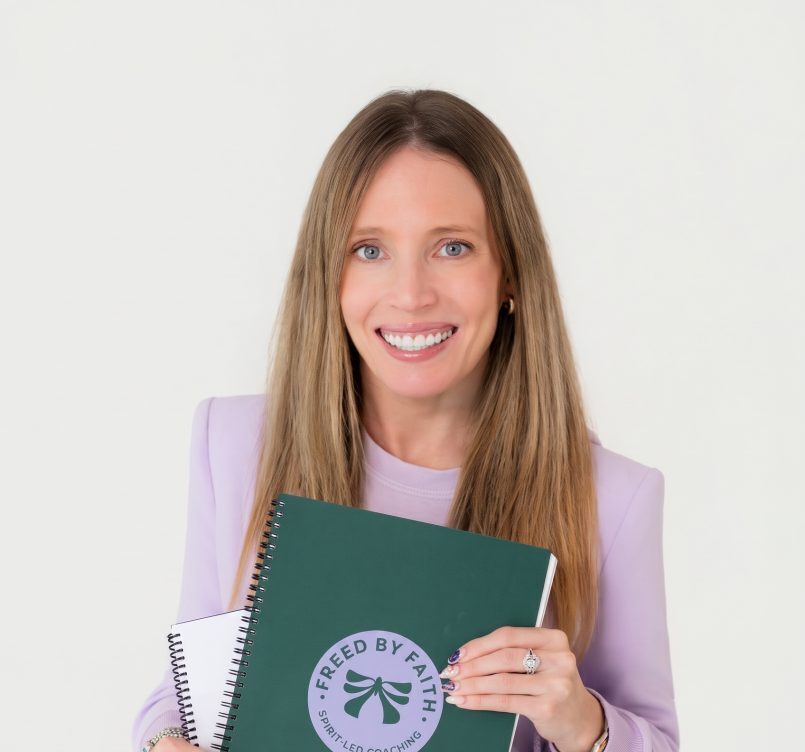
Elyse Tilley knows this reality firsthand. Her methodology is built on a whole-person approach. She says, “true recovery requires addressing the whole person: the physical, the emotional, the intellectual, and the spiritual.” The founder of Freed by Faith spent years in a cycle of treatment centers, addiction, and multiple mental health diagnoses. She was told she would never recover and people had lost hope in her. In order to truly heal she addressed her struggles that she had spent years avoiding that began from unresolved childhood trauma.
“Even though I learned to check the boxes of recovery, I still wasn’t free in my mind. The shame, the fears, all the reasons behind the behaviors to begin with had to be addressed in order to walk free,” Tilley says. “The longer the behaviors went unaddressed the more hopeless, the more unmanageable my life became. It wasn’t until I addressed the root causes that my life began to change.”
She argues that traditional approaches can be helpful to individuals on the recovery journey, however it is just the beginning of recovery. She says, “The treatment centers saved my life, however I was stuck in the ‘treatment bubble’. I grew dependent on treatment as an attempt to avoid life. I didn’t know how to cope with life so going back to treatment felt easier.”
“If recovery remains focused on food, weight, and your body, it remains focused on the problem,” Tilley says. “The solution doesn’t look like the problem. Changing the behaviors without addressing the root causes does not lead to lasting change.”
This creates a false sense of progress. What is often called a relapse is sometimes the reality that the deeper work was never resolved. Tilley puts it plainly. She says, “You cannot relapse if you never healed to begin with. The world is often focused on food, weight and changing behaviors. My journey taught me that physical restoration is the foundation, not the focus of recovery. Changing behaviors is the fruit of doing the deeper work.”
Addressing those deeper wounds requires a willingness to surrender to the process of recovery. For Tilley, meaningful change began with community, which over time led her to become willing to let go of her destructive behaviors and face the root causes. It meant learning to rely on God, working through her trauma, discovering her God given identity, and facing her past. She believes that without taking responsibility for one’s own physical needs, the spiritual, intellectual and emotional work cannot fully take root. Her methodology is rooted in Scripture and her Christian faith, serving as the guiding lens for her entire approach.
One of her coaching principles is, ‘you cannot heal something you are fighting against.’ Many individuals view their eating disorder as an enemy to be suppressed. They refer to this as the ‘ED Voice’. She refers to this part of herself as “Rebel Elyse” and that part of herself was there for a reason. “Learning to listen and understand that part of myself, and the needs that she was trying to meet, was an important part of healing. It was far more empowering than treating it as an obstacle,” she reflects.

This philosophy extends to how people understand their triggers. Rather than allowing triggers to dictate their choices or become an excuse for staying stuck, she advocates for personal responsibility. Understanding why triggers occur, she believes, is far more empowering than allowing them to stand in the way of change.
Crucially, this healing does not happen in isolation. Tilley emphasizes that community is essential to walking free. Much of modern coaching focuses exclusively on one-on-one sessions. While that is also important, her own experience in seeing other people actively choose recovery is what made her believe that change was possible.
As she connects with her community, she describes this experience as a “recovery sisterhood.” Her own turning point came when she entered a community she was determined to resist. As she says, “Whether I liked it or not, the community worked me.” Being surrounded by people who were getting better helped her believe it was possible for herself. She notes that individuals do not need to arrive with an established faith, but they must be open to the approach for it to be effective.
“When it came to the eating disorder I was not willing to surrender nor did I have any idea how to rely on God. Admitting that my way was not working is what led me to learn to rely on God,” Tilley says. “Doing the work of my recovery led me to an encounter with God and ultimately I developed a relationship with him. Over time this led to the true freedom I live in today.”
This belief system is the foundation of Freed by Faith. The organization offers structured programs designed to guide women 18 and over through this deeper work. The introductory course, Hungry for Hope, provides a bite-sized look at her approach. The core group coaching program, Nourished by Faith, is a 13-week faith-based journey guided by someone who has walked the recovery road, alongside the support of the ‘recovery sisterhood’. Finally, God Glow Girl offers one-to-one coaching, but only for those who have completed the group program. This ensures that individuals do not bypass the essential need for community.
Tilley is clear that her coaching complements other support. It does not replace clinical treatment where it is needed. But for the woman who has exhausted all other options and feels entirely hopeless, her message is one of profound hope.
“Lasting recovery is not simply about stopping a behavior. It requires healing the whole person God created us to be, doing the deeper work, allowing others to walk alongside you, learning to rely on God and developing a relationship with him,” Tilley says. “The journey to finding true freedom was difficult and far from perfect, but I learned to find the joy in the journey. As someone who once believed I would never walk free, it’s an honor and a privilege to help the women I once was, find their freedom too.”

