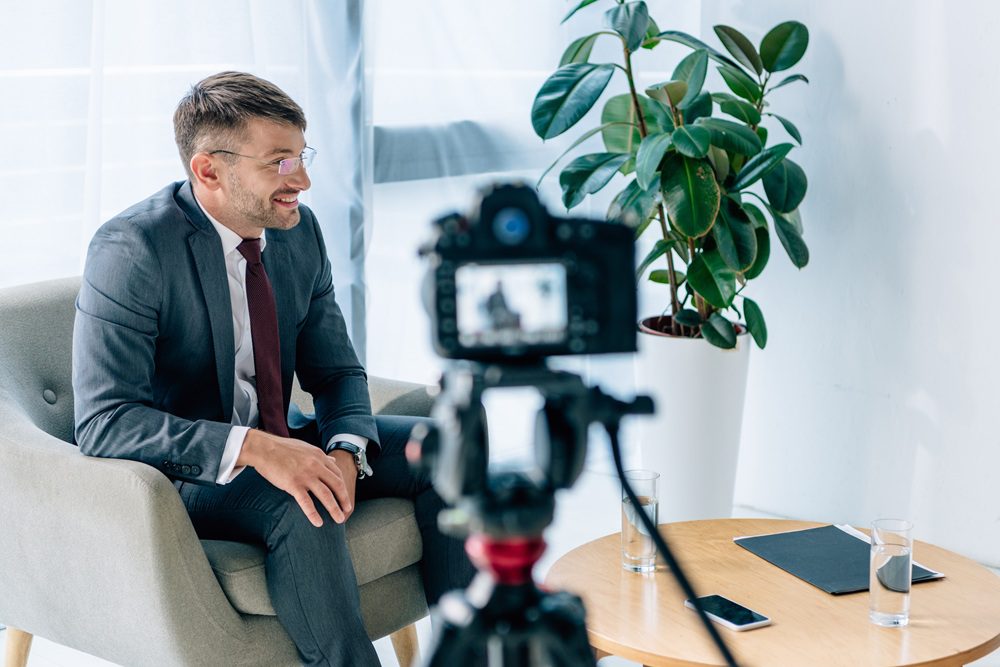
Every CEO interview on this site tells some version of the same story: a founder who built genuine authority not by being the loudest voice in the room, but by being consistently useful, sharing real insight often enough that an audience started paying attention before the first sales conversation ever happened. The format that’s increasingly carrying that insight isn’t a blog post or a slide deck. It’s video, short, unscripted, and captured in the moment rather than produced in a studio.
That shift puts most executives in an awkward spot. They understand, often from reading exactly this kind of advice, that consistent video content builds authority faster than almost anything else available to them. What they usually don’t have is a production team following them around to capture it. The gap between “I should post more video” and “I actually did” tends to come down to that exact friction, not a lack of things worth saying.
The Hardware Behind Hands-Free Executive Video
One tool making that easier to produce consistently is lightweight camera glasses, eyewear with a built-in camera, microphone, and voice assistant that lets a wearer capture a thought or a moment hands-free, from a genuine first-person point of view. For a CEO whose calendar doesn’t include a production crew, that removes the single biggest obstacle to consistent video content: the friction of stopping to set up a shot.
What tends to matter most here isn’t the novelty of the hardware. It’s that the resulting footage looks unplanned, because it genuinely was. A founder narrating a thought while walking out of a board meeting reads completely differently than the same founder sitting in front of a ring light reciting a similar point from notes, even when the underlying insight is identical.
The Business Case for Thought Leadership Is Larger Than Most Realize
The stakes behind getting this right are substantial. On LinkedIn specifically, leadership content tends to pull in roughly twice the engagement and three times the comments that a company account gets for similar material, a gap that’s only widened as audiences grow warier of anything that reads as brand messaging rather than a real person talking. In other words, an executive’s visible presence is reaching an audience that scrolls straight past the company page.
That’s a meaningfully different argument for consistent content than “it builds your personal brand.” It’s closer to: the attention a company page struggles to earn is sitting there waiting for the person actually running it to show up and claim it.
Founder-Led Content Is Already Outperforming the Alternative
The instinct behind this isn’t new to this audience. How founders build brand authority that outlasts their ad budget has already made the case that paid acquisition dries up the moment a campaign pauses, while authority built through consistent, authentic content keeps compounding long after. Video is simply the format currently rewarded most by the platforms where that authority gets built.
Recent industry surveys on video marketing consistently rank short, unscripted formats among the top-performing content types marketers currently have, ahead of long-form video and most other formats measured. For an executive trying to decide where limited content-creation time should go, that’s a reasonably clear signal, and it reframes the decision away from “should I make video” toward “how do I make enough of it without it consuming my week.”
This Isn’t Limited to Traditional B2B Either
The same logic has already crossed into adjacent industries. How one entrepreneur is turning gaming and beauty into a single creator identity illustrates how building a recognizable, authentic presence across platforms has become a genuine business strategy, not a side activity, for founders well outside traditional B2B. The tools and instincts are converging: audiences across very different industries now reward the same thing, content that feels like it came from the person, not a brand team.
That convergence matters for any executive wondering whether this applies to their specific sector. The platforms and audience expectations driving this shift aren’t industry-specific. A fintech founder and a beauty-and-gaming creator are, in this narrow sense, solving the identical content problem.
What This Actually Looks Like for a Busy Executive
The use cases are fairly ordinary once you picture an actual week. A quick, unscripted reaction recorded walking out of a board meeting while the thought is still fresh. A short clip from an industry event capturing a genuine response to something a speaker just said. A behind-the-scenes moment from a team offsite that would never get captured if someone had to stop and set up a tripod first.
A reasonable way to test whether this fits an executive’s actual workflow:
- Pick one recurring format, a weekly reflection or a “walking thought” segment, rather than overhauling an entire content calendar at once.
- Compare engagement against existing scripted content over several weeks before drawing conclusions.
- Resist over-editing. The authenticity that makes this format work is exactly what gets lost when footage gets polished into something that looks produced.
- Delegate the posting, not the capturing. An assistant or marketing team can handle captions, scheduling, and light trimming, but the raw capture has to come from the executive directly for the authenticity to hold.
The Line That Still Matters
None of this changes the basic judgment required around recording other people. Footage captured during a client conversation, a board meeting, or anywhere a bystander hasn’t agreed to be filmed needs the same discretion any other camera would require, arguably more, given how easy this hardware is to forget you’re wearing. An executive whose content is public by design has more reason to take that seriously, not less, since a privacy misstep becomes a visible one fast.
Final Thoughts
Thought leadership increasingly rewards exactly the kind of content that’s hardest to produce through a traditional setup: consistent, unscripted, and genuinely in the moment. Hands-free, wearable capture is one of the more direct ways to close that production gap, not as a replacement for having something worth saying, but as the mechanism that gets it actually captured and published before the moment, and the insight, passes. For executives already building the case for personal authority, it’s a low-cost addition worth testing against whatever’s currently working.