


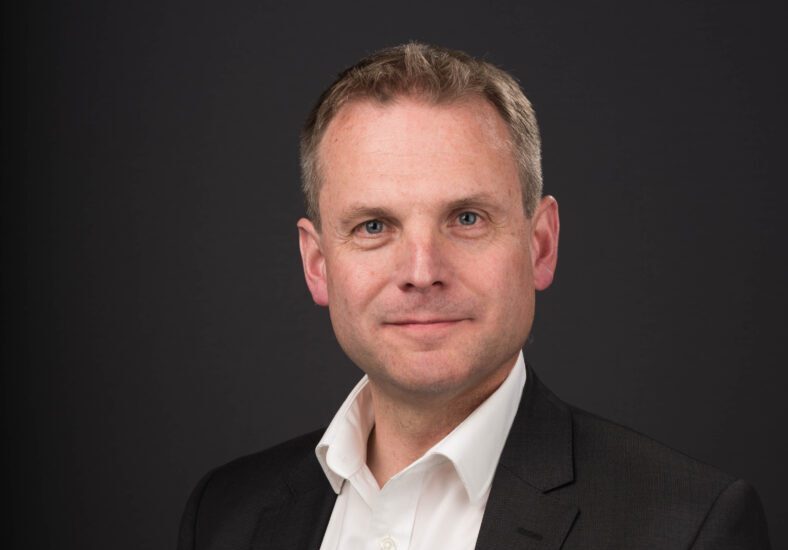
Steve Flavell, co-CEO and co-founder of LoopUp, is responsible for LoopUp’s global commercial activities, based out of London. Prior to LoopUp, Steve was EVP and main board director at GoIndustry, the online industrial auctioneering platform. As part of its founding team, Steve played an instrumental role in the company’s success, which included six acquisitions, rapid organic growth and listing on AIM. Previously, Steve spent five years in strategy consulting with Monitor Company and Mars & Co, and two years with Mobil Oil. He has an MBA from Stanford and MEng from St. John’s College, Cambridge.
Company: LoopUp
We are thrilled to have you join us today, welcome to ValiantCEO Magazine’s exclusive interview! Let’s start off with a little introduction. Tell our readers a bit about yourself and your company.
Steve Flavell: I co-founded LoopUp with my co-CEO, Michael Hughes, whom I met in the mid-90s while we were both studying at Stanford Graduate School of Business in the US.
Our first product was in the world of conference calling, where we brought a really simple software solution for less chaotic remote meetings. We developed one of the first ever business BlackBerry apps, that essentially turned your BlackBerry into a ‘remote controller’ of the conference call, and we were proud to include 25 of the world’s top-100 law firms in our customer base. But the pandemic decimated the conference calling market, after which meetings essentially became just a feature within much broader Unified Communications platforms, such as Microsoft Teams.
And so, we moved into the world of Multinational Cloud Telephony for Microsoft Teams, where we enable global enterprises to consolidate how they buy and manage telecoms service around the world. Why buy from multiple – often tens of – telcos, when you can now consolidate service provision with a single vendor? Why carry-on managing telecoms in a disparate country-specific way when you manage your primary Teams capability in a centralized and globally-consistent way?
Fast forward to today, and LoopUp is the world’s most multinational telecommunications service provider in the market, offering numbers and service in more countries than any other provider around the globe, with many of the world’s largest companies as its customers.
What was the defining moment or challenge that prompted you to pivot your business model, and how did you recognize it was time for a change?
Steve Flavell: The defining moment that prompted us to pivot our business model away from conference calling and into multinational cloud telephony came at the peak of the pandemic. As remote work went mainstream, platforms like Microsoft Teams and Zoom all but took over the industry, leaving LoopUp’s (and everyone else’s) conference calling business in decline. It was clear we had to act, and act fast, if we were going to survive.
Can you walk us through the most significant change you made to your business model and the immediate impact it had on your company’s trajectory?
Steve Flavell: The critical change we made – quickly and decisively – was deciding not to fight the Unified Communications (UC) giants in our legacy conferencing market, but to move swiftly into a related growth industry that was complementary and integrated with UC. We pivoted into a fast-growing market for Teams Cloud Telephony, with clear differentiation over country-specific/regional telcos through our broad multinational service availability. Today, LoopUp offers the broadest global coverage on Microsoft’s Operator Connect and Direct Routing programs and has already exceeded $10m in annual recurring revenue in our new, thriving line of business.
How did you convince your team, investors, or stakeholders to embrace such a dramatic shift, especially if it involved risk or uncertainty?
Steve Flavell: My co-founder and co-CEO, Michael Hughes, and I were very fortunate to have such a strong and loyal team, as well as shareholders who believed in us. However, inevitably, the proof of the pudding came down to the eating, and it was the rapid growth of our new Multinational Cloud Telephony business that shone through so swiftly, it convinced everyone — ourselves included — that the plan was both investment-worthy and exciting. Furthermore, since launching this service in 2021, we are very proud to have never lost a single customer.
What was the biggest obstacle you faced during the pivot, and how did you overcome it to ensure the new model’s success?
Steve Flavell: One of the biggest obstacles we faced was access to capital. The business pivot simply wasn’t suited to the public markets, and we were ultimately left with no choice but to retake the company private and delist from the London Stock Exchange. If floating a company is challenging, try delisting one…
Looking back, what’s one key lesson from your pivot experience that you’d share with other CEOs considering a major business model shift?
Steve Flavell: Acting quickly and decisively was certainly important, but the biggest learning was the criticality of frequent, open communication with the team that have to get you through that transition. Sharing our strategy and ‘why we’re doing what we’re doing’ was critical, and repeating that ‘why’ message at every suitable opportunity. Transparency about performance – not only the good stuff in terms of the new growing business, but also the decline of the old legacy business – was important for trust and credibility, as well as having a lighthouse target metric that everyone could rally around.