
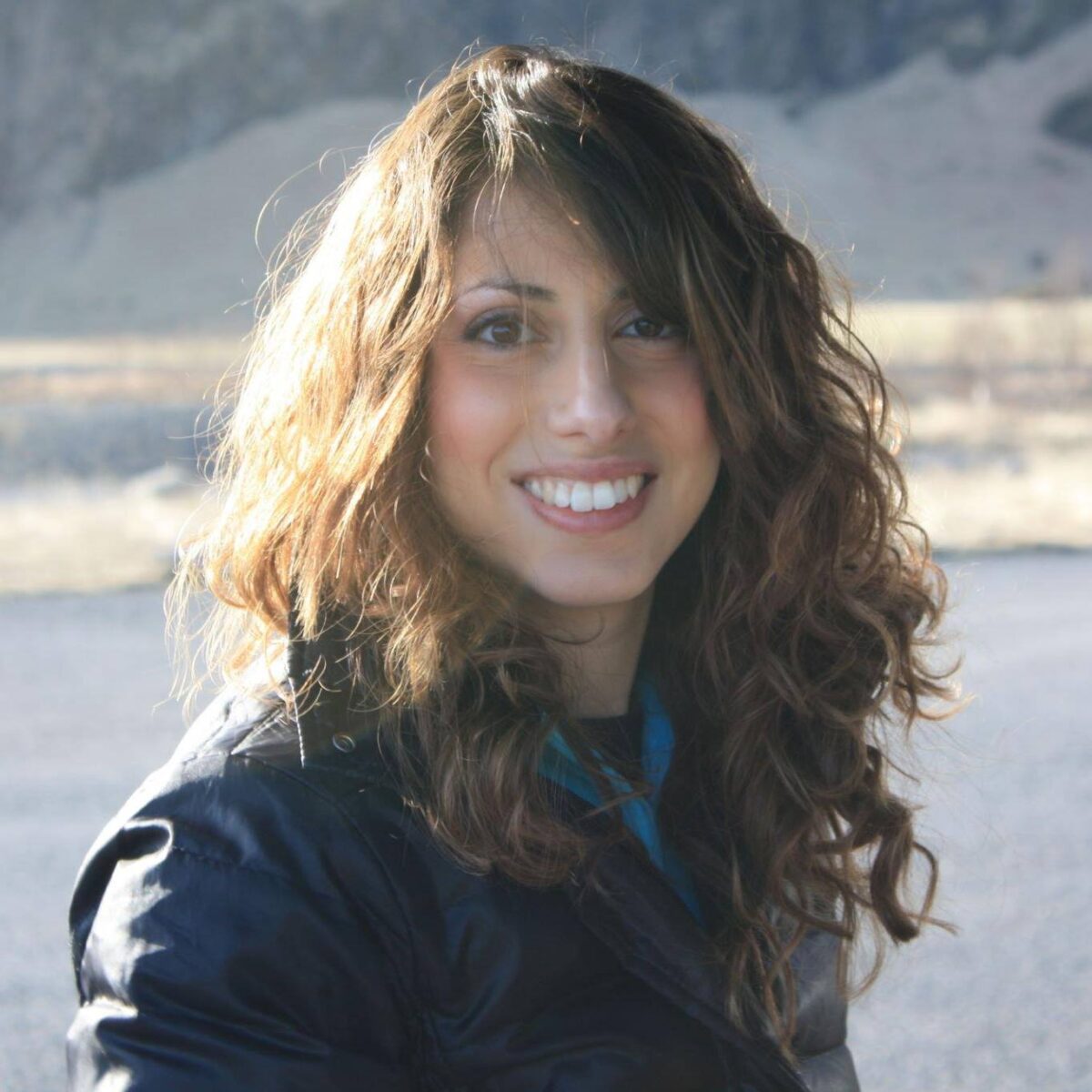
Selda Seyfi is the founder of Quantum Lane AI, a UK AI automation agency that helps founder-led businesses hand their repeat work to AI. She spent 20+ years in management consulting, at Fujitsu, where she trained in Lean and Six Sigma, at PwC and then as a partner at a boutique strategy firm, advising clients including Adobe, National Grid, Lloyds and Keywords Studios. Finding and removing the waste in how a business runs has been her work for 20 years.
She came to AI with no technical background and taught herself. Her rule is simple: fix the process first, then automate it. Her flagship product, FounderOS, is an AI operating system installed around a founder-led business in two to three days. It learns the business, watches the numbers and the meetings, sends a daily brief and automates recurring tasks one at a time. She writes Maximize Your Minutes, a weekly productivity newsletter with 2,600+ subscribers, and has been featured in Fast Company and Boss Today.
Company: Quantum Lane AI Ltd
We are thrilled to have you join us today, welcome to ValiantCEO Magazine’s exclusive interview! Let’s start off with a little introduction. Tell our readers a bit about yourself and your company.
Selda Seyfi: Hello there! My first job was washing up in my parents’ restaurant in rural Warwickshire. I was ten. By my teens I’d worked up to sous chef, running the kitchen and making sure every plate went out on time and correct, Christmas rush included. That kitchen taught me about time, pressure and taking the waste out of a system, long before I had a word for any of it.
The word turned out to be Lean. I trained in Lean and Six Sigma, helping teams see where the value was and where the waste was, then cutting the waste. From there I went to PwC’s operations transformation team, where I learned a method for doing consulting work in a fraction of the usual time, and then to a boutique strategy firm, where I became a partner. In more than 20 years I worked with clients including Adobe, National Grid, Lloyds and Keywords Studios.
Then I was made redundant while on maternity leave with my second child. I’m not technical by background, so I taught myself AI, and enough code to build things properly. I founded Quantum Lane AI in January 2025. Along the way I built an AI operating system to run my own business. Other founders saw it and asked for their own, and it became our flagship product, FounderOS.
Quantum Lane AI is a UK AI automation agency for founder-led businesses. We install FounderOS around a business in two to three days. It learns the business, watches the numbers and the meetings, sends a daily brief, and takes recurring tasks off the founder one at a time. We also run AI Opportunity Assessments and AI training for teams.
Simplicity is the principle underneath all of it. Our framework starts with removal: work out what to cut before deciding what to keep, and well before anything gets automated. Stop trying to automate the mess. Fix it first. I run my own business on the same system. As a mum with two small children my days are short and have a hard stop, so less noise and faster decisions are something I rely on every day.
What was the moment you realized that complexity was holding your company back, and how did that shift your approach to product, operations, or strategy?
Selda Seyfi: It was a week I spent tracking my own time, back when I’d first started adding AI tools to my work. I logged every minute and every task for a whole week. What shocked me was the gaps between the work. Fifteen minutes a day went on moving information from one tool to the next: email to ChatGPT, ChatGPT to Notion, Notion to LinkedIn, and back round again. Two minutes here, three minutes there. Nobody invoices you for two minutes. When I ran the maths against my hourly rate, it came to more than £9,000 a year walking out of my profit.
That week shaped three decisions.
On product, it showed me where the real cost sat: in the joins between tools. Picture a business with seven tools, each with its own AI agent built in. Those agents don’t talk to each other, so the owner is still the one joining it all up. FounderOS is built the other way round. It’s one system connected to everything the business already uses, so the information moves without a person carrying it.
On operations, it taught me the order. Layering AI on a broken process just gets you a faster broken process. So every install starts with removal. We look at what can be cut before we decide what to keep, and only then do we automate what’s left. Our free Tool Stack Audit asks owners the same question that caught me: how many minutes go on copying, pasting, exporting, reformatting and hunting for files between tools?
On strategy, I later turned the same lens on the company itself. I’d been marketing to four different kinds of client, so I cut it to one: business owners who are growing faster than they can handle. I paused cold email and put a large custom build on the shelf, so we could focus on FounderOS and assessments. One kind of client and fewer offers means fewer decisions to weigh up every week.
Can you share one specific example of something you simplified (a product feature, process, pricing model, or customer experience) that delivered outsized results?
Selda Seyfi: The biggest thing we simplified is how a client receives their system.
Our first installs were built in layers, one piece at a time, on the client’s own machine. It worked, but it was slow. One install took at least five weeks.
So we turned the install into a present. We now do the thinking before install day: we interview the founder, learn the business and build their whole system around it. Then we pack it all into one bundle. On the day, the founder opens it and it unwraps itself, setting everything up on their machine in one guided session.
That cut the whole install from weeks to two to three days. The install itself now takes one day.
So a founder has a working system within days of starting.
How do you systematically identify and eliminate complexity across the organization without oversimplifying in ways that hurt quality or value?
Selda Seyfi: We use a task audit. It’s the same one we run with clients, and I ran it on my own business first.
It has three steps. First, list every recurring task in the business, with how often it happens and how long it takes. Nothing gets left off for being small. Second, score each task: fully automatable, partly automatable, not yet, or human-only. Third, rank them by time saved and how easy they are to fix, and start with the quick wins.
Some tasks don’t get automated at all. They get dropped. When I stopped cold email, I got 5-10 hours a week back.
The human-only column is what protects quality. Discovery calls, training, networking and the interview at the start of every install stay with a person on purpose, because they need judgement, relationships or being in the room. And when a task is partly automated, the last step stays human: nothing goes out until I’ve read it and pressed send.
The results on my own business: in March, 6% of my recurring tasks had any automation in them. By August it was 65%. AI research used to take 10-12 hours of my week. Now it runs itself, and that time goes into networking and content, the work that brings clients in
What’s the biggest resistance you’ve faced when pushing for radical simplicity, and how did you overcome it?
Selda Seyfi: In my own business, I make the call. The resistance comes when I go into other businesses and try to make things simpler.
It nearly always sounds the same. Show someone a process map, or talk about AI in general, and they’ll tell you it won’t work for their role, and give you all the reasons why. They can’t picture the simpler version yet, so they defend the one they know.
The way I overcome it is to show them the outcome. For a proposal call, we build a small working demo on the client’s own problem, with their real information and their own brand. They watch it do a job they recognise from their own week. Once people see what a simpler way of working looks and feels like in a situation they know, their resistance melts.
For other CEOs who struggle with feature bloat, process overload, or confusing customer journeys, what’s the most important principle or first step you would recommend they take?
Selda Seyfi: Start with the problem. We don’t start with the technology, ever.
All of those struggles usually start the same way: someone adds a fix before anyone has agreed what the real problem is.
So my first step is a question. It’s the first one I ask on every discovery call: what’s the biggest problem in your business right now? Keep asking it in different ways until you get past the polite answer to the real one. Ask your team. Ask your customers. Write down what they say, in their own words.
Once you know the one problem worth solving, simplifying gets much easier. Anything that doesn’t help solve it is a candidate to cut. And only after that do you decide what, if anything, to automate.