
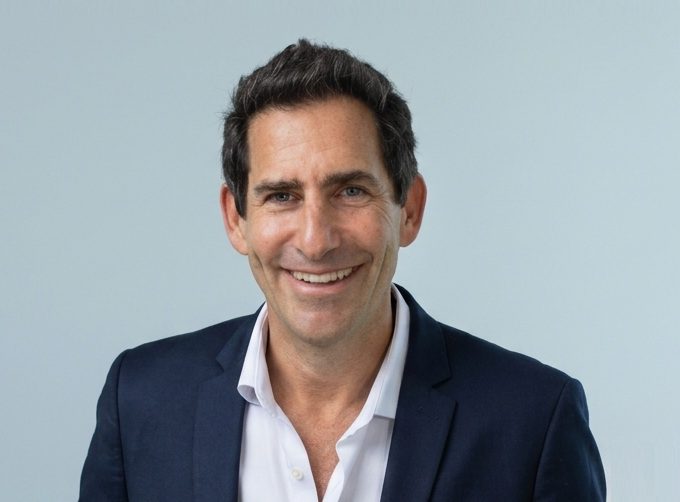
Samuel Strauch is Principal of Metrik Holdings and Metrik Real Estate in Miami, where he has worked in South Florida real estate since 2002. He runs Miami Dossier, a private buyer advisory for Miami luxury new construction and pre-construction. His operating philosophy is simplicity: if something needs more than one step, he sits down and questions it, and builds loops and systems instead of processes. He is also the author of dear humans., published under 13311331. He studied business at Hofstra, with courses at Erasmus Rotterdam, and executive education at Harvard in 2008 and MIT in 2021. He lives in Miami Beach.
Company: Metrik Holdings
We are thrilled to have you join us today, welcome to ValiantCEO Magazine’s exclusive interview! Let’s start off with a little introduction. Tell our readers a bit about yourself and your company.
Samuel Strauch: My name is Samuel Strauch. I am the Principal of Metrik, a private holding company primarily working in real estate, although we also invest in other verticals such as technology, blockchain, and some particularly interesting non-defined categories that can provide an asymmetrical bet. I am also the Principal of Metrik Real Estate, which runs Miami Dossier (miamidossier.com), a private advisory for new construction in Miami. I’ve been in Miami for over 25 years, in real estate for more than 22 years, and I am also the author of Dear Humans, a non-fiction book about remembering the self as we venture into the exponential.
One of the core elements that I try to adopt into everything that I do is efficiency, and that’s probably something innate in me, because I just like things to be done in the simplest, most efficient form, and preserve energy rather than have an expense on my bandwidth and resources. So both in my personal life and my professional life, I try to think from first principles and add an outside objective perspective into the things that I’m doing, to see how they can be fully optimized and done the best way possible. And once a system is built, keep it there, so it can be reapplied or re-engineered for something else that I’m doing.
One of the other things that is interesting to me is that the more I apply this philosophy into various aspects of my professional and personal life, there’s an element of cross-pollination. You can transfer a solution or an idea from a specific sector into something totally else. So the wider perspective you have, it creates a way better method to see things from a holistic perspective.
What was the moment you realized that complexity was holding your company back, and how did that shift your approach to product, operations, or strategy?
Samuel Strauch: Many years ago I was noticing that we were replicating a lot of steps that we were not simplifying. We were repeating steps, both in the way that we were approaching clients and archiving information, maybe falsely thinking that the more steps would provide more control, which I was wrong about. So based upon that, and then looking at people that are highly efficient and companies that are highly efficient, I modeled my thinking based upon that.
Can you share one specific example of something you simplified (a product feature, process, pricing model, or customer experience) that delivered outsized results?
Samuel Strauch: The way now that we work with clients, in all sides of our operations, we have created hyper-personalized loops that are tailored specifically for the clients’ needs, for the clients’ profile, and for the clients’ expectations. And we apply it to all of our companies.
Just to give you a quick example: the user experience of people that come to us for new construction in Miami. From the first approach, whether personal or online or through a referral, that whole data set is captured immediately, analyzed, saved, archived, and hyper personalized with loops that feed into the requirements that that person is looking for. If somebody is looking for a very high end property on Miami Beach, the minute that we capture that information, the system by itself already generates a pre-filter model of where the client comes from, if international, what’s their preferred language, what are the filters that they are looking for, if it’s a multi-million dollar property on the water or land, if it has views, then their specifications of their needs, if it’s a holding property or if it’s something that they’re going to live in. And we cross reference with all existing properties in the market, because we track every single project in Miami at the same time. So we have a system in place that immediately pre-filters, follows up, and provides information systematically, on information that is relevant to the client, and we track every single communication to make sure that we’re not being redundant.
Our clients are some of the most busy, successful people in the world and time is valuable. So we have to make sure that we treat them with the same respect and efficiency that they are applying to their own companies.
How do you systematically identify and eliminate complexity across the organization without oversimplifying in ways that hurt quality or value?
Samuel Strauch: Before we create any system, the first thing is we look at the why and the what and how we try to approach it. Instead of making assumptions, we try to really step out and go back to first principles, and see what is every single interaction that is relevant to that specific point in the organization that we need to solve. We break it apart, and then we come with a blank slate to see how are we going to build it, and try to do it objectively, without trying to emulate and copy anybody, so we can have our own independent thinking based on the specific particularities of our own business.
What’s the biggest resistance you’ve faced when pushing for radical simplicity, and how did you overcome it?
Samuel Strauch: At one point, the resistance was a false sense that the more steps would add control into the way we operate, but it hasn’t. Once we changed our mindset and our thinking approach, it’s not even a resistance. It just wouldn’t make sense to complicate things, it’s just not in our nature. Again, we try to preserve resources and energy into everything that we do. And now we’re leveraging it as never ever before, and we are always on the pulse of what’s new that can help the mission.
For other CEOs who struggle with feature bloat, process overload, or confusing customer journeys, what’s the most important principle or first step you would recommend they take?
Samuel Strauch: For other CEOs, I think the principle, the rationale, is quite simple. Sometimes we stay too much into our heads and we make assumptions, and we have to come out with a perspective that we have to remove every assumption. Let’s not assume that we know everything. Let’s take everything as a new element, as a new project, and always hear feedback, and have a team of people that can really add different perspective. You just don’t want people that will say yes to you. You want to have people that will provide and add value by precisely adding different perspective, adding different color, adding different ways of thinking. The people that work into very specific sections of the company, they will know things that you will not know. So it’s important to be very humble, very open-minded, start from the perspective of what we’re trying to do, why we’re trying to do it, how can we best do it, and always apply a first principles approach into everything. And by applying a first principles approach, it’s also that not because something was done a certain way for many, many years, that became also an old pillar of the enterprise, means that it was done right. Somebody at some point created that. But you have to question every element, and you have to let your team question every element, so that we can have novel ideas, novel propositions, novel ways of thinking, of how to best approach every single task that needs to be done, and do it in a cohesive, holistic way.