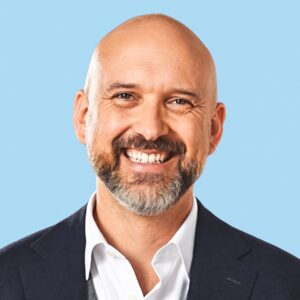
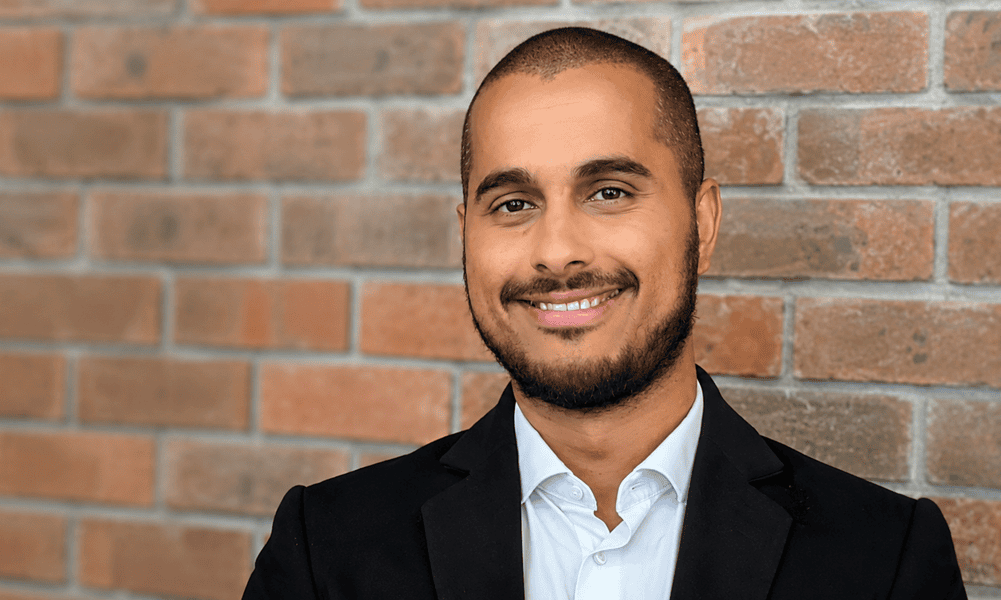
I’m Russell Sean, founder of QuanMed AI — a medical AI platform combining quantum biology research, AI-powered diagnostics, and decentralised health data infrastructure. Our flagship product, QuanBot, is a RAG-powered assistant trained on quantum biology and functional medicine literature, giving clinicians and patients access to a depth of research that no single practitioner could hold. We also built MyDeMed, which returns ownership of health records to patients via cryptographic sovereignty, and QuanDen, an AI annotation platform for dental radiograph analysis. The founding insight was straightforward: healthcare decisions happen in fragmented, information-poor environments. Clinicians need synthesis, not just data. Patients need agency, not just access. QuanMed AI was built to close both gaps
Company: QuanMed AI
We are thrilled to have you join us today, welcome to ValiantCEO Magazine’s exclusive interview! Let’s start off with a little introduction. Tell our readers a bit about yourself and your company.
Russell Sean: I’m Russell Sean, founder of QuanMed AI — a medical AI platform combining quantum biology research, AI-powered diagnostics, and decentralised health data infrastructure. Our flagship product, QuanBot, is a RAG-powered assistant trained on quantum biology and functional medicine literature, giving clinicians and patients access to a depth of research that no single practitioner could hold. We also built MyDeMed, which returns ownership of health records to patients via cryptographic sovereignty, and QuanDen, an AI annotation platform for dental radiograph analysis. The founding insight was straightforward: healthcare decisions happen in fragmented, information-poor environments. Clinicians need synthesis, not just data. Patients need agency, not just access. QuanMed AI was built to close both gaps
What specific opportunity in the health or longevity market convinced you that a profitable, scalable business was possible, and how did you validate it early on?
Russell Sean: Most people optimizing their health have more data than they know what to do with. Oura ring, blood panels, CGM, WHOOP. But there’s no intelligence layer that ties it together and tells them what to actually do. Their doctor doesn’t have time to look at any of it. So they end up on Reddit or PubMed at midnight, half understanding what they’re reading, and nothing changes.
That gap felt real to me. Not because the market reports said so, but because I was that person.
The validation:
I started by just talking to people. Not asking “would you pay for this” because everyone says yes to that. I asked them to walk me through the last time they got a confusing lab result or a weird readiness score and what they did next. Almost every single person described the same thing: hours of searching, no clear answer, gave up and moved on.
That told me the demand was already there. They were already trying to solve it, just badly. We put up a waitlist before we had a real product and people signed up, which meant they were actively looking for someone to trust on this.
Why it scales:
The content and AI layer doesn’t cost more to serve the 10,000th user than the 10th. Every article, tool, and structured piece of health content we publish keeps compounding. We also saw from the dental annotation work that clinicians will pay for AI-assisted decision support, so there are two real revenue surfaces from the same underlying platform. Consumer side and clinical side. That’s what made me believe this wasn’t just a nice product but an actual business.
Can you share one product, service, or business model decision that significantly accelerated both customer impact and revenue growth?
Russell Sean: Early on, we had to choose who we were building for. The easy answer was to pick a lane, go consumer or go clinical. Most people told us to do that. Pick one, get traction, expand later.
We went the other direction and I think that was the right call.
The insight was that the data and knowledge layer we were building was genuinely useful in both directions. A patient wants to understand their lab results. A dentist wants AI assistance reading an X-ray. Those feel like different products but they run on the same foundation. The annotation work, the knowledge base, the structured clinical content. Same infrastructure, two paying audiences.
What accelerated customer impact was that clinical users gave us credibility with consumers and vice versa. When we could say that clinicians were using the platform, individual users trusted the output more. That trust loop is hard to manufacture and we basically got it for free by serving both sides.
What accelerated revenue was simpler. We stopped depending on one growth channel. Consumer acquisition is expensive and slow. But when you have a clinical side, you can land a practice or a hospital system and get access to hundreds of patients through one relationship. The deal size is bigger and the payback period is shorter.
The hard part was not letting one side pull all the roadmap attention. That discipline took longer to build than the product did. But once we had it, the two sides started reinforcing each other in ways we did not fully anticipate at the start.
How do you balance scientific credibility and regulatory requirements with the speed and marketing needed to build a commercially successful wellness brand?
Russell Sean: The honest answer is you don’t fully balance it. You make a choice about which side you’re willing to be wrong on.
We decided early that we would never sacrifice scientific accuracy to move faster. Not because we were being noble about it but because in health, the moment you lose credibility you don’t get it back. One bad claim that goes viral in the wrong direction and you’re done. So we treated that as a hard floor.
But regulatory requirements are a different thing from scientific credibility. A lot of founders in this space conflate the two and end up paralyzed. The FDA has a clear line between a wellness product and a medical device. We stayed on the wellness side deliberately. That’s not regulatory evasion, that’s product strategy. We’re not diagnosing anyone. We’re helping people understand their own data and giving them context to have better conversations with their doctors.
That framing actually helped marketing. Instead of making claims we couldn’t defend, we leaned into education. The blog, the guides, the tools. When you teach someone how to read a blood panel, you don’t need to say “our product cures X.” They trust you because you made them smarter, not because you made a promise.
The speed piece came from separating what needed clinical review from what didn’t. Content about circadian biology or VO2 max norms doesn’t need the same approval process as a feature that touches patient data or makes a clinical recommendation. We built a tiered review process, not a single gate. That let us ship fast on 80 percent of things while being slow and careful on the 20 percent that actually carried risk.
The tension never fully goes away. There are still moments where a marketing instinct and a scientific instinct point in opposite directions. When that happens we default to the science and find a different way to tell the story. Usually there is one. And usually it’s a better story anyway because it’s true.
What’s been the biggest challenge in turning health or longevity solutions into a sustainable, profitable business, and how did you overcome it?
Russell Sean: Trust takes longer to build than the product does.
You can ship a biological age calculator in a few weeks. Getting someone to actually trust the output enough to change their behavior, that takes months. And behavior change is the product. Not the software.
That was the thing that surprised me most. We had good tools, good content, good AI output. But early users would interact once, find it interesting, and not come back. Not because the product was bad but because they had no reason yet to believe it over everything else they’d read.
The way we worked through it was building the knowledge layer first and the product second. Instead of leading with the app, we led with content that was genuinely rigorous. Articles that cited real research, guides that acknowledged what we don’t know yet, tools that explained their methodology rather than hiding it behind a clean UI. We were basically earning trust before asking for anything in return.
That shifted retention meaningfully. Users who came in through the content stayed longer and converted better than users who came in through the product directly. The content was doing the trust work that a brand normally takes years to build.
The second challenge was monetization timing. Health decisions move slowly. Someone reads about precision medicine, thinks about it for three months, mentions it to their doctor, comes back. The sales cycle doesn’t fit a standard SaaS conversion funnel. We had to build a much longer nurture path than we originally planned and stop optimizing for 30-day conversion.
The combination of those two things, slow trust and slow conversion, meant the early revenue numbers looked bad for longer than was comfortable. The way we overcame it was mostly not panicking and having conviction in what the retention data was telling us even when the top-line numbers weren’t there yet. Users who stayed past 60 days almost never left. We just had to get them to 60 days.
For other founders looking to enter the wellness or longevity space, what’s the most important lesson you’ve learned about building a company that delivers both real health outcomes and strong financial results?
Russell Sean: Stop trying to build a wellness brand.
That sounds counterintuitive but I think it’s the core mistake most founders in this space make. They see a large market, they see consumers spending money on supplements and wearables and gym memberships, and they build toward that spending behavior rather than toward a real problem.
What actually works is finding one specific person with one specific frustration that nobody is solving well, and solving it so completely that they tell other people without being asked. Everything else, the brand, the revenue, the scale, follows from that. If you lead with the brand you end up with marketing that outpaces your product and users who churn the moment something shinier appears.
The health outcomes and the financial results are not in tension if you’re solving something real. They’re the same thing. A user whose behavior actually changes because of your product comes back, pays, and refers people. A user who feels good about downloading your app but doesn’t change anything cancels in month two. The companies that struggle in this space are usually optimizing for the download, not the outcome.
The other thing I’d say is be honest about what you don’t know. Health is full of things that are genuinely uncertain. Founders who paper over that uncertainty with confident marketing are borrowing trust from their future self. At some point a user finds the study that contradicts your claim or the outcome that doesn’t match your promise and you lose them permanently. The founders who say “here’s what the evidence shows, here’s where it’s strong, here’s where we’re still learning” build something that lasts because people trust them when it’s hard, not just when it’s easy.
The financial results in this space compound on trust. There’s no shortcut to that. But if you build it correctly the defensibility you get is real because trust in health is not something a competitor can copy by spending more on ads.