
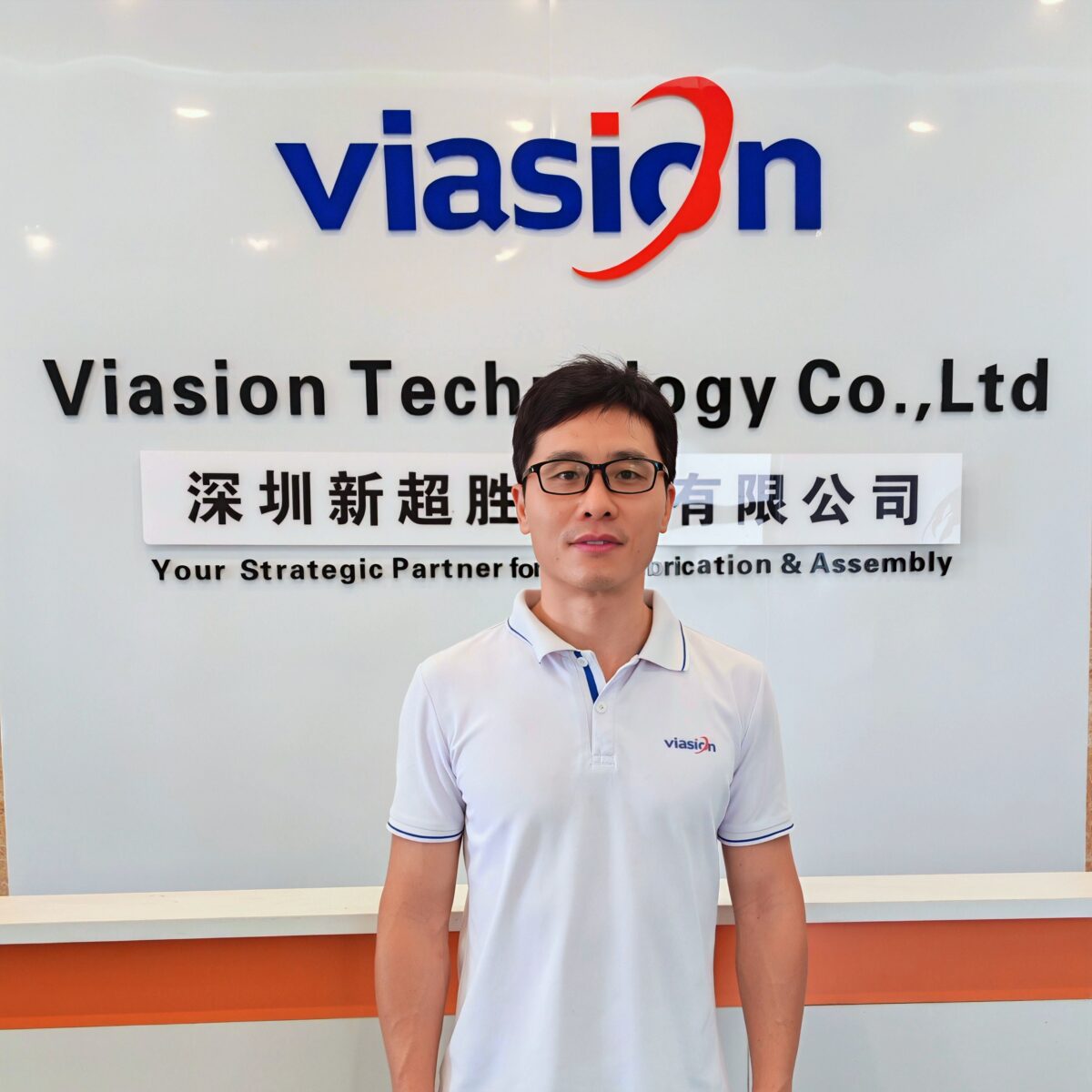
Ross has over 20 years of experience in the PCB industry. He began his PCB career in sales at Yantat PCB Co., Ltd. in 2004, one of China’s top PCB manufacturers. During his tenure there, he built in-depth expertise in PCB fabrication, engineering, quality assurance and customer support.
In 2007, he co-founded Viasion alongside a small team of industry professionals, initially focusing on small-to-medium-volume PCB supply. As CEO, he has successfully steered Viasion through the strategic consolidation of two factories within the PCB fabrication and assembly space, delivering consistent, sustainable growth since the company’s establishment.
Company: Ross Feng
We are thrilled to have you join us today, welcome to ValiantCEO Magazine’s exclusive interview! Let’s start off with a little introduction. Tell our readers a bit about yourself and your company.
Ross Feng: I’m Ross Feng, with more than 16 years of experience in the PCB industry. I began my career in sales at Yantat PCB, one of China’s top PCB manufacturers, in 2004, where I built solid expertise in PCB fabrication, engineering, quality assurance and customer support. In 2007, I co-founded Viasion Technology together with a team of seasoned industry professionals.
Viasion is a China-based full-service EMS contract manufacturer. We focus on low-to-medium volume PCB and PCBA orders, typically 100 to 5,000 pieces per batch, specialising in high-complexity and high-reliability projects. Our services cover 1–40 layer PCB fabrication, SMT, BGA and through-hole assembly, component sourcing, as well as turnkey box-build and product development.
Quality is always our top priority. Operating under ISO 9001:2015, we believe quality includes not only reliable products, but also on-time delivery and quick, flexible responses. “Total Customer Satisfaction” is our core target, shared by all our teams from engineering, production to sales and quality control.
Up to now, we have gained trust from over 500 customers worldwide. Our solutions support many industries: medical, automotive, industrial automation, energy, robotics, IoT, telecommunications and test measurement.
I am grateful to every customer and our dedicated team. We keep growing steadily, and aim to be your most trustworthy electronics manufacturing partner.
What was the moment you realized that complexity was holding your company back, and how did that shift your approach to product, operations, or strategy?
Ross Feng: We realized complexity was slowing us down around 2018. We tried to accept too many diverse custom requests without clear boundaries, which stretched our engineering and production resources, delayed lead times and hurt consistency.
This pushed us to reset our strategy. Instead of chasing every order, we focused on our sweet spot: high-reliability, medium-complexity PCB and PCBA jobs. We standardized our core workflows while keeping flexible for custom needs.
We simplified internal review rules, clarified our product scope and optimized our quoting process. This shift cut waste, stabilized quality and shortened our response cycle. It helped us serve targeted industries better and build more reliable, long-term customer partnerships.
Can you share one specific example of something you simplified (a product feature, process, pricing model, or customer experience) that delivered outsized results?
Ross Feng: Earlier, our quoting engineers were fully swamped with RFQs from all kinds of customers across different sectors, including high-volume consumer electronics. We spent countless hours preparing detailed quotations, yet many of these projects ended up unprofitable. Over time, we realised we simply could not compete well on low-end, mass-produced electronic items, where pricing pressure and thin margins left little room for our high-reliability standards.
We therefore made a clear strategic shift and narrowed our focus to low-to-medium volume industrial PCB and PCBA projects, which align perfectly with our strengths. We also added a quick pre-screening step for new inquiries to filter out mismatched orders at the very beginning.
This change delivered outstanding results. Our quote win rate rose sharply, our engineering resources were freed up for suitable high-value work, and we could offer more attentive support to target clients. Naturally, customer satisfaction improved significantly, alongside healthier profit margins.
How do you systematically identify and eliminate complexity across the organization without oversimplifying in ways that hurt quality or value?
Ross Feng: We start by mapping all core workflows regularly and collecting feedback from engineering, production and customer teams to spot unnecessary complexity. Every process or custom request is reviewed against our core positioning: low-to-medium volume, high-reliability industrial PCB and PCBA projects. We ask one simple question: does this add real value for our target customers, or only create extra workload?
We set clear service boundaries instead of saying yes to every requirement. For items outside our focus, we politely decline or refer them to suitable partners. Meanwhile, we keep standardized checklists and engineering templates for repeatable work to reduce repetitive manual labour.
Crucially, we separate “redundant complexity” from “necessary complexity”. Strict quality controls, design reviews and reliability testing are never removed. These are essential to protect product performance and customer value. We only cut redundant approval steps, repeated data entry and non-value-added checks.
We also run small pilot tests before rolling out any simplification. We track metrics including quality yield, defect rate and customer feedback to make sure changes do not compromise reliability. This balanced approach lets us remove waste while keeping the high quality our industrial customers depend on.
What’s the biggest resistance you’ve faced when pushing for radical simplicity, and how did you overcome it?
Ross Feng: The biggest resistance came from inside our team. Many engineers and sales staff worried that tighter service boundaries and fewer custom options would cost us orders. They were used to accepting nearly every customer request and feared saying “no” would damage client relationships and shrink revenue.
To overcome this, we did not force sudden changes. First, we shared real data with the whole team: our low-margin, mismatched projects drained engineering resources, caused delays and brought frequent quality headaches, while our focused industrial jobs delivered higher profits and happier customers.
We also built clear guidance for sales, with polite templates to explain to customers which projects fit us and which did not. We helped them learn to redirect unsuitable inquiries to trusted partners gracefully.
Over time, as the team saw our quote win rate and profit margin improve, the doubts faded. People understood that simplicity was not about turning away business, but about protecting our capacity to deliver consistent quality for the customers we serve best.
For other CEOs who struggle with feature bloat, process overload, or confusing customer journeys, what’s the most important principle or first step you would recommend they take?
Ross Feng: My core recommendation is to go back and clearly define who your ideal customer is, and what problem you exist to solve for them. Many companies fall into feature bloat and heavy processes simply because they keep trying to satisfy every customer’s extra request.
This should be your very first step: write down your target customer profile and your unique value promise. Use this as a single filter for every new feature, process change and custom demand. If a request does not serve your core value for your ideal customers, pause before adding it.
This principle stops you from spreading your resources too thin. It does not mean ignoring customer feedback. Instead, it helps you separate feedback that improves your core offering from requests that pull you off track. Once this filter is shared and understood across the whole team, everyone can make aligned decisions, naturally cutting unnecessary complexity before it builds up.