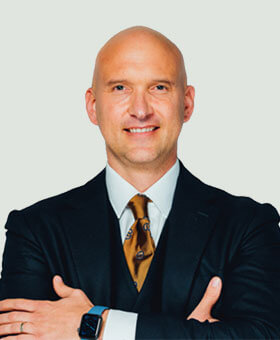




Alex Frenkel is the Co-Founder and CEO of Kai.ai, an AI-powered mental health platform that enhances access by blending clinically validated AI support with licensed clinical human supervision. With a background in psychology and product leadership at global tech firms, Alex uniquely bridges clinical expertise with product innovation. His mission: make compassionate, effective mental health support accessible at scale.
Alex Frenkel’s background is in clinical psychology, having practiced as a therapist in public settings for many years. Over a decade ago, he launched his first startup, and KAI marks his second venture. KAI embodies his lifelong mission—to merge clinical psychology with conversational AI and make mental health support accessible to a wider audience.
Frenkel pursued clinical psychology to gain a deeper understanding of himself and others. His own experience in therapy inspired his passion for helping people through mental health care. During his years of practice, he found great fulfillment in supporting those in emotional distress but also grew frustrated with the limitations of the system. He often saw students only once a year for 15 minutes, while families waited months for an appointment with a junior therapist.
Motivated by the need for change, Frenkel and his team founded KAI to bridge the gap in mental health accessibility. Recognizing that millions need emotional support but few have timely access to clinicians, KAI offers a hybrid model that combines safe, ethical conversational AI with licensed professionals—scaling mental health support to reach people before their challenges escalate.
How has the significance of networking evolved over the past decades?
Alex Frenkel: My most significant learning is that it’s all about people. Networking makes all the difference in startups.
Networking is critical in every key aspect. It helped me connect with our first investors who provided pre-seed funding. It was essential for building our core team, we recruited our Head of Psychology, Professor Shoshani, after meeting clinicians at networking events. The same applies to any key talent.
Our first pilots, customers, and partners all came through networking. At the end of the day, people believe in and trust people. Of course, the technology must be amazing, but it comes down to networking and having the right team around you. For me, it’s the number one priority as CEO.
Can you share a personal story where one networking interaction led to unexpected doors opening, and how it highlights the ripple effect of networking?
Alex Frenkel: When you think about a startup, interactions cover every key aspect, from fundraising to working in the industry. For first-time investors, it is crucial to build the core team. I’ll share two stories that illustrate this ripple effect beautifully.
First, we’re presenting at the HLTH Conference in Las Vegas thanks to being part of the Philadelphia Science Center network. We couldn’t have met them without connections to health organizations in Haifa, Tel Aviv, and elsewhere. Each connection builds something unexpected. That invitation wouldn’t have happened without participating in a delegation to Philadelphia.
Second, over the years, I’ve sought mentors with more experience. That’s how I met Daron Nir, VP of Product at a large company who started StreamElements. We built a relationship over years.
When we started KAI, Daron became one of our first investors and introduced us to Rainfall Ventures, which had invested in his company. They became one of KAI’s early VC investors. I never could have predicted that working with Daron as a mentor would lead to VC investment years later.
What are some common networking mistakes people make, and how can they pivot to turn potential missteps into learning experiences?
Alex Frenkel: People often focus on immediately converting relationships into results. They mistakenly view meetings as almost a waste of time because startup life is so busy. That approach doesn’t work.
Sometimes you spend time with people even when nothing concrete will happen immediately. But after months or years, an opportunity opens. Having a long-term view and building real, authentic connections eventually results in business value, but not if you’re impatient.
The pivot is shifting from a transactional mindset to an investment mindset. Think of networking like planting seeds. You might not see the harvest immediately, but with genuine care over time, those relationships grow into unpredictable opportunities. Focus on building trust and authentic connections rather than immediate conversions.
How do you see the future of networking evolving with the rise of AI, VR, and other technologies?
Alex Frenkel: I see significant changes already happening through messaging platforms. Many interactions are shifting from email to WhatsApp and Telegram, both in groups and one-on-one. I feel far more comfortable sending professional messages, knowing that people will respond across borders and time zones when it’s convenient.
I see tremendous potential for AI-human partnerships. AI can help me prepare for meetings, manage relationships, and stay on top of conversations. The new deep-thinking AI models with search capability have huge potential, fewer hallucinations, better reasoning, and help with preparation and follow-up.
I view AI as a personal companion, assisting with tasks that are more challenging for us, but not replacing human interaction. I’d never send an AI-written message, but I use AI to prepare more effectively and maintain timing for my communications.
VR isn’t mature enough yet to replace physical interactions or video sessions. However, messaging and conversational AI are already significantly impacting networking, and everyone should utilize both immediately.
One final thought: trust is crucial in networking. It’s easier to build trust when technology doesn’t replace human touch. We lead with our human team, then explain how AI enhances our approach. Focusing on building trust is key to improving networking and industry relationships.