



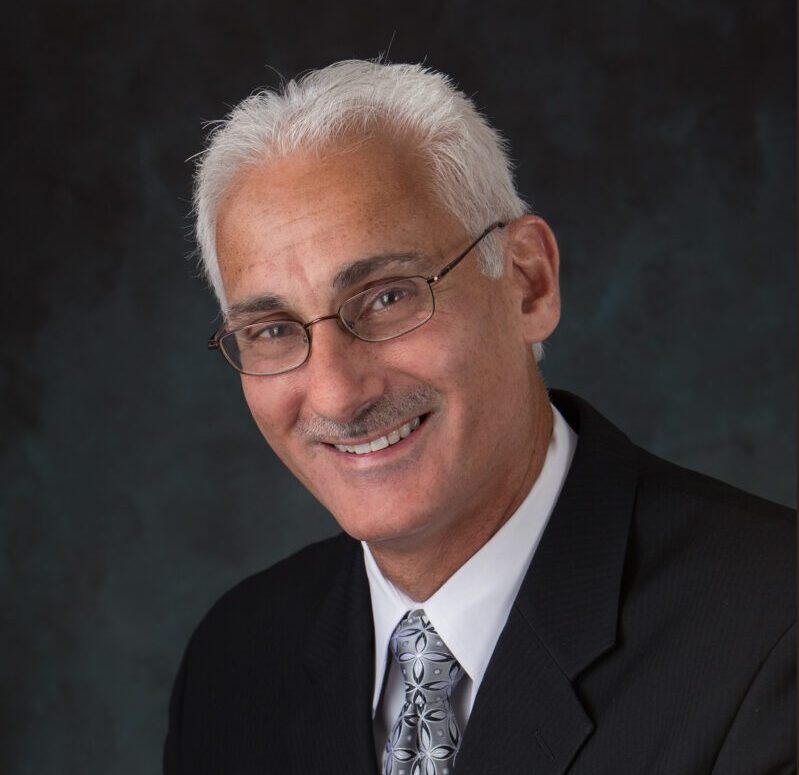
Dr. Robert B. Kerstein is a nationally recognized prosthodontist, educator, researcher, and thought leader with more than 40 years of experience advancing the understanding of occlusion, temporomandibular disorders, and restorative dentistry. He earned his D.M.D. in 1983 and his Prosthodontic certificate in 1985 from Tufts University School of Dental Medicine, where he later served for 13 years as a clinical professor of Fixed and Removable Prosthodontics. Throughout his career, Dr. Kerstein has championed a more objective, evidence-based approach to evaluating bite function and understanding its impact on restorative outcomes, patient comfort, and long-term oral health. A pioneer in digital occlusal analysis, he has studied every generation of T-Scan technology since 1984 and has become one of the field’s leading authorities on its clinical applications. His scholarship includes extensive contributions to peer-reviewed dental journals as well as nine edited research volumes exploring occlusion, bite analysis, and T-Scan applications. As an educator and clinician, Dr. Kerstein has helped advance the use of measurable occlusal data to inform treatment decisions rather than relying solely on traditional subjective assessment methods. His work continues to shape how clinicians approach occlusion, with the goal of improving treatment predictability, patient comfort, and the longevity of restorative care.
Company: RBK Consulting
We are thrilled to have you join us today, welcome to ValiantCEO Magazine’s exclusive interview! Let’s start off with a little introduction. Tell our readers a bit about yourself and your company.
Dr. Robert Kerstein: Thank you for inviting me to ValiantCEO. My personal journey to my business really began when I attended Tufts University School of Dental Medicine, where I graduated in 1983 and later specialized in Prosthodontics, also at Tufts Dental.
It was during my prosthodontic specialty program in 1984 that I was introduced to the original T-Scan I bite computer technology, which changed my life instantly and forever. The T-Scan I was the first computerized technology developed specifically for diagnosing and treating dental patients’ bites. At first, I was unsure of what it did or how to use its’ bite force data with patients, but it was clearly a significant advance over traditional analog paper-and-ink bite analysis.
Because the traditional paper-and-ink method provides only a subjective assessment of the bite, dentists have difficulty accurately identifying how a restoration affects a patient’s occlusion. This can lead to post-operative bite complications after fillings or crowns, or Invisalign.
I began using the T-Scan on dental students and my prosthodontic patients at Tufts. There I discovered new, never-before-seen details about bite timing and force, which led me to study the technology further on my own. My earliest research revealed many solutions to common patient bite problems, such as TMJ disorder. The amazing thing was that none of these bite time and force discoveries were detectable until I applied the T-Scan I.
Over time, the manufacturer developed new T-Scan iterations (we’re now using the T-Scan 10 Novus), and I continued publishing more and more computer-based bite science. I became well known throughout dental medicine for solving many common, problematic bite conditions. This led to more invitations to lecture and teach dentists around the world about the T-Scan technology’s many benefits for patients and dental practices, and that ultimately led me to create my own business, RBK Consulting.
Can you share a time when your business faced a significant challenge? How did you navigate through it?
Dr. Robert Kerstein: Since I began studying, using, and teaching dentists about the T-Scan through my consulting business, I have faced a persistent challenge: the dental community’s resistance to adopting computerized bite analysis, and its resistance to recognize the T-Scan as the significant advance it represents over the outdated, non-digital, and highly subjective paper-and-ink method of bite diagnosis and adjustment.
As the primary T-Scan researcher and the longest-standing T-Scan author worldwide, I have faced intellectual and personal criticism in many forms, even though my primary goal has always been to inform dentistry about the patient-centered merits of using this digital technology to precisely treat the human bite.
A significant area of resistance came from the most prominent and well-respected peer-reviewed dental journals. They actively rejected my computer-guided bite treatment studies, even though I followed each journal’s publication guidelines. These journals repeatedly rejected my research, often without giving me a chance to rewrite sections or address the reviewers’ criticisms. When I submitted a rejected study to another journal, that journal often rejected the findings too, even after I had incorporated sound answers to the first journal’s criticisms. Almost every paper I wrote from 1989 to 2006 was rejected at least once.
That same academic resistance is still present today. A recent landmark study of TMD patients who underwent computer-guided, high-precision bite treatment found that the subjects’ salivary cortisol levels dropped by 50% (Journal of Prosthetic Dentistry, 2026; 136: 187–195). The manuscript went through eight rounds of peer-review revisions before it was accepted.
You can view the full study here: https://www.thejpd.org/article/S0022-3913(26)00145-9/fulltext
But the story doesn’t end there. After the study was accepted and published, a group of academic detractors I’ve encountered before while publishing T-Scan science wrote a letter to the journal criticizing it for publishing the cortisol study. The letter continues that detractor groups’ long-running effort to promote the view that dental occlusion is unrelated to TMD symptoms.
Instead of criticizing, I wish these detractors would ask about the study’s remarkable outcome. The study made highly significant discoveries about human stress reduction, especially since 100% of the treated subjects showed a significant reduction in cortisol. By comparison, you can’t take a pill, eat a “cortisol-reducing diet,” or take a yoga class to drop your salivary cortisol by 50%.
How has a failure or apparent failure set you up for later success?
Dr. Robert Kerstein: It wasn’t really “failure” that shaped my later success. It was the constant resistance to replacing the outdated, highly inaccurate paper-and-ink bite method that harms patients’ well-being, with the highly accurate and objective T-Scan digital bite method that greatly improves patient well-being, that drove my persistence.
Over the past 42 years, I have had to keep “trying,” “adapting,” and “being resilient” to overcome the constant academic naysaying to help dental medicine see that computerized bite analysis and high-precision, computer-guided bite treatment are major clinical advances in treating dental patients.
I continually pushed back against that resistance and, in doing so, created a niche as the world’s leading expert in this modern, computer-era approach to helping dental patients live better lives.
How do you build a resilient team? What qualities do you look for in your team members?
Dr. Robert Kerstein: I actually don’t have a “team” per se. I’m a one-man shop that recruits interested dentists who have struggled with complications from traditional bite procedures, which hurt their practice efficiency and affected their patients. These are dentists who finally realized that the outdated paper-and ink bite method was keeping them from achieving consistent bite treatment success.
Once dentists see how effective computerized bite analysis is with patients, they naturally become advocates for modern bite care within their own professional spheres of influence. My recruits then push back against the academic resistance through their social media posts, in discussion forums, and at the dental conferences they attend.
Knowing that they’re practicing in a much more beneficial way for their patients gives them their own motivation to quiet the naysayers they encounter professionally.
How do you maintain your personal resilience during tough times?
Dr. Robert Kerstein: I’ve been able to maintain my resilience and persistence because of how much the technology helps patients with chronic bite problems and chronic TMD pain.
Computer-guided, high-precision bite treatment greatly improves patients’ quality of life. Seeing them go from living in pain and ongoing depression, frustrated that splints and nightguards hadn’t helped, to reengaging with their lives and their families is incredibly rewarding.
Patients have been able to stop taking medication, discontinue ongoing management therapies such as repeated Botox injections, and live without chronic pain. Those results constantly motivate me to educate more dentists who are willing to listen and adopt the technology.
What strategies do you use to manage stress and maintain focus during a crisis?
Dr. Robert Kerstein: My strategy is to keep my focus on the patients. When the naysaying and academic resistance get frustrating, I remind myself how much computer-guided, high-precision bite treatment improves life for patients with chronic bite problems and chronic TMD pain. Then I put that stress into the things I can control: publishing new studies with my international research collaborators and training more dentists who are willing to listen and adopt the technology.
How do you communicate with your team during a crisis?
Dr. Robert Kerstein: I primarily work alone, but once I personally train doctors at their own practices in proper computerized bite therapy, I am always available to help them with their patients. If they have a challenging case or a clinical difficulty arises, I help them over Zoom. They share their patient data with me, and I guide them in addressing what is causing their patient’s difficulties.
This continuous one-on-one mentoring is essential to developing each dentist’s knowledge and skill set. It allows them to grow as digital bite diagnosticians who can better handle more challenging situations, such as a difficult patient or a case where they’re struggling to get an optimal bite treatment outcome.
What advice would you give to other CEOs on building resilience in their organizations?
Dr. Robert Kerstein: My advice: try to stay resilient and passionate no matter what you face.
Four decades ago, I discovered the T-Scan I technology. I continued to work with it so I could understand it more completely and develop dental procedures that helped patients live with significantly less chronic pain that quickly improved their bite comfort. All of my published computerized bite protocols were developed, tested, and repeatedly validated despite dentistry’s resistance to moving away from the inaccurate, analog paper-and-ink method, which can harm patients.
I would advise other CEOs to “keep pushing” against the naysaying. In my case, I have been advocating for consumer awareness of the T-Scan’s benefits so that fewer patients settle for outdated, guesswork-based paper-and-ink bite analysis. That approach often leaves patients in pain, going from dental office to dental office looking for answers they won’t find unless they see a dentist who knows how to use the T-Scan.
How do you prepare your business for potential future crises?
Dr. Robert Kerstein: I am constantly working to replicate my early research from the 1980s and 1990s with new studies that further validate the patient benefits of computerized bite analysis that I have observed for decades.
Partnering with my international research collaborators to publish new studies on the patient well-being benefits of digital occlusion technology is an ongoing effort to advance dentistry, even as many in the profession continue to doubt that bite technology is necessary.
What’s the most important lesson you’ve learned about leadership in times of crisis?
Dr. Robert Kerstein: I’d have to say that no matter how many frustrating responses I’ve received or how much naysaying has taken place, believing that I’m doing the right thing, with my primary goal being to lead my trainee doctors in helping their patients live better lives, has been incredibly rewarding.
This has been especially true while many in my profession still doubt me and still question whether the T-Scan 10 should become the standard of care in modern bite analysis and treatment.

