



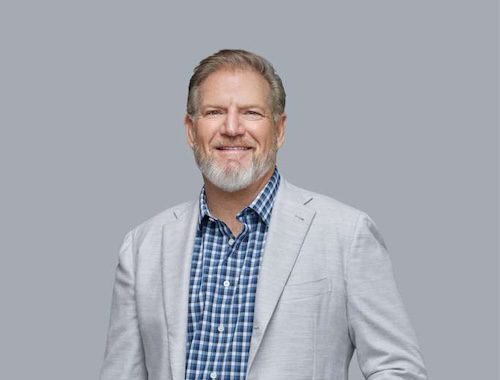
Ken Goodrich is founder, chairman and CEO of Generator Partners, a national backup power platform.
He has spent more than 40 years in the skilled trades, beginning at age 10 holding the flashlight for his father, Duncan Goodrich, an air conditioning contractor in Las Vegas, while his father worked on a customer’s air conditioner. By 16 he was running service calls on his own, and at 25 he bought the family business, his first acquisition.
Over his career he has built and successfully sold eight businesses and participated in more than 200 acquisitions across heating and air conditioning, plumbing, electrical and backup power. He acquired Goettl Air Conditioning & Plumbing in 2013, when the company was generating $11 million in annual sales and losing $3 million a year, led its turnaround, and sold it in 2021 for more than half a billion dollars. Today Generator Partners operates Generac dealerships including Suncoast Power Solutions in Tampa Bay, GenPro in Houston and Never Dark Carolinas. He has also served as a board member, advisor and investor in A1 Garage Door Service since 2019.
Ken co-authors the E-Myth series for the trades with Michael E. Gerber, including The E-Myth HVAC Contractor and The E-Myth Plumber, with The E-Myth Electrician forthcoming.
A champion for the trades, Ken continues to give back by serving on some of the industry’s most recognized boards and speaking at the industry’s most popular conferences and events. He keynoted ServiceTitan Pantheon in Orlando in October 2026 and speaks at Service Nation Alliance Day in Las Vegas. Learn more at kengoodrich.com.
Company: Generator Partners
We are thrilled to have you join us today, welcome to ValiantCEO Magazine’s exclusive interview! Let’s start off with a little introduction. Tell our readers a bit about yourself and your company.
Ken Goodrich: I started as a 10 year old boy holding the flashlight for my dad while he worked on an air conditioner for a customer in Las Vegas. His name was Duncan Goodrich. By the time I had my driver’s license at 16 I was running service calls on my own. When I was 25 my father passed away and I bought the family business from my mother: some tools, a beat up van and a list of 115 customers. That was my first acquisition.
Over the last four decades I have built and successfully sold eight businesses and participated in more than 200 acquisitions. The one most people know is Goettl Air Conditioning and Plumbing, which we bought in 2013 doing eleven million in sales and losing three million a year, and sold in 2021 for over half a billion dollars. Today I am founder, chairman and CEO of Generator Partners, and I co-author the E-Myth series for the trades with Michael E. Gerber.
What was the moment you realized that complexity was holding your company back, and how did that shift your approach to product, operations, or strategy?
Ken Goodrich: About two and a half years into owning my father’s business, I came in one morning and a man in a disheveled suit was standing out front. He said he was from the IRS and wanted to talk about my back payroll taxes. I was so green I said, what are payroll taxes. He said, well son, we are going to show you exactly what payroll taxes are.
A week later he came back with agents and tow trucks. They took three of our vans, garnished my business and personal accounts, and I bounced payroll to 30 employees. Almost everyone quit that afternoon.
The part that still matters is not the tax bill. It is that the company came apart in an afternoon. There was nothing holding it together except me, and the moment I was in trouble there was nothing left. I had not built a business. I had built a job with my name on the truck. Every decision in that company existed in exactly one place, which was my head, and I did not know it until the trucks were gone.
Can you share one specific example of something you simplified (a product feature, process, pricing model, or customer experience) that delivered outsized results?
Ken Goodrich: At Goettl, we threw out the way the whole industry markets itself and replaced it with one story.
Every competitor in the market was shouting about a $49.95 service call. We stopped talking about price entirely. Instead, I told people the truth: that I was a 10 year old boy holding a flashlight for my father, that he told me when a person needs help you go right away, not when it is convenient for you, and that he believed the Goettl machine was the finest one made. So I bought the company. Goettl is hard to spell, but we will respond right away and do the right thing always.
As soon as that went out, people called and said I held the flashlight for my dad too. It stopped being I am going to call Goettl and became I have a friend in the air conditioning business named Ken. We became the most expensive company in town, by about three times, and kept growing.
The operational version of the same idea was the price book. Pricing that lives in the owner’s head means every quote is a judgment call and no two technicians charge the same way for the same job. Putting it in writing took that decision off my desk permanently and protected the margin on the days I was not watching, which are the days margin tends to disappear.
How do you systematically identify and eliminate complexity across the organization without oversimplifying in ways that hurt quality or value?
Ken Goodrich: I approach every business the same way. There are seven centers of management attention that must be in place: leadership, management, money, marketing, lead generation, lead conversion and client fulfillment. I build the fundamental processes for each one. That framework is what keeps you honest, because it shows you whether you are removing complexity or just removing work that still must happen somewhere.
The practical method is one process a week. Nobody in this trade has a free week to write procedures, so do not take a week. And then test it: hand it to someone who has never done that job and see whether they can follow it. If they cannot, it is not finished. That is information, not failure.
That test is the guardrail against cutting too far. A system that a new person can execute at the same quality as your best person is simple enough. One they cannot is not simple, it is just thin.
What’s the biggest resistance you’ve faced when pushing for radical simplicity, and how did you overcome it?
Ken Goodrich: Two kinds, and they come from different places.
The first is time. The objection I hear most is that there is no room to stop and build systems, and it is a fair objection. The answer is not to argue with it. It is to make the increment small enough that the objection stops being true.
The second is harder, because it comes from your good people. Salespeople in particular resist a sales system, because they believe their own judgment is the value they bring. My response was always the same. Your title is not price man. Your title is not give it away man. Your title is salesman, and that means executing proven techniques that make someone comfortable with the decision in front of them. Sales is a system, the same as everything else. Once we understood that, we leaned all the way in.
For other CEOs who struggle with feature bloat, process overload, or confusing customer journeys, what’s the most important principle or first step you would recommend they take?
Ken Goodrich: Ask yourself one question and write down the honest answer. If you left tomorrow for two weeks with no phone, what would stop?
Most owners can answer instantly, and the list is long. Pricing on anything unusual. The unhappy customer. The schedule when a job runs over. The new technician’s training. That list is not proof you are busy. It is an inventory of the systems your company does not have.
Take the first item, the one that interrupts you most, and build the system that removes it. Do that twenty times over the next two years and you will own a different company. You will still be the best operator in the building. That never goes away. The difference is that your company will no longer need you to prove it every day.
The work is not the work. The system is the work. Until you learn to systemize your business, all you really have is a job working for a lunatic.

