



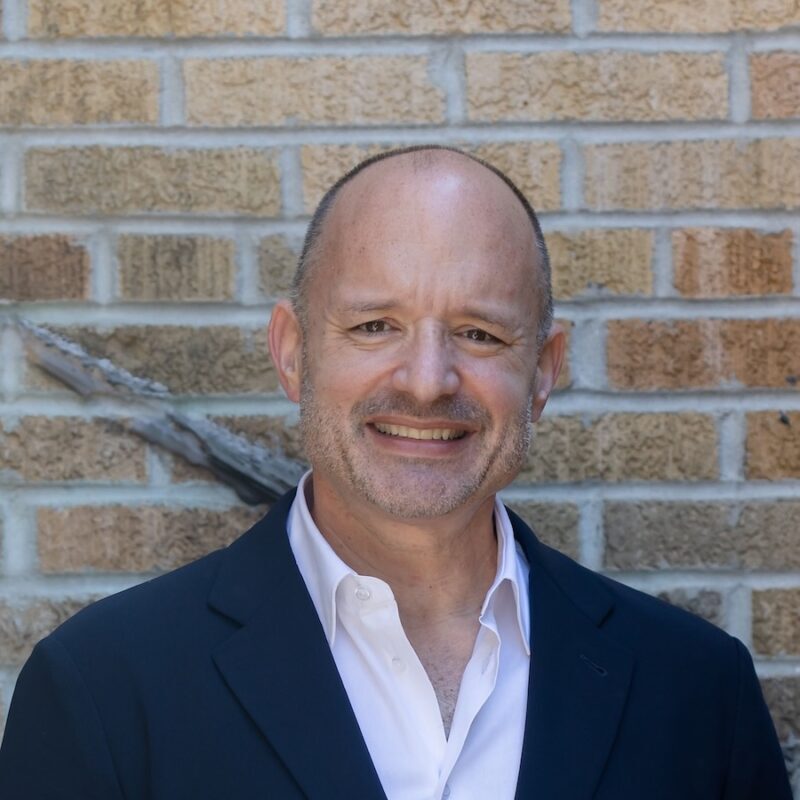
Jonathan is an author and negotiation instructor with the Black Swan Group, who’s spent his career at the intersection of strategy, negotiation, and leadership development.
Having worked extensively with executives facing high-stakes decisions, he’s gathered the insights and Black Swan Group techniques developed over the years in his upcoming book: “Fight Less Win More”. Released in January 2026, the book builds on the lessons of Chris Voss’ “Never Split the Difference”, bringing empathy-based negotiation skills to leaders and professionals at every level.
Beyond negotiation, he’s an Expert EOS Implementer® who has coached more than 150 high-growth companies (through 1,500+ sessions), helping them sharpen their strategy, strengthen their execution, and align their leadership teams. His work has allowed him to combine his experience as an entrepreneur with his gifts for scaling businesses and people.
When it comes to public life, he’s had the privilege of serving as a Delegate with the U.S. Department of State’s Global Entrepreneurship Program, completing the FBI Citizens Academy in New York, and joining JCOC 84 with the Department of Defense. Today, he also sits on the advisory board of the International Spy Museum in Washington, D.C.
Jonathan is driven by finding ways to improve on a daily basis and encouraging others to do the same. Negotiation and leadership skills aren’t just for the boardroom, they’re for every-day life.
Company: ChiefOptimizer, LLC
We are thrilled to have you join us today, welcome to ValiantCEO Magazine’s exclusive interview! Let’s start off with a little introduction. Tell our readers a bit about yourself and your company.
Jonathan B. Smith: Absolutely, and thank you for having me. I’m a business strategist, EOS Implementer™, negotiation trainer, and co-author of “Fight Less, Win More.” For the last several years, I’ve had the opportunity to work with more than 150 high-growth entrepreneurial companies across 1,500-plus sessions, helping leadership teams get clearer on strategy, stronger in execution, and better in the way they lead people and results. I also train with The Black Swan Group, the negotiation firm founded by Chris Voss, where my focus is helping leaders use Tactical Empathy to navigate the conversations that matter most.
At the center of my work is a simple belief: most business problems are people problems before they become operational or financial problems. Misalignment, avoidance, poor communication, and unresolved conflict are expensive. My goal is to help entrepreneurial leaders build healthier, higher-performing organizations by combining practical operating discipline with better conversations. In other words, we help teams gain traction, improve accountability, and make sure the way they communicate is actually supporting the business they’re trying to build.
What excites me most is that this work is incredibly practical. Whether I’m in a leadership offsite, coaching an executive team, or teaching negotiation skills, the goal is the same: help people fight less, align faster, and win more, without losing trust along the way.
What was the pivotal realization that made you shift from trying to hire superstars to focusing on turning average performers into exceptional ones?
Jonathan B. Smith: The pivotal realization for me was that hiring only proven stars is not a sustainable growth strategy. Stars are hard to find, expensive, and usually already taken. What shifted my thinking was the EOS framework that helps leaders see people more clearly through four categories.
Stars: people who share your core values and perform at a high level. In EOS terms, they are the right person in the right seat.
Puppies: people who clearly fit your culture and values but still need training, coaching, and time to grow into the role. EOS makes the point that if you hire a puppy, you need to be willing to invest 12 to 18 months in their development.
Rats: people who do not share your core values and are also poor performers. They are the wrong person in the wrong seat, and most leaders know they cannot keep them around for long.
Terrorists: people who can perform and hit the numbers but do not align with your core values. They may look productive on paper, but they are still a cultural misfit, and over time they can push your true stars out of the organization.
What made me shift was realizing that too many leaders spend all their energy chasing stars, when the real opportunity is often in identifying puppies. If someone is the right person culturally, and you are willing to invest in them, you can often help them become exceptional over time. That is a much more scalable leadership model than waiting around for unicorn hires.
Can you share one specific system, process, or habit you introduced that had the biggest impact on elevating your team’s performance and engagement?
Jonathan B. Smith: For me, the biggest shift came from making Delegate and Elevate® a real discipline. The tool is straightforward. You list everything you do, sort it by what you love and are great at versus what drains you or sits outside your strengths, and then start handing off the lower-quadrant work over time. The why behind it is what matters most. Leaders get stuck when they keep doing work they have outgrown. Teams get stronger when ownership moves to the people who can truly own it. That one habit helped us create more clarity, more trust, and better performance across the board.
How do you identify and unlock hidden potential in team members that others might overlook or undervalue?
Jonathan B. Smith: I try to look for hidden potential in two places: what the team already admires in a person, and what that person cannot yet see about themselves. That is why I like combining the EOS Team Health One Thing Exercise with the Johari Window.
The EOS Team Health One Thing Exercise is powerful because it creates a structured conversation where each team member hears two things from their peers: their most admirable trait, and the one thing others want them to start or stop doing for the good of the team. That process tends to surface strengths that may have been under-recognized, while also giving people honest, constructive feedback they can act on.
The Johari Window gives me the lens for what to do with that feedback. It frames development through four areas: the open area, which is known to self and others; the blind spot, which others see but the individual does not; the hidden area, which the individual knows but has not shared; and the unknown area, which is undiscovered by both.
So in practice, I use the EOS Team Health One Thing Exercise to surface the blind spot. A team member may be seen by everyone else as calm under pressure, highly trustworthy, or naturally influential, but they may not fully recognize that strength themselves. At the same time, the exercise can reveal a habit that is limiting them, which might be the very thing keeping their potential hidden. Then I use the Johari Window to help them process what belongs in each quadrant and move more of that value into the open.
What I have found is that people are often undervalued not because they lack ability, but because their best qualities are sitting in a blind spot or an unknown area. When you create a high-trust environment where peers can name admirable traits, give specific start-or-stop feedback, and where the individual can reflect without defensiveness, you help people see themselves more clearly. That is often the moment hidden potential becomes usable potential.
What’s the toughest challenge you’ve faced when trying to raise the performance bar across an entire team, and how did you overcome resistance or skepticism?
Jonathan B. Smith: The toughest challenge in raising the performance bar across a team is getting people to truly listen. Not just wait their turn to talk. Not just defend their position. Actually listen.
That is why I focus so much on the 5 Levels of Listening. In my experience, most performance issues are not really effort issues first. They are listening issues first. People miss meaning, miss emotion, miss context, and then wonder why alignment breaks down.
Here is how I think about the five levels:
Level 1: Listening intermittently. You are physically present, but mentally somewhere else. You are half listening and half inside your own head.
Level 2: Listening to hijack. You are listening just enough to respond, interrupt, correct, or make your own point.
Level 3: Listening for internal logic. You are trying to understand how the other person is thinking and what reasoning led them to their conclusion.
Level 4: Listening for emotion attached to the logic. You are paying attention not just to what they think, but to what they feel and what is driving that emotion.
Level 5: Empathetic listening. You are listening for the deeper context that is shaping their emotions, thinking, and worldview. That is where real understanding starts.
The truth is, Levels 1 and 2 damage teams. They create misunderstanding, defensiveness, and shallow communication. Level 3 is where good listening really begins. Level 4 is where trust starts to deepen. Level 5 is where breakthrough conversations happen. The book makes the point clearly: Levels 3 and 4 are strong everyday standards, and Level 5 becomes essential when the conversation is sensitive, emotional, or high stakes.
So when I am trying to overcome resistance or skepticism on a team, I do not start by pushing harder. I start by raising the level of listening. I encourage people to operate at Levels 3 through 5. At Level 3, you understand the logic. At Level 4, you understand the emotion. At Level 5, you understand the context. That is where people stop talking past each other and start actually hearing each other.
For me, that has been one of the biggest performance unlocks on a team. Better listening creates better understanding. Better understanding creates better trust. And better trust creates better execution.
For other CEOs struggling with mediocre output despite decent people, what’s the one mindset shift or practical first step you would recommend they take immediately?
Jonathan B. Smith: The biggest mindset shift is to stop thinking you need a complete overhaul and realize that one great people move can change the trajectory of the whole team. When you have decent people but mediocre output, there is usually one seat, one role, or one tough decision you have been avoiding. My advice is to find the point of greatest frustration, look at the structure first, then make the one people move that will create the most relief and momentum. Sometimes that means a key hire. Sometimes it means reshuffling roles. Sometimes it means having the honest conversation you have been putting off. But the key is to stop waiting for perfect clarity and make the move.

