



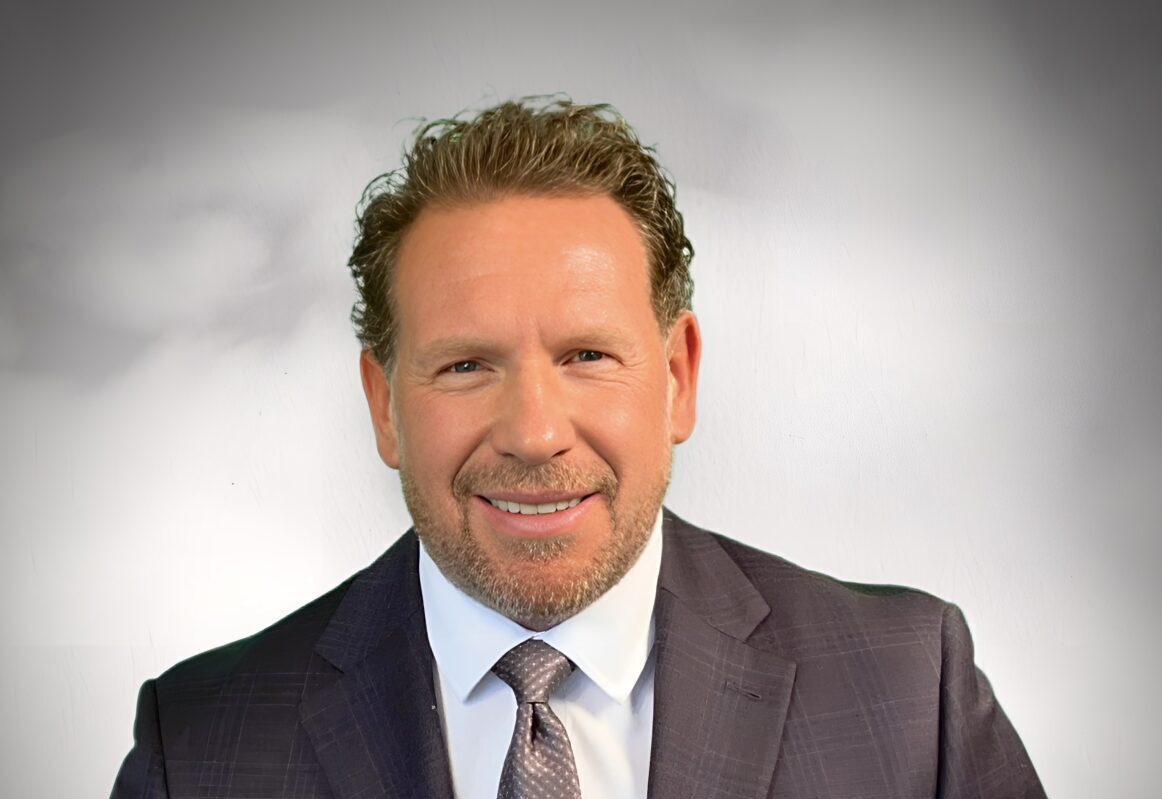
Jon Law
Founder & Director, Sync7
CEO, Verdicus, Inc.
Author, Corporate Overdose
Over thirty years ago, Jon pioneered the industry sector and founded and operated the nation’s largest medical licensing company which served many of the most respected healthcare organizations in the United States, and helped several underserved communities gain access to adequate care. During this time he was also a hired consultant for a number of medical entities for his expertise in compliance.
For six years Jon owned an events company in both New Zealand and the United States during which time he was also the head rugby coach at the University of Utah, tallying an 85% winning record.
Presently, he is a keynote speaker and runs Sync7, a facilitation, training, and consulting firm focused on team performance optimization and leadership development, and is the CEO of the emerging Verdicus, Inc., with properties in digital commerce.
Over the past 25 years, Jon has served as a Board of Directors member, Corporate Advisor, President of civic organizations and sports commissions, and entrepreneur. Jon’s organizations have outperformed their resources and his journey reads like an adventure novel.
Jon is a devoted husband and father with hobbies that include: travel, fitness, motorcycling, mountain biking, cycling, rock climbing, mountaineering, music, nature (especially extreme weather), the animal kingdom, motivational theory, relationship philosophy, basic juggling, and a little light physics.
Company: Sync7
We are thrilled to have you join us today, welcome to ValiantCEO Magazine’s exclusive interview! Let’s start off with a little introduction. Tell our readers a bit about yourself and your company.
Jon Law: My name is Jon Law, and I am honored to be here today. Leadership and team excellence have been central to my personal and professional journey. I’ve delivered keynotes on leadership, team optimization, motivation, relationship development, communication, and career development.
Professionally, I’m the founder of Sync7, a company dedicated to organizational development, offering tailored programs to enhance individual and team effectiveness, clarity, and trust. At Sync7, we’ve implemented the Trivium Leadership Model, which has helped us, and our clients, build a thriving culture, reduce employee turnover, and significantly enhance both revenue and employee satisfaction.
My passion lies in creating systems that don’t just succeed today but are built to stand the test of time. Whether I’m working with my team or sharing ideas on leadership, my goal is to spark meaningful, sustainable progress.
How does your company integrate purpose and impact into its overall business strategy?
Jon Law: I began implementing a meritocratic compensation model in the late 90s because an authority/compliance or command-and-control model felt intuitively limited. In our pay model, we did not give employees raises. They gave themselves raises. They decided what they were worth and what they were willing to do, and their consistent production and contributions determined their compensation. Each employee knew precisely where they were operating and what they needed to do to get to the next level. They had access to candid but supportive feedback and targeted training and development to equip them with the tools needed to climb to their desired compensation range.
This management and leadership philosophy was incubated in a company that handled medical licensing for physicians and healthcare companies. As a high-touch service-based company, it was important to have an equilibrium between our inside reality and our outside perception. At its core, our services allowed trained medical professionals the freedom to practice medicine with minimized bureaucratic restrictions so that they may ease human pain and suffering. Internally, we believed that a cessation of growth, stunted authenticity, and a muted voice were all forms of pain and suffering, so we served our people with the same enthusiasm as we served our clients.
Can you share an example of how your business has successfully balanced profitability with social responsibility or sustainability?
Jon Law: We became experts in the regulatory protocols of every jurisdiction in the United States so that healthcare providers and medical organizations could focus on more important aspects of their mission, like caring for humans. Regulation and compliance are critically important parts of the system. These laws and rules keep us all safe. As experts in a vital section of the system, we expected to be paid well for executing effectively on our expertise.
We were the first to create an outsourced solution and pioneered this sector of the industry. We were a BPO in this field long before BPOs were leveraged for complex business processes. We had to clear the trees, grade the land, and build the road before we were even able to travel the road of profitability. As the first organization through the gates, we had no model to follow and had numerous barriers to overcome, such as an unwillingness from state medical boards to communicate with us. We had to break that wall down. And every entity that has followed us has benefited from the effort. For example, some of this led to breakthroughs that allowed telemedicine to spring into existence. Somewhere in America tonight, a worried mother will hold her suffering baby, and she’ll be able to have a video call with a provider who will guide her, console her, and begin the healing process for the child. We didn’t create that solution, but we contributed to the removal of obstacles so that the solution could live.
While I’m no longer in the medical compliance space, my time there afforded me the wonderful opportunity to exchange perceptions with physicians from all over the world, nurses, CEOs, COOs, government officials, and hundreds of my own employees. This all contributed to the development of the Trivium Leadership Model that we use at Sync7 to improve the lives and prosperity of people in a wide array of industries and different walks of life.
What role does philanthropy or community involvement play in your company’s mission, and why is it important to you as a leader?
Jon Law: Like most others, I’m excited about emerging technologies. I’m eagerly integrating some of them into two companies I’m building. As thrilling as it is, I’m avoiding overindulgence. Why? There are just some things AI cannot generate, like the wholesome energy of a Keith Urban concert, the mesmerizing wonder in a nighttime summer storm, the satisfying euphoria in the body after a hard workout, or the rush of new love and the serenity of old love. The point is, while some aspects of tech dev dehumanize, people matter. People are cool. People make Earth a home.
We don’t live or work in a vacuum, so caring for each other is both necessary and rewarding. Over the years, finding ways to take care of people has given depth to our organizations that cannot be purchased through a singular pursuit of revenue. I’ll share just a few of those stories:
One employee with a large family had developed significant dental pain. His commitment to his family put his children’s needs first and he didn’t have enough money to take care of his pain, so we quietly paid his dental bills and gave him a car to drive while he worked his way into greater prosperity with us.
Another employee had an alcoholic spouse whose addiction had advanced to a life-threatening level and could not be left alone. We invited the spouse to join us at the office daily and gave her contractor jobs to help her feel valuable and on purpose. She recovered and their marriage is strong and vibrant.
An employee was in an abusive marriage but was financially trapped. There were no prospects for improvement, so we helped her pay for the divorce and paid the deposit and living expenses for a few months to help her get established in a new home. We also handled birthday and Christmas gifts for her children for the year.
How do you ensure that purpose-driven initiatives resonate with both your employees and your customers?
Jon Law: We clarify the difference between values and principles. With principles governing and values guiding, our people develop the psychological safety to be authentic. We don’t minimize the expression of negative feelings; we run toward differences because that’s where the learning is. With the freedom to communicate clearly, anchored by principles that are self-evident and time-tested, we can get beyond positions and focus on interests. Sometimes, those interests are characterized by differing values, and that’s perfectly okay. Different departments may have different current needs or wants, and since values can change from time to time, we always have principles as our backstop, our final arbiter. This is different than compromise. This culture surfaces ideas rooted in common interest which is the resonating mechanism that connects us individually to something bigger than ourselves.
What advice would you give to other leaders looking to embed purpose and impact into their organizations?
Jon Law: Recognize that most leadership models still in use today came about over fifty years ago. The notion that we can cling to a single leadership style and expect people to conform to us is an outdated mindset that resembles more management than leadership. Management and leadership are not mutually exclusive; they are symbiotic cogs in the machine. Management is concerned with complexity (the how-to). Leadership is concerned with change (what to do).
A leader can be wrong, a leader cannot be unclear. In today’s rapidly changing business world, one of the most valuable assets a leader can develop is visionary leadership. This is where you not only paint a picture of where the company is going and how great it will be but also how that vision impacts each of the people expected to get it there. If we are to follow you into your vision, we must have assurance that your vision is a place worth going to. That assurance does not develop if you are unclear.
Extrinsic motivation was sufficient in the post-WWII workplace. Almost all workplace engagement studies are telling the same story: in the 21st century, people want both extrinsic and intrinsic meaning in their work. This is more than Kombucha bars and ping-pong tables. As business leaders, we are certainly capable of driving high production and meeting our people at their level of need.