
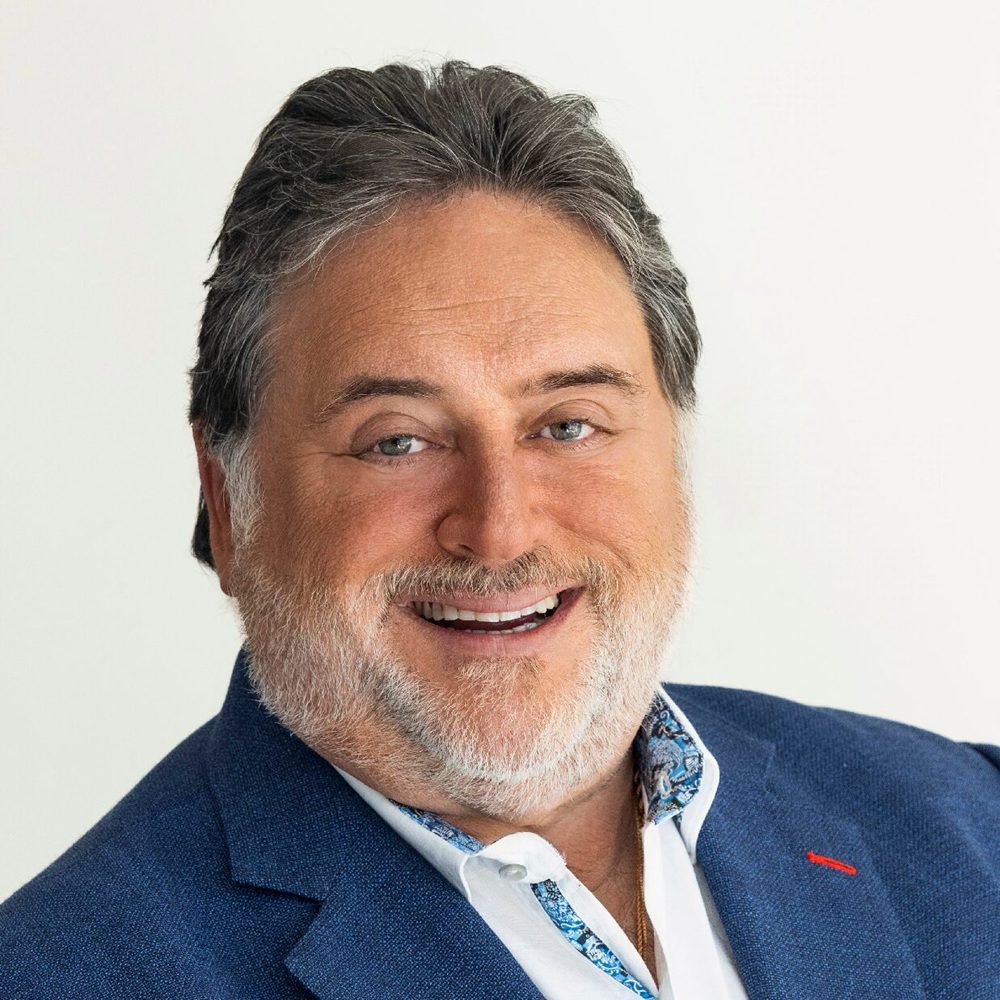
Joe Curcillo has spent his career working across disciplines that rarely speak the same language. Trained in engineering and construction, he went on to spend 41 years as a trial lawyer, translating complex evidence and expert testimony into language juries could understand. He also spent more than 20 years as CEO of his law firm, worked in government and executive leadership, and built a parallel career as a professional entertainer and mentalist.
Those experiences taught him something that became central to his work: organizations often have the expertise they need, but struggle to connect it.
Today, Curcillo is a keynote speaker, strategic advisor, and author of *The Generalist’s Advantage* and *Hold the Horizon*. His work focuses on the Integration Gap™, the disconnect between what people know and what reaches the decisions their organizations make.
Drawing on decades of experience across professions, he helps leaders see beyond individual specialties, connect different perspectives, and make better decisions when the answers aren’t obvious.
Company: Generalist’s Advantage Strategies, LTD
We are thrilled to have you join us today, welcome to ValiantCEO Magazine’s exclusive interview! Let’s start off with a little introduction. Tell our readers a bit about yourself and your company.
Joe Curcillo: I’m Joe Curcillo, a keynote speaker, strategic advisor, and author of The Generalist’s Advantage and Hold the Horizon. My work helps leaders connect the knowledge and experience already inside their organizations so they can make better decisions.
I came to this work through an unusual collection of careers. I started in engineering and construction, spent 41 years as a trial lawyer working with juries, and ran my own law firm for more than 20 years. I’ve also worked in government and executive leadership and spent nearly five decades performing as a magician and mentalist.
Those experiences may look unrelated, but each taught me something about how people think, communicate, and solve problems. Engineering taught me to understand how systems fit together. As a litigator, I spent decades translating complicated evidence and expert testimony into language juries could understand. Government and business brought me into rooms where people from different professions had to reach decisions together, often without understanding one another’s language.
Working with juries and audiences also taught me to listen for what people weren’t saying. Someone may recognize a problem but hesitate to speak, or assume everyone else already knows what they know. Recognizing those moments can be just as important as understanding the information being presented.
Over time, I became particularly good at moving between professional worlds, understanding what each expert was saying, and helping everyone else understand it, too. That experience became the foundation of The Generalist’s Advantage™.
Today, I call the problem I help leaders address the Integration Gap™. It’s the distance between what people in an organization already know and what actually reaches the decision. A company can have excellent people in every department and still struggle because their knowledge never comes together.
My speaking and advisory work helps leaders spot where those connections are missing and better use the expertise they already have.
What was the moment you realized that complexity was holding your company back, and how did that shift your approach to product, operations, or strategy?
Joe Curcillo: I don’t think there was one defining moment. I started recognizing the problem long before I ran my law firm or worked in government. I saw it in construction, during a teenage job in a department store, and later in courtrooms while working with expert witnesses. Different settings, but the same problem kept showing up.
Everyone understood their own work, but they didn’t necessarily understand how it affected someone else’s. People could sit through the same meeting, agree on what needed to happen, and leave with completely different ideas about what they had just agreed to.
As CEO of my law firm, I had to deal with the consequences when those misunderstandings affected the work. My years as a litigator had already taught me that understanding complicated information and communicating it effectively were two very different skills. I began applying that same lesson to business and leadership decisions.
Instead of immediately looking for another procedure or management solution, I started asking more questions. What are we actually trying to accomplish? What does each person know that the others don’t? Are we solving the same problem, or is everybody working on a different piece?
That changed how I approached operations and strategy. I became less concerned with simplifying individual tasks and more interested in how those tasks fit together. Often, unnecessary complexity came from people creating workarounds for misunderstandings nobody stopped to address.
Sometimes, making an organization simpler starts with making sure everyone understands the problem they’re supposed to solve. When things fall between the cracks and the handoffs between departments, I called out the integration gap. The simplicity of improving the conversation and dialogue between experts does not break Silos, it makes them work effectively.
Can you share one specific example of something you simplified (a product feature, process, pricing model, or customer experience) that delivered outsized results?
Joe Curcillo: Years ago, as a fraud prosecutor, I sat in multidisciplinary meetings with people from accounting, law, medicine, and the welfare system. Everyone was an expert in their own field, but getting them to understand one another was another matter.
Each profession had its own vocabulary, acronyms, and assumptions. People explained things that made perfect sense to them and their colleagues, while others around the table struggled to follow. We had plenty of expertise in the room, but we weren’t getting the full benefit.
I started asking people to drop the acronyms and the “impressive language” and explain things in ordinary terms. What did they mean? Why did it matter? What did the rest of us need to understand before deciding?
It was a simple change, but it made a real difference. People began to understand problems from perspectives other than their own, and we could address issues that had previously gotten lost in professional language.
Nobody needed to surrender their expertise or lower their standards. We needed to understand one another well enough to put that expertise to work.
That experience shaped much of what I later wrote in The Generalist’s Advantage. Sometimes the biggest obstacle to solving a complicated problem is the language we’re using to discuss it. Each profession, expertise or silo has a own language. People failed to understand how that “specialty language” does not translate as well as they think it does. People have to learn from others and keep their minds open as they step out of their own way to find solutions.
I am a proponent of the phrase, nothing great ever happened when someone stayed in their lane.
More recently, one of my advisory clients told me his company had introduced a new service in record time. He attributed much of that success to being more open to what other departments were telling him. Instead of discovering problems after decisions had been made, his team recognized and addressed them as the work progressed. For him, listening across departments had made a measurable difference in getting the service launched. He was willing to learn and facilitate dialogue between departments in an exceptional fashion. And it works.
How do you systematically identify and eliminate complexity across the organization without oversimplifying in ways that hurt quality or value?
Joe Curcillo: First, I try to understand why the complexity exists. Some of it is necessary. Legal requirements, safety standards, financial controls, and quality checks are there for good reasons. Removing them to make a process feel more efficient can create bigger problems than the ones you’re trying to solve.
What concerns me is the complexity that builds up because people stop questioning how things are done. A procedure gets added to correct one problem, another department develops a workaround, and before long nobody remembers why half the steps are necessary.
My approach is to follow the work beyond the department responsible for it. Talk to the people doing the work, the people receiving it, and anyone whose responsibilities depend on the outcome. What makes perfect sense to one department may create unnecessary work for another.
Engineering taught me to examine how the parts of a system affect one another. Litigation taught me to question assumptions and look closely at what the evidence actually supports. Those habits carry over into the way I examine organizational problems.
You also have to distinguish between a genuinely complicated process and one people don’t understand. Removing steps won’t necessarily help if different departments are working from different assumptions.
The goal is to eliminate unnecessary complexity without losing the judgment, safeguards, or expertise that make the work valuable. Sometimes that means removing a step. Other times, it means getting two people to talk before either takes the next step. People have to realize that there are definitive gaps between teams. They don’t go away unless you bridge those gaps as the leader.
What’s the biggest resistance you’ve faced when pushing for radical simplicity, and how did you overcome it?
Joe Curcillo: One of the biggest obstacles I’ve encountered is specialists’ reluctance to think beyond their own fields. I understand it. People spend years developing expertise, earning credentials, and building professional reputations. The last thing they want is to appear less knowledgeable by venturing into territory where they aren’t the expert.
For generations, we’ve told people to pick a lane, become specialists, and stay there. Then we put those same people around a conference table and expect them to solve problems that cross several disciplines.
Some worry that thinking like a generalist will diminish their credibility as a specialist. Others see simplifying a process as a threat to standards they’ve worked hard to establish. Neither concern should be dismissed.
I’ve always maintained that we need good specialists. If I need a surgeon, an engineer, or an accountant, I want someone who knows the field thoroughly. But I also want that person to understand how their work connects to everyone else’s.
I’ve approached that friction by making it clear that nobody needs to surrender their expertise. I celebrate their expertise, but I encourage people to become curious about what others know, remain open to perspectives outside their profession, and embrace the gray area between silos. That includes being willing to reconsider an approach when someone else’s knowledge reveals something they’ve missed.
Once people understand that the goal or solution is to connect their expertise rather than replace it, the conversation changes. They can keep their professional identity while contributing to a solution none of them could have developed alone.
For other CEOs who struggle with feature bloat, process overload, or confusing customer journeys, what’s the most important principle or first step you would recommend they take?
Joe Curcillo: I’d start by finding one problem that keeps coming back and asking why nobody has been able to solve it.
Consider a customer who calls a company with a question about an invoice. Customer service sends them to accounting. Accounting explains that the charge came from operations. Operations says the work was completed according to the original agreement and sends the customer back to customer service.
Every department may have handled its responsibilities correctly, but the customer still doesn’t have an answer. The company doesn’t necessarily need another process or more technology. It needs someone who understands how those departments fit together and can take responsibility for resolving the issue.
Recognize what I call the integration gap. See it, explore it and understand that is where things get lost and fall through the cracks. Be the bridge builder.
That’s where I’d begin. Bring the people involved into the same conversation and ask them to explain the problem in language everyone understands. Find out what each department knows, what the others are missing, and where responsibility becomes unclear.
Don’t limit the conversation to what people’s job titles suggest they know, either. Your employees bring experiences and skills from outside their formal responsibilities. Someone may have spent years working in another industry or running a business. That knowledge doesn’t disappear when they walk into work.
Thinking like a generalist doesn’t mean knowing everyone’s job. It doesn’t mean doing everyone’s job. It means being curious enough to understand how their work connects, open enough to consider what they see differently, and willing to make a change when the evidence supports it.
Once you’ve identified the problem, resist the urge to redesign everything at once. Take a small, deliberate step. In our customer example, perhaps one person becomes responsible for seeing the issue through to an answer. Try it, see what happens, and ask the people involved whether it actually made their work easier. If it helped, build on it. If it created another problem, make an adjustment.
You don’t need to have the entire solution figured out before you begin. You need to understand enough to make a responsible first move and be willing to learn from the result.
That’s how you begin reducing complexity without creating a new set of problems in the process.