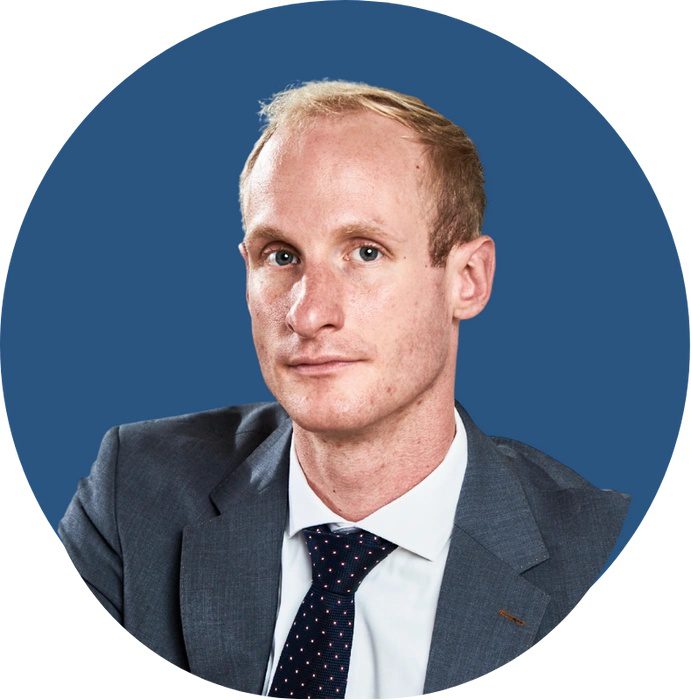
As CEO of Nuclea Energy, mechanical engineer Josef Freundorfer is advancing a pragmatic vision for next-generation nuclear power—one designed to be manufactured, deployed, and operated at scale. Drawing on experience spanning nuclear operations, engineering, project management, and industry advocacy, he is focused on transforming spent nuclear fuel into a resource while delivering dependable energy to data centers, defense, mining, and remote communities.
Tell us about yourself and your company.
I’m a mechanical engineer by training, and my career has given me the opportunity to work across engineering, nuclear operations, project management, communications, and the broader nuclear industry. Before becoming CEO of Nuclea Energy, I founded Nuclear Potential Canada, where I focused on advancing the conversation around nuclear energy and its role in meeting our future energy needs.
At Nuclea Energy, we are developing next-generation nuclear technologies designed to bring reliable, resilient power to places where traditional energy infrastructure may not be practical or sufficient. Our focus is not simply on developing innovative reactors, but on creating a technology that can ultimately be manufactured, deployed, and operated at scale, solving some of the world’s greatest challenges. An example of this is the nuclear fuel recycling technology and fast-spectrum advanced reactor we are acquiring with Moltex, these technologies will turn today’s waste nuclear fuel into valuable energy and resources for tomorrow’s future. We see significant applications for energy across areas such as data centers, defense, mining, remote communities, and other energy-intensive operations that increasingly require dependable, around-the-clock power. Our novel nuclear fuel recycling technology will unlock valuable critical minerals, energy, and uranium from today’s spent nuclear fuel accelerating the nuclear renaissance across all reactor platforms.
What is one lesson or piece of advice you would share with other leaders or founders?
One of the most important lessons is to stay focused on solving a real problem. It can be easy, particularly when you are developing an advanced technology, to become focused on the technology itself. But ultimately, customers are looking for solutions to specific challenges.
For us, that means continually asking how our technology can address real energy needs and what it will take to make it practical and economic for the end user. Founders also have to be willing to listen, adapt, and recognize that the path you initially envision may evolve as you learn more about the market and the novelty of the technology or solution you are developing. Having a strong vision is important, but so is remaining flexible about how you get there.
How is innovation, AI, or technology shaping your business today?
Technology is at the core of everything we are building. Nuclear energy has traditionally been associated with very large, complex infrastructure projects. Micro and advanced reactors give us an opportunity to rethink that model and develop nuclear technology that is smaller, unique, more standardized, and ultimately more economically deployable.
We are also looking at how modern digital tools, automation, and AI can support the broader lifecycle of these systems. That can range from engineering and design to monitoring, predictive maintenance, and operations, all of which are greatly influence the design of our reactors and its supporting systems. The opportunity is to combine the tremendous energy density and reliability of nuclear power with advances in technology that can make these systems increasingly efficient and practical to operate.
Where do you see the biggest opportunities in your space over the next few years?
The biggest opportunity in the nuclear space is being driven by a fundamental shift in how much reliable power the world needs and where that power is needed. Data centers and AI infrastructure are creating enormous new electricity requirements, while industries such as mining, defense, and remote operations need dependable power in locations where the grid may be constrained or nonexistent.
This creates a compelling opportunity for micro and advanced reactors. They can potentially provide reliable, continuous power closer to where it is actually consumed without requiring the same infrastructure footprint as a conventional nuclear facility.
Over the next several years, I believe one of the most important developments will be moving advanced nuclear technologies from concepts and prototypes toward real-world deployment. The companies that can demonstrate not only that their technology works, but that it can be manufactured, licensed, installed, and operated effectively will be in a strong position as demand for reliable energy continues to grow.
What advice would you give to leaders trying to adopt new technology without losing focus?
Start with the problem rather than the technology. There will always be a new technology, platform, or tool that generates excitement, but adopting technology simply because it is new rarely creates lasting value.
Leaders should first identify the specific problem they are trying to solve and then determine whether a new technology meaningfully improves the solution. That requires understanding the technology well enough to separate what is genuinely useful from what is simply generating attention.
I also think it is important to remain disciplined about execution. Innovation is essential, particularly in an industry like ours, but it has to be connected to a clear commercial and operational objective. The technology should support the strategy rather than become the strategy itself.