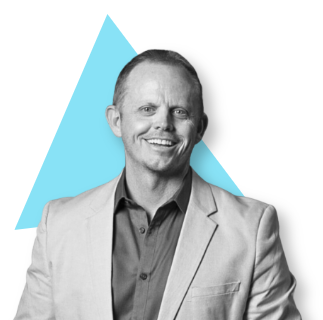




Hugh Hornsby has spent more than four decades building businesses in the skilled trades, leading distribution companies through periods of rapid growth while mentoring hundreds of professionals along the way. As the founder of Blue Collar Smart, he champions a simple belief: businesses succeed when they invest in people first. His career has taken him from warehouse floors to executive leadership, board positions, and now authorship and podcasting, all centered on helping leaders develop stronger teams and stronger cultures.
In this conversation, Hornsby reflects on the moments that shaped him, from a childhood head injury and epilepsy diagnosis to being told he wasn’t college material and, more recently, facing stage four prostate cancer. Those experiences became the foundation for a leadership philosophy built on resilience, self-belief, and helping others rediscover the dreams they abandoned. The discussion moves from personal setbacks to leadership, AI, company culture, and why the future of the trades depends as much on mindset as technical skill.
You have a long career in the skilled trades. How did you first get into the industry?
Hugh Hornsby: I graduated from college by the skin of my teeth. Looking back, I realized my real education started after graduation. It was 1981, during a recession, and I joined Ferguson Enterprises, which was about a $100 million company at the time.
I started in the warehouse, drove trucks, pulled pipe, and worked through their management training program. One day I was interviewing in a suit and tie, the next one I was loading trucks. People in our industry always say that if you stay three years, you never leave. That’s exactly what happened to me.
You often talk about the “underdog advantage.” What does that mean to you?
Hugh Hornsby: It started when I was ten years old. I fell from a swing set, suffered a severe head injury, and was diagnosed with epilepsy.
I remember leaving the hospital with my mother. She had tears in her eyes, and I told her I’d be okay. She said, “It’s not you I’m worried about. It’s everybody else.” Then she made me promise something I’ll never forget: “Never let anybody hold you back, especially yourself.”
That became the foundation of everything I’ve done.
She also filled my life with books about people who overcame adversity. My favorite was The Little Engine That Could. I still keep a copy nearby today. Those stories helped build confidence early, and they made me want to help other people find that same confidence.
You also write about another defining moment in ninth grade.
Hugh Hornsby: My teacher wanted to place me in special education because people believed I wasn’t smart enough for college.
I came home upset, and my mom gave me what I call my “yellow pad moment.” She told me to take fifteen minutes for a pity party, then go upstairs with a yellow legal pad and write down what I was going to do differently.
When I came back downstairs, I told her I was going to help people, and I was going to college.
That exercise became a habit. Whenever something knocked me down, I focused less on what happened and more on what I was going to do next.
How do you help people turn setbacks into strengths?
Hugh Hornsby: I used to think I could help everyone. Eventually, I realized you can’t help people who don’t want to help themselves.
One idea that’s always stayed with me is the law of polarity. Everything has an opposite. Every setback has another side if you’re willing to look for it.
My job isn’t to erase someone’s challenges. It’s to help them see what those experiences prepared them for.
Your upcoming book is called Blue Collar Smart. What does that idea represent?
Hugh Hornsby: People hear “blue collar” and think it’s only about the trades. That’s not how I see it.
Blue Collar Smart is really about looking at the world differently. It’s a mindset, not a job title.
I’ve spent my career in the trades, so that’s where I naturally focus. But the principles apply to anyone who’s willing to think differently and keep learning.

One of your core beliefs is that “people build businesses.” Why has that become such an important philosophy?
Hugh Hornsby: Too many people are taught to stay inside a box. School often rewards fitting into the next box instead of discovering your unique gift.
I believe everyone has a gift.
When I mentor people, whether they’re early in their careers or executives who have just lost their jobs, I ask the same question:
“What dream did you leave behind?”
Most people haven’t been asked that in years. Somewhere along the way, someone convinced them it wasn’t realistic. That’s often where we start.
You’ve mentored hundreds of people throughout your career. Is that question usually where the real work begins?
Hugh Hornsby: Absolutely.
People talk about needing motivation, but often what they’re really missing is clarity. Once they reconnect with something they genuinely care about, the desire comes back.
I’ve experienced that myself. Sometimes someone else helps you see what you’ve stopped seeing.
You’ve built successful teams by hiring people others overlooked.
Hugh Hornsby: One of the first people I hired at Everflow was a convicted felon who had served time in prison. Someone told me I probably wouldn’t want to interview him. I said, “That’s exactly who I want to talk to.”
He became our number one salesperson.
I’ve hired people from all kinds of backgrounds because I wasn’t looking for perfect resumes. I was looking for potential.
One employee sent me a Father’s Day message saying I’d changed his life. I told him, “No, you changed your life. I was just the guide.”
What separates companies that continue growing from those that struggle?
Hugh Hornsby: Founders often spend too much time trying to compete with the biggest company down the street.
I always looked for opportunities nobody else was paying attention to.
When we expanded, we didn’t try to conquer fifty states overnight. We focused on winning one state, one customer, one person at a time.
The best businesses are often built before anyone notices them.
You also emphasize organizational alignment. What do you mean by that?
Hugh Hornsby: You have to decide who you want to matter to.
One of the biggest mistakes companies make is trying to be everything to everyone.
Relationships outperform transactions. Transactions matter, but long-term growth comes from building trust, serving the right people, and creating transformation instead of chasing every opportunity.
Many founders feel trapped because the business depends entirely on them. How do they change that?
Hugh Hornsby: It comes back to people.
The biggest challenge in the trades it’s workforce.
Most owners care deeply about their business, but they don’t spend enough time investing in the people who make that business possible.
If people know you genuinely care about them, they’ll invest in the mission. If they don’t believe that, they won’t stay.
Culture is what gives founders room to step back.
AI is changing every industry. How do you see it affecting the trades?
Hugh Hornsby: I’m very involved with AI companies, and I’m excited about what it can do.
But I think people make two mistakes.
Some believe AI will solve everything. Others refuse to embrace it.
The right approach is somewhere in the middle.
AI should free people to spend more time doing the work only humans can do. If it strengthens relationships and removes unnecessary tasks, it’s incredibly valuable. If it replaces culture, you’ve created a different problem.
What inspired you to launch the Blue Collar Smart podcast at this point in your life?
Hugh Hornsby: Two years ago, I was diagnosed with stage four prostate cancer.
At the same time, I was preparing to retire from Everflow. Facing cancer made me question everything.
I started journaling. Every time I had a negative thought, I wrote down a positive one instead. Morning and night, I kept asking myself one question:
“What is it that you really want?”
I realized Everflow had been a platform, not the destination.
It would’ve been easy to retire and enjoy life, but I felt there was something bigger I was supposed to do. This podcast is part of that.
Who do you hope will listen?
Hugh Hornsby: Founders. Leaders. Salespeople. Anyone who feels they’ve lost sight of where they wanted to go.
I also hope it reaches people who need to forgive themselves.
I carried childhood abuse with me for more than sixty years before I finally dealt with it.
When I coached people, I always encouraged them to invest in themselves first. Then I’d invest in them. After that, I’d ask them to become part of something bigger than themselves.
Finally, I’d ask for one promise:
“When someone helps you, do the same for someone else.”
Where do you see the future of the trades heading?
Hugh Hornsby: Private equity is investing heavily in the trades, and that’s going to continue.
The biggest opportunity isn’t just teaching people technical skills. It’s helping them build businesses, lead teams, and develop the right mindset.
More people who once assumed college was their only option are beginning to see the trades differently.
The companies that invest in culture and people will stand out.
It won’t just be about growing revenue. It’ll be about building people.
Before we finish, what’s one message you’d like readers to remember?
Hugh Hornsby: The most important conversation you’ll ever have is the one you have with yourself.
I learned that through cancer, through setbacks, and through every challenge I’ve faced. Words matter. If you constantly speak to yourself in a negative way, that’s the life you’ll create.
The good news is you can change that conversation. And when you do, you change far more than your mindset. You change the direction of your life.