A small company can now sell to a distributor in Brazil or pitch an investor in Seoul in its first year. It can work out terms with a factory in Vietnam just as early, and most exporters are that size. The Census Bureau’s exporter profile shows that 254,820 of the 262,529 U.S. companies that exported goods in 2025 were small or medium-sized.
Guides to expanding a business internationally cover entities, banking and logistics. But on most calls language is what gets in the way. A professional interpreter costs real money per call and has to be booked ahead. A founder with a dozen cross-language calls a month cannot realistically book one every time.
Language gaps do cost deals. The American Council on the Teaching of Foreign Languages ran a 2019 survey of 1,200 U.S. managers and HR professionals. Nearly one in four employers said they had lost or been unable to pursue a business opportunity for lack of foreign language skills. Small and midsize employers were more exposed than large ones.
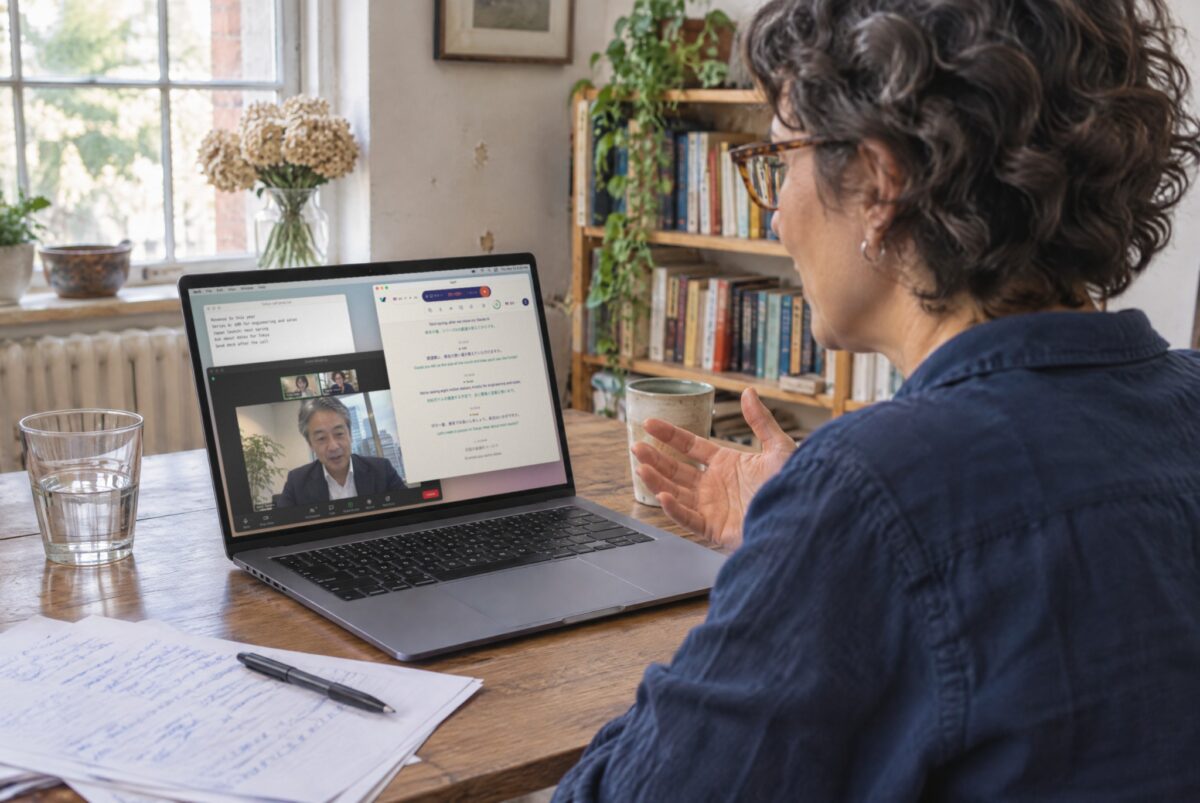
AI live translation has closed much of that gap for a fraction of what an interpreter costs. It runs on your laptop and shows the other person’s words in your language as they speak. It will not do everything an interpreter does, so choose the calls carefully and run them with care.
When AI translation is enough and when to pay for a person
AI translation works well for the ordinary calls that make up most of a small business’s week. Think of a first sales conversation or a weekly check-in with an overseas partner. Supplier updates, support calls and intro chats with investors fit too. If a sentence comes out slightly wrong on calls like those you can simply ask again.
A human interpreter is still worth the money when one misunderstanding could cost far more than the fee. That covers contract negotiations where exact wording matters and legal or regulatory meetings. It also covers sensitive talks about layoffs, disputes or health. Some partners expect a formal interpreter as a sign of respect, and the U.S. government’s business etiquette guide for Mexico suggests hiring one for formal business meetings. A good interpreter also conveys tone and politeness and picks up on what the speaker left unsaid. Software does not do that.
For high-stakes deals use AI translation for the early calls and bring in an interpreter only for the final negotiation. By then you will know the people and the open issues.
Picking a tool before you need it
Try a tool on a low-stakes call before you depend on it with a client. To choose one, see Verli’s comparison of real-time meeting translation tools. It sets out how each one joins the call and what it gives you, along with the languages it covers and what it costs.
Check delay first. Translation that arrives several seconds behind makes it hard to respond naturally. Accuracy in your own language pair comes next. A tool can be strong in English and Spanish and much weaker in Thai or Polish. Test it in the language you will actually use, ideally with a colleague or friend who speaks it. Then work out what an hour of translated calls costs on each plan and multiply it by your real monthly call time.
How the tool joins your calls matters as well. Some send a bot into the meeting that shows up in the participant list and may need the host’s approval. Others listen to the audio on your own computer and work in any Zoom, Teams or Google Meet call you can hear, even ones you don’t host. The second kind is usually easier for outside calls.
Before the call
Translation most often goes wrong on names, product terms and numbers. Speech recognition has never heard your company name, your feature names or the investor’s fund, so it has to guess.
Write down the names of everyone on the call along with your company and product names. Add the industry terms and acronyms you expect and any place names. Many tools let you load a list like this before you start. Verli lets you add names and terms in advance so they come out spelled right in the live transcript.
Send a short agenda by email the day before. It helps the other side prepare and gives both of you the key terms in writing. If you will discuss prices, volumes or dates, put the numbers you expect in writing too. Send the deck as well for an investor call. Clear slides help any pitch to investors and help even more when the listener is reading a translation.
Audio needs sorting out too. Use a headset or a decent microphone and sit somewhere quiet. Run a two-minute test call first, since bad audio usually hurts translation more than an accent does.
During the call
Slow down a little once the call starts. Pausing between sentences gives the transcription time to catch up and gives the other person time to read. Short plain sentences help for the same reason. The International Trade Administration’s guide to business travel in Vietnam gives the same advice for working with a human interpreter: speak slowly in one or two simple sentences at a time. “We can ship 500 units in March” translates cleanly. “Assuming nothing unexpected comes up on our end, we should be in a position to get roughly 500 out the door sometime in March” gives the software three chances to go wrong. Leave out idioms and sports metaphors because they rarely survive translation.
Confirm every number, date and commitment in writing during the call by typing it into the meeting chat. For example: “To confirm: 500 units, delivery by March 15, price per unit as quoted on November 3.” Numbers are where a mistake costs you most. The chat gives both sides a written version they can read in their own language.
If something sounds odd, ask about it rather than reacting. A translation can make a polite person sound curt or a firm “no” sound like “maybe.” Rephrase a surprising line as a question: “Just to check, you are saying the timeline doesn’t work?”
After the call
Save the transcript from a translated call under a clear name with the company, date and topic. That way you can find it when the deal comes back. If your tool writes an AI summary, read it alongside the transcript before you rely on it. Summaries can merge separate points or drop the conditions attached to a promise. In sales those conditions are often what matters. Verli shows the summary next to the transcript, so checking one against the other takes a minute.
Then send a follow-up email the same day in both languages. List the decisions and the numbers plus the next steps with owners and dates. Putting both versions in one message lets the other side correct anything that came out wrong. Buyers also care about language after the sale. CSA Research surveyed 8,709 consumers in 29 countries in 2020 and found that 75% were more likely to buy from the same brand again if customer care was in their language.
Consent and privacy
Live translation software transcribes the call audio. Most tools do that on the provider’s servers. Tell the other participants at the start that you are using live translation and saving a transcript, and ask if that is fine. Some US states require every participant’s consent to record a call. When people are in different states it is hard to know which law applies, as the Digital Media Law Project’s guide to recording calls explains. Other countries have their own rules. Asking builds trust even where consent isn’t required.
Read the privacy policy before you choose a tool. Check where the audio goes and whether the provider uses it to train AI models. Check how long it keeps transcripts and how you can delete them. Investors and enterprise buyers may ask you these questions, so know the answers.
Start with one recurring call with a partner or customer who speaks another language. After a few calls you will know which ones a tool handles well and which still need an interpreter.