



Rodents are one of the most common pest problems for businesses across Canada. A single mouse in a kitchen or storage room may not look like much. But mice and rats breed fast, chew through almost anything, and contaminate food and surfaces. By the time you notice them, the problem is often bigger than it looks.
The good news is that prevention works. This guide covers the main ways rodents get into commercial buildings and the simple steps that help keep them out.
Why Rodents Target Commercial Buildings
Rodents need three things: food, water, and shelter. Commercial buildings often offer all three. Restaurants have food waste and warm kitchens. Warehouses have quiet corners, pallets, and loading doors. Offices have break rooms, cardboard, and wall voids.
Weather also plays a part. When temperatures drop, as they do early in much of Canada, mice and rats look for warm places to wait out the cold. Rodents are active all year, but fall is when many of them move indoors. A building that stayed quiet all summer can suddenly have a problem once the nights turn cold.
Know the Common Entry Points
Rodents get in through gaps that are much smaller than most people expect. Mice can squeeze through an opening about the size of a dime. Rats only need a hole the size of a quarter. They also use open doors, rain gutters, and drain pipes.
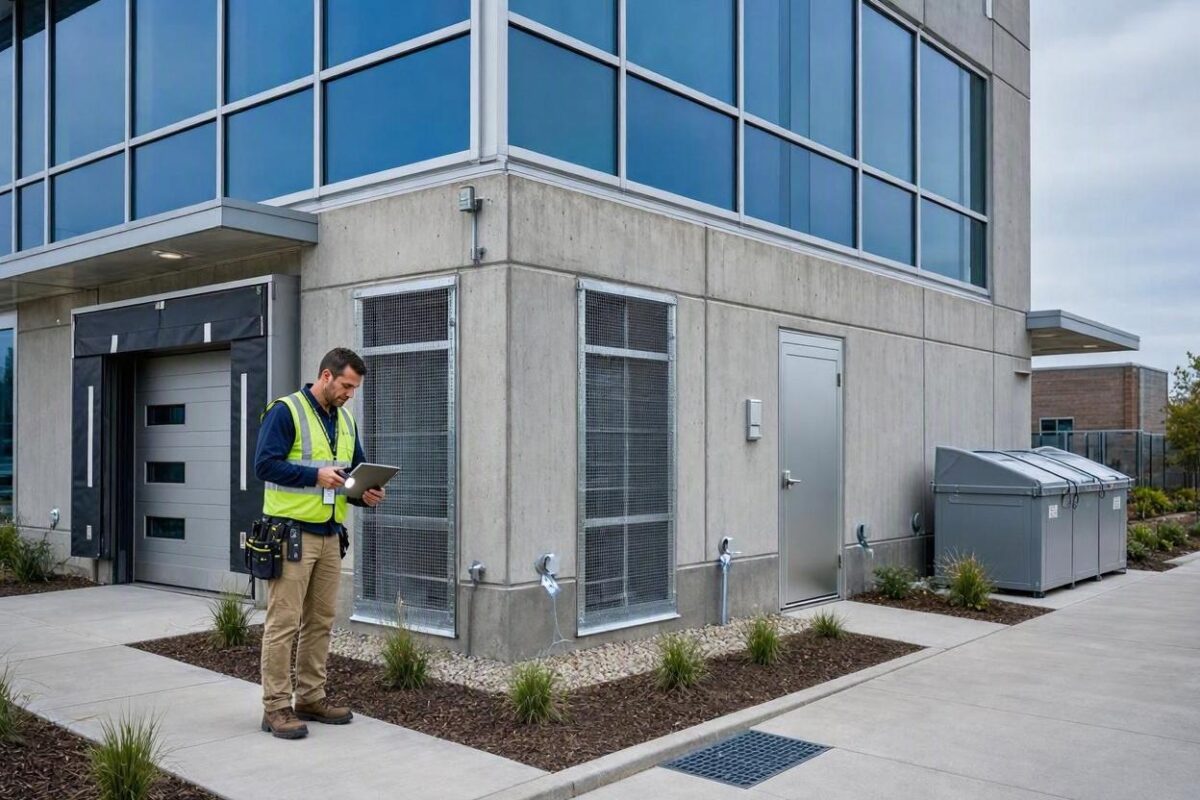
Walk around your building and look closely at gaps around pipes, cables, and vents. Check for cracks in foundations and walls, and for loading dock doors that do not close tightly at the bottom. Look at damaged door seals and weather stripping, and inspect roof edges, soffits, and gutters too.
Do not forget the roof. Rodents are good climbers, and branches that touch the building make it even easier.
Seal the Gaps
Sealing is the most effective step you can take. Provincial government guidance recommends sealing any opening of about 6 mm, or one quarter inch, or larger with durable materials. It suggests stuffing steel wool around pipes and then sealing over it with caulk. It also recommends covering vents with heavy wire mesh and repairing cracks in foundations.
For doors, metal weather stripping under the door helps block gaps. Metal kick plates on the outside of the door stop rodents from gnawing through the bottom edge. These materials last longer than foam or plastic, which rodents can chew through.
Once the work is done, check it regularly. A repair that held last spring may have cracked by fall.
Why Professional Support Helps
Sealing and sanitation do a lot, but they do not always solve the whole problem. Large buildings have many hidden spaces, and rodents can nest in walls, ceilings, and storage areas where staff rarely look. That is where commercial rodent control from a trained provider adds value. A good program starts with a documented inspection, builds a plan to stop rodents from returning, and adds monitoring that adjusts with the seasons.
This matters most for businesses that cannot afford disruption, such as restaurants, healthcare sites, and food storage facilities. With 24/7 support available, urgent problems can be handled quickly instead of waiting until the next day. For businesses with several locations, national coverage with local teams also helps keep the same standard at every site.
Remove Food and Water Sources
Even a well sealed building can attract rodents if food is easy to find. Keep food preparation areas clean and wipe up spills and crumbs right away. Store dry goods in hard containers with tight lids, and keep them off the floor.
Garbage is another common draw. Use bins with tight fitting lids, empty them often, and keep dumpsters away from doors where possible. Fix leaking taps, sweating pipes, and open drains, since rodents need water too. Remove bird feeders and any outdoor food sources close to the building.
Clear Hiding Spots Around the Building
Rodents like places where they can hide and nest. Clutter inside and outside a building gives them just that. Remove unused items from storage areas and keep pallets and boxes off the floor and away from walls so you can see behind them.
Outside, keep the edge of the building clear of junk and debris. Cut tall grass and weeds back, and trim bushes so there is open space between the ground and the lowest branches. Store firewood, lumber, and other materials away from the building and off the ground. Trim any branches that hang over the roof.
Watch for Early Warning Signs
Mice and rats are most active at night, so you may not see them. You will often see the signs instead. Look for chew marks, greasy rub marks along walls, holes, and small pellet like droppings. Chewed food packaging and scratching sounds in walls or ceilings are also clear clues.
If you see any of these signs, act right away. Rodents multiply quickly, and a small problem can turn into a full infestation within weeks. Train staff to report anything unusual, and keep a simple log of what is found and where. Patterns often show you which entry points need attention first.
Keeping Rodents Out All Year
Keeping rodents out of a commercial building comes down to a few steady habits. Seal gaps, remove food and water, clear hiding spots, and check for warning signs on a regular schedule. Do these things in every season, not only after a problem appears. With good prevention and the right support when you need it, your property can stay clean, safe, and rodent free.

