



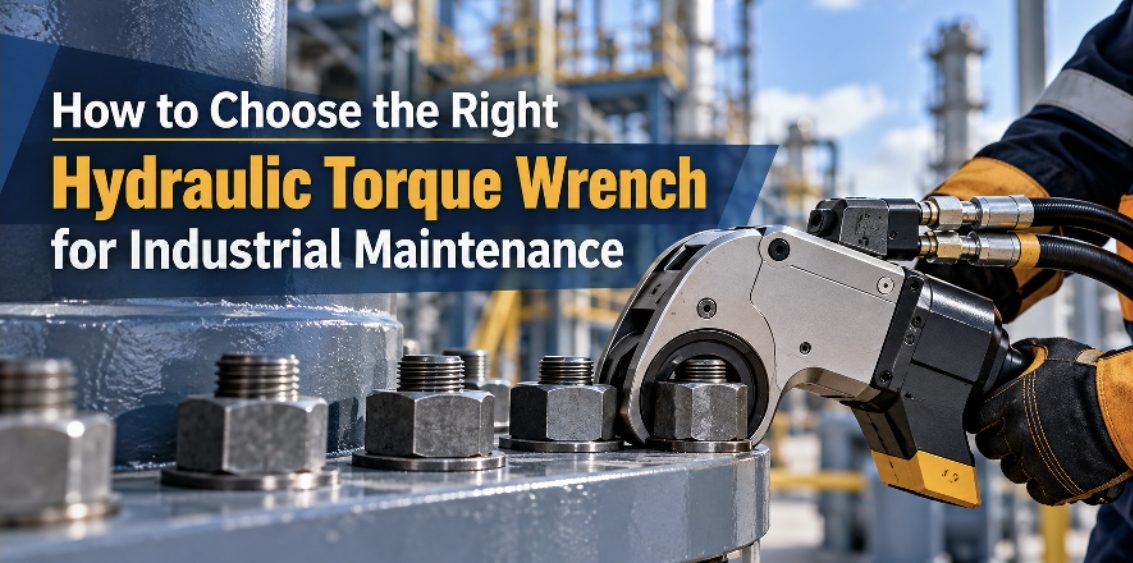
Choosing the right hydraulic torque wrench is critical to safe, reliable industrial maintenance. They can be employed by a technician in the tightening and loosening of large bolts on pipelines, heavy equipment and industrial machinery. However, if the incorrect wrench is used, misalignment can happen, equipment damage can result and valuable time will be lost.
The first factor to consider is the torque output requirement, the size of the bolt to be torqued, the space limitations, and compatibility of the hydraulic system. This guide will discuss the various types of wrenches, specifications and considerations that will assist you to determine the correct wrench for the task.
What Is a Hydraulic Torque Wrench and Why Is It Used in Industrial Maintenance?
A hydraulic torque wrench is a strong tool that is employed in industrial settings to put on a specific torque to a bolt or nut . It is widely used when manual torque wrenches are not able to efficiently provide the desired torque.
A hydraulically operated torque wrench is a good tool for industrial maintenance tasks in oil refineries, power plants, manufacturing plants, and heavy equipment maintenance. It can be used for the tightening and loosening of bolts, particularly on large industrial connections, under control.
How Hydraulic Pressure Produces Controlled Torque Output
The wrench is connected to a hydraulic pump to supply it with a pressurized fluid, which initiates a torque-producing mechanism in the wrench.
The correct pump pressure is set according to the required tightening torque on the pump on a torque-pressure curve provided by the pump manufacturer. A secure reaction point will help to offset the reaction force during operation.
Which Type of Hydraulic Torque Wrench Should You Choose?
There are various types of hydraulic torque wrenches and it is essential to know what they are and their uses to better meet maintenance requirements.
Square Drive Hydraulic Torque Wrenches for Accessible Bolting Jobs
A square drive hydraulic torque wrench has interchangeable impact sockets which are used to attach different nuts.It is suitable for:
- Heavy machinery maintenance
- Equipment assembly
- Correct fit of bolts in the industrial structure, sufficient clearance.
- Sockets with different dimensions (applications!)
It is also versatile and can be used for various types of fasteners, making it a useful tool for maintenance personnel who need to work with different-sized fasteners.
Low-Profile Hex Cassette Wrenches for Tight Spaces
This is a low-profile hydraulic torque wrench that operates with a compatible hex cassette that is wrapped around the nut. The design is especially advantageous at flange connections, pipelines, and confined spaces in the industry where the standard sockets won’t fit.
Square Drive vs. Low-Profile: Key Differences
| Feature | Square Drive | Low-Profile |
| Tool design | Uses interchangeable sockets | Uses hex cassettes |
| Working space | Requires more socket clearance | Designed for restricted clearance |
| Versatility | Different socket sizes | Compatible cassette sizes |
| Common applications | Heavy machinery and general bolting | Flanges and confined spaces |
| Main advantage | Flexible socket selection | Compact access around nuts |

Describe the differences between square drive and low profile. Explain the difference between square drive and low profile.
There is no one definitive design that is superior. The selection of the right choice would depend upon the application of the bolts and the clearance available.
How to Choose a Hydraulic Torque Wrench: 6 Essential Selection Factors
A good hydraulic torque wrench selection guide should take into account factors other than maximum torque capacity. The following six factors will give the engineers and maintenance staff what they need to consider in a decision.

1. Match the Torque Range to the Required Bolt Preload
Choose a wrench that has a torque rating that contains the desired torque . Keep in mind that the value of torque can only be used as a guide to an accurate preload, as it is affected by friction and joint conditions. Do not measure the torque using the size of the bolt, as the appropriate engineering specification must be used.
2. Check Bolt Size, Nut Dimensions, and Available Clearance
Take a measurement across the nut, and inspect the area around the nut.
Consider:
- The diameters of nuts and bolts.Nut and bolt sizes.
- Should be free of any obstructions above and around the fastener.
- The spacing between adjacent bolts is the distance between the two bolts.
- Need to be able to plug into a socket or cassette.
- Space for a safe reaction point: Space for a safe reaction point:
If you can’t fit the high torque wrench in place on the connection, then it isn’t useful.
3. Verify Hydraulic Pressure and Pump Compatibility
Hydraulic bolting equipment is a comprehensive set of equipment. Always check the pump’s rated pressure, hose specifications, hose couplings, and pump control prior to selecting a wrench.
The pressure levels for many industrial hydraulic torque systems can reach a maximum of 10,000 psi (around 700 bar) however, this is not the case for all systems. Do not exceed the limits of the parts and make sure that the equipment used is approved for the specific wrench.

4. Evaluate Accuracy, Calibration, and Repeatability
To ensure controlled tightening, it is important to have the correct equipment and ensure that it is maintained properly. Verify wrench size, manufacturer’s torque-pressure chart and inspect or test . Calibration needs to be done according to manufacturers’ instructions, to standard specifications, and site maintenance practices.
5. Consider Safety Features and Operator Handling
Industrial bolting tools produce a lot of reactions. You can have serious pinch-point hazards as a result of incorrect positioning.
Select equipment with suitable reaction accessories, good and convenient tool or cassette holding, and convenient tool weight. Operators check on hydraulic connections, refer to the manufacturer’s instructions, and ensure hands are not in reaction areas during operation.
6. Compare Durability, Maintenance, and Overall Cost
Not all hydraulic torque wrenches are created equal – and not all that are the most expensive or powerful are the best for industrial use.
Take into account the amount of use that the equipment will receive, the availability of replacement parts, and the availability of service.
A long-lasting and heavy-duty torque wrench that can be trusted with solid technical support could be more cost-effective for regular industrial maintenance than a low-priced torque wrench that needs constant maintenance.
Choosing Hydraulic Torque Wrenches for Different Industrial Applications
The application of bolt load where it is used varies from industry to industry. Correcting the tool to the environment runs helps to improve the efficiency of maintenance.

Oil, Gas, and Petrochemical Flange Maintenance
When flange connections are made, they tend to have big fasteners, and they’re all close together. Low-profile hydraulic wrenches are often needed in situations where there is limited access.
Technicians also need to adhere to approved flange tightening procedures, as well as specified flange torque sequences.
Power Plants and Heavy Machinery Maintenance
The high torque and strong tooling requirements for turbines, generators, and heavy machinery might be required.
Choose a wrench with torque requirements that are appropriate for the equipment, and designed to fit the position of the reaction arm.
Manufacturing Plants and Routine Equipment Servicing
A number of different-sized fasteners could be required in a variety of machines for manufacturing maintenance. With space available, a flexibility can be provided, allowing a square drive model with an appropriate socket to be serviced regularly.
Common Mistakes to Avoid When Selecting Hydraulic Bolting Equipment
Even expert maintenance technicians can find themselves in trouble when selecting hydraulic tools.
Typical selection errors are:
- Selecting maximum torque only: Not considering the full range of operation of the wrench.
- Clearance: Buying a tool that will not reach over the bolt.
- Failure to ensure the use of incompatible equipment: Pumping incompatible equipment or hoses or cassettes without checking.
- Reaction forces: Not being able to find a proper point of reaction.
- Failure to calibrate: Failure to have inspection and maintenance records available for tools being used.
These errors can be avoided to minimize unnecessary downtime and increase bolting reliability.
Hydraulic Torque Wrench Selection Checklist Before Buying or Renting
When purchasing or renting a hydraulic torque wrench, be sure to inspect it for the following:
Check the correct torque.
- Take measurements of the bolt and nut.
- Ensure that suitable working clearance is available.
- Opt for square or low profile.
- Test compatibility of pump, hose and accessories.
- Check calibration and safety precautions.
- Discuss inventory and maintenance expenses.
Take this checklist along to help make sure wrench is used properly in the application of maintenance.
FAQs
What is the proper size of the hydraulic torque wrench to use?
Choose the right wrench for the right purpose based on the torque of the nut, nut size, and nut clearance. Take into account the rated torque range and the right socket/cassette of the manufacturer prior to making a selection.
What’s the difference between the square drive and low profile hydraulic torque wrench?
A square drive wrench is interchangeable and can be used for accessible bolting jobs. A low-profile wrench is a compact wrench that is suitable for narrow spaces and featuring hex cassettes.
How do I determine the correct torque output for industrial bolts?
Follow equipment manufacturers’ specifications and/or approved engineering bolting procedure. The diameter of the bolts is important, but is not alone sufficient, since the design of the joints, the nature of the bolts, lubrication and the required preload all affect the torque.
Can one hydraulic pump work with different torque wrenches?
Yes, other wrench models are acceptable to use with this hydraulic pump as long as the pressure ratings, hose connections, and system specifications of the wrench are equal to the hydraulic pump. Make sure of the manufacturers compatibility.
How often should a hydraulic torque wrench be calibrated?
The frequency of calibration will depend on manufacturer’s recommendation, frequency of use, quality standards necessary for the site, and applicable quality standards for the site. Further checks should be carried out if the item is used heavily, damaged, or if there is a suspicion that there may be inaccuracies.
Conclusion
When choosing a hydraulic torque wrench, the torque capacity, bolt size, working clearance, hydraulic compatibility, and safety of the wrench should be considered. Square drive models are available for easy access bolting, and low-profile models allow easier access for technicians in limited areas. The correct calibration and maintenance are also critically important for consistent performance.
Never purchase industrial bolting equipment without making sure to check out the specifications and see the advice of competent equipment suppliers.You can know more about hydraulic torque wrench operation and how these tools support controlled industrial bolting.

