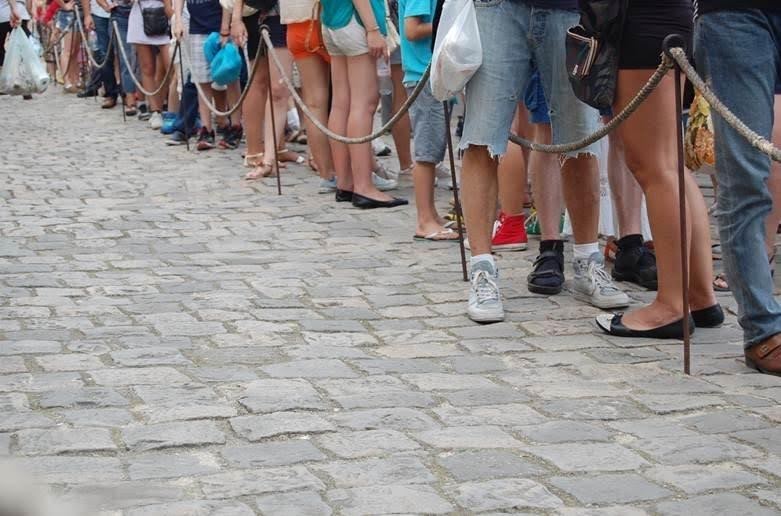
You’ve arrived at the concert, festival, or big game, ready to have a good time – and then you see the security line. It barely moves. You shuffle forward, empty your pockets, open your bag, and wait while hundreds of people do the same.
Suddenly, the excitement of getting inside is replaced by one thought: Why is this taking so long?
For high-traffic venues, security has to do more than keep people safe. It also needs to keep crowds moving and the entrance experience as smooth as possible.
That’s where modern screening technology, like the CEIA OPENGATE, is helping venues rethink how they handle large crowds without turning the entrance into a bottleneck.
Why High-Traffic Venues Need a New Approach to Security
A packed stadium or sold-out festival is a great sight, until everyone tries to get through the entrance at the same time. Thousands of visitors can arrive within a short window, putting enormous pressure on security teams and creating bottlenecks before the event has even begun.
Traditional screening can make this worse. When every person has to stop, empty their pockets, open a bag, or pass through a checkpoint one at a time, even a small delay can quickly turn into a very long line.
And while nobody wants security rushed or skipped, nobody wants to spend the first half-hour of their concert experience standing in a queue, either.
That’s the balancing act venues face today: strong security without unnecessary friction. As stadiums, arenas, festivals, and other public venues look for ways to handle growing crowds more efficiently, screening technology is evolving with them.
CEIA OPENGATE and the Shift Toward Frictionless Screening
What if getting through security didn’t have to mean stopping the crowd in its tracks? That’s the idea behind a new generation of walk-through screening technology.
CEIA OPENGATE is designed for high-throughput environments where large numbers of people need to be screened quickly and efficiently. Instead of making every visitor feel like they’ve hit a checkpoint, walk-through systems can help create a more continuous flow into the venue.
That can make a noticeable difference when thousands of people are arriving within the same short window. Of course, no single piece of technology can do the entire job of venue security. Screening works alongside trained personnel, surveillance, access control, and other security measures.
Security Is Becoming More Connected
A metal detector at the gate is only one piece of the puzzle. Behind the scenes, modern venues can bring together screening systems, surveillance, access control, and security teams to create a much more complete picture of what’s happening on site.
That matters especially at outdoor festivals, stadiums, and other sprawling venues, where security teams may need to keep an eye on multiple entrances, crowded public areas, and constantly changing conditions.
The real shift is that these technologies don’t have to work in isolation. When different layers of security complement each other, staff can respond to situations with more information at their fingertips instead of relying on a single checkpoint to do all the heavy lifting.
For visitors, much of this technology may go unnoticed, and that’s not necessarily a bad thing. The best security measures can be doing their job quietly in the background while everyone else gets on with enjoying the event.
From Metal Detectors to Smarter Security
The days when a security guard and a metal detector were expected to do all the work are fading. Today’s venues have access to a growing toolbox of AI-powered surveillance, biometric systems, and smarter screening technologies that can help security teams keep up with the sheer scale of modern crowds.
But smarter technology doesn’t mean taking people out of the equation. Quite the opposite: when systems can handle more of the routine monitoring and detection work, trained security staff can focus their attention where human judgment matters most.
For venues dealing with thousands of visitors, that combination could be a game changer, because it gives security teams more eyes, more information, and more ways to respond.
The Future of Venue Security Is About Keeping People Moving
Nobody wants security to be the most memorable part of their night. The real goal is to keep people safe while letting the event itself take center stage.
That means finding smarter ways to screen large crowds without turning the entrance into a bottleneck. Technologies such as CEIA OPENGATE can help venues move in that direction, allowing security screening to become faster and less disruptive while still forming an important layer of protection.
Because ideally, you shouldn’t be thinking about the security system five minutes after walking through the gate. You should be inside, your friends should be waiting, the lights should be going down – and the only thing you’re worried about is whether you can get close enough to the stage.