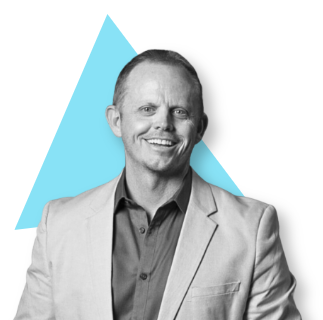

Mike Bennett, DDS, PhD, is a board-certified dentist and educator passionate about helping people breathe, sleep, and heal through airway-focused care. With a PhD in Healthcare Professions Education, he empowers both dentists and the general public to understand the critical link between oral health and whole-body wellness. His mission is to transform lives by making dentistry about more than teeth—it’s about total health.
Company: More Than Teeth
Could you share the journey that led you to where you are today, and what originally sparked your passion for this field?
Michael Bennett:
For years, I built a thriving dental practice. My schedule was full, my income was solid, and life was good. I had a wife, six kids, and bills to pay—and dentistry provided well for my family. But something kept gnawing at me.
Patient after patient walked through my doors exhausted, in pain, and frustrated. They had broken teeth, worn crowns, gum recession, and crowded smiles—clear signs that something bigger was going on. They lacked energy, struggled with migraines, and had no real answers.
I sent them to specialists, physicians, and therapists, hoping someone could help. But the cycle continued—no relief, no real solutions, just more Band-Aid fixes.
I couldn’t shake the feeling that I was missing something big.
Then, everything changed.
I started taking courses, diving into research, and completing mini-residencies in airway health, sleep-disordered breathing, TMJ dysfunction, and sleep apnea. What I discovered was undeniable—these weren’t just isolated dental issues; they were signs of an airway problem that was impacting my patients’ entire health.
Suddenly, it all clicked.
Broken teeth? Stress from an unprotected airway.
Crowded teeth? A sign of poor jaw development and breathing issues.
Chronic pain and migraines? Often linked to TMJ dysfunction and airway restriction.
Dentistry wasn’t just about teeth—it was about total health.
Armed with this new understanding, I couldn’t go back to business as usual. I felt called to do something different, something bigger. I knew I had to become the expert that patients—and other dentists—could turn to for answers.
So, I made a bold move: I sold my general dental practice and opened a specialty clinic dedicated to treating sleep-disordered breathing, TMJ disorders, and airway-related issues.
For over a decade, I helped transform lives, working alongside physicians and specialists to help patients breathe, sleep, and heal.
But the deeper I got, the more I realized another huge gap—most dentists aren’t trained to recognize these issues.
And that had to change.
So, I took another leap: I sold my specialty clinic, returned to general dentistry, and got a PhD in Healthcare Professions Education.
Why?
Because this knowledge is too important to keep to myself.
Now, I help dentists integrate airway and sleep medicine into their practices—so they can provide life-changing care while increasing case acceptance and practice growth.
Was there a specific turning point or ‘aha’ moment that shaped your approach or fueled the creation of your product/strategy?
Michael Bennett: Absolutely. The turning point came when I realized that so many of my patients—despite having “healthy mouths”—were still exhausted, in pain, and dealing with broken teeth, migraines, or TMJ issues that no one could explain. I was referring them out to specialists but getting nowhere. Once I started diving into courses on sleep-disordered breathing and airway health, everything clicked: these weren’t just dental problems—they were signs of a bigger issue that dentistry was uniquely positioned to help solve. That realization changed everything. It shifted my entire approach from fixing teeth to restoring total health, and ultimately led me to get a PhD so I could help other dentists do the same.
What were some of the biggest hurdles you faced in establishing your authority, and how did you navigate those challenges?
Michael Bennett: One of the biggest hurdles I faced was being one of the first dentists in my area to explore sleep dentistry. At the time, it wasn’t widely understood, and there were few established pathways—so naturally, there was skepticism. Patients didn’t always know whether to trust me with issues they’d never thought a dentist could address, and other healthcare professionals weren’t sure I was qualified to be part of the conversation.
I had to earn that trust—not just through credentials, but through results. I completed mini-residencies, earned board certifications, collaborated with physicians, and most importantly, I kept showing up with humility, a hunger to learn, and a deep desire to help. As patients began to experience life-changing results, the referrals followed. Over time, I became the dentist others sent their patients to—not because I said I was an expert, but because I proved it one patient at a time.
What is the core problem your solution addresses, and why do you believe your approach is uniquely effective?
Michael Bennett: The core problem I address is this: too many people are living with chronic pain, fatigue, broken teeth, and poor sleep—and they have no idea it’s connected to how they breathe. Most dentists are trained to treat teeth, not root causes like sleep-disordered breathing or TMJ dysfunction, even though we’re in the perfect position to identify and intervene early.
What makes my approach unique is that I combine over two decades of clinical experience with specialized training in airway, sleep, and craniofacial pain—and I’ve walked the path myself. I know what it’s like to feel unsure as a provider, to question whether it’s “your place” to address these issues. That’s why I don’t just treat patients—I teach and empower other dentists to confidently screen, educate, and provide care that goes beyond the mouth. Because when we focus on breathing, sleeping, and healing, we don’t just save smiles—we change lives.
Could you share a compelling example or case study that illustrates how your product/strategy delivers results?
Michael Bennett: It’s hard to pick just one case after years of witnessing so many life-changing results—but a few stand out that remind me why I do what I do.
One young man came to me with Tourette’s syndrome or a tic disorder. He constantly experienced involuntary movements and sounds—blinking, throat clearing, repeating words, specific gestures. It wasn’t just disruptive; it was devastating. He was being bullied at school, his family was exhausted and heartbroken, and his future felt uncertain. We implemented a treatment plan that helped him breathe better, sleep deeper, and decompress his jaw. According to his mom, it reduced his tics by about 75%—and it changed the entire trajectory of his life. That kind of transformation never gets old.
An older woman came to me with crippling migraine headaches. She had a dream to serve a church mission with her husband, but the pain made it feel impossible. Through non-surgical therapies focused on the airway and central nervous system, she experienced enough healing to fulfill that dream.
One of the most rewarding cases was for my own daughter. She had asthma, allergies, and eczema as a child. Expanding her airway as a part of a collaborative effort with other healthcare providers, helped to transform her into the healthy young woman she is today. That experience only deepened my conviction to treat root causes, not just surface symptoms. After all, every patient is someone’s son or daughter, and I know from helping my daughter how deeply personal that can be.
These are just three stories among many. But they prove that when we focus on the root cause—airway, sleep, and function—we can help people do more than just feel better. We help them reclaim their lives.
What sets you apart from others in your industry, and how do you maintain a competitive edge?
Michael Bennett: What sets me apart is that I’ve stood at the intersection of clinical dentistry, airway-focused therapy, and education for over two decades—and I’ve lived every part of the journey I now teach. I’m not just a dentist who dabbles in sleep or TMJ; I’ve built and sold both general and specialty practices, earned multiple board certifications, and completed a PhD in Healthcare Professions Education to better equip other dentists to lead in this space.
I maintain a competitive edge by staying relentlessly curious. I collaborate with medical professionals, stay up to date on emerging research, and never stop refining how I communicate complex topics to both patients and providers. But more than anything, I stay focused on impact—real outcomes for real people. When you’ve seen lives change because someone finally sleeps well or lives pain-free, you don’t settle for surface-level solutions. You go all in. And that’s exactly what I help other dentists do.
Where do you see your industry heading in the next few years, and what emerging trends should our audience pay attention to?
Michael Bennett: I believe we’re at the front end of a massive shift in dentistry—from treating teeth in isolation to treating the whole person. Over the next few years, I see the industry embracing a more integrative, airway-centered approach, where dentists become key players in identifying and addressing sleep-disordered breathing, TMJ dysfunction, and even systemic health issues.
Emerging trends to watch include:
• AI and imaging tools that help detect airway and joint issues earlier and more accurately
• 3D printing and digital workflows for same-day sleep and TMJ appliances
• Interdisciplinary collaboration between dentists, ENTs, sleep physicians, and physical therapists
• A growing emphasis on preventive, non-surgical interventions—especially for children with early signs of compromised airway development
Dentists who start learning this now will be ahead of the curve. Because as awareness grows, patients will demand more than cleanings and crowns—they’ll want answers to why they feel exhausted, why their child snores, or why they keep breaking teeth. And the dentists who can connect those dots will become the most valuable providers in healthcare.
Are there any must-have tools, resources, or habits that have significantly contributed to your success?
Michael Bennett: Absolutely. There are several tools, resources, and habits that have been game-changers for me—both in patient care and professional growth.
First, I’ve embraced technology as a partner, not a replacement. Tools like AI diagnostic software and 3D printing have allowed me to detect problems earlier and deliver custom oral appliances in record time, often within 24 hours. This level of precision and speed improves patient outcomes and boosts trust.
Second, collaboration has been essential. I’ve seen the greatest patient transformations when working alongside ENTs, sleep physicians, physical therapists, myofunctional therapists, and nutritionists. No one provider can do it all—team-based care is the future.
And finally, one of the most important habits I’ve developed is constant learning. Whether it’s completing mini-residencies, earning board certifications, or pursuing a PhD, I stay curious and committed to growing. That mindset keeps me sharp, relevant, and always one step ahead in an evolving field.
Bottom line: the right tools, the right people, and a relentless drive to learn—that’s been the formula for my success.
In your experience, which metrics or indicators best reflect meaningful progress and success in your line of work? *
Michael Bennett: In my experience, the most meaningful metrics aren’t always found on a spreadsheet—they’re found in the lives we help change.
Sure, we track clinical improvements like reduced apnea-hypopnea index (AHI), improved airway space on CBCT scans, better jaw alignment, or fewer pain episodes. But the real indicators of success show up when a child starts sleeping through the night, a teen stops getting bullied for tics, or an adult wakes up with energy for the first time in years.
From a practice perspective, I also pay close attention to:
Patient testimonials and word-of-mouth referrals
Case acceptance rates for airway and TMJ treatments
Collaboration requests from other healthcare providers
And most importantly, whether patients say things like, “I finally feel like myself again.”
Because at the end of the day, progress means helping people breathe, sleep, and live better—and giving dentists the tools to make that possible.
What upcoming projects, initiatives, or developments are you most excited about, and how do they tie into your long-term vision?
Michael Bennett: One of the projects I’m most excited about right now is mentoring and consulting with dentists who want to integrate airway and sleep medicine into their practices. I’m building training programs and hands-on resources that make it easier for general dentists to identify airway-related issues, communicate them effectively to patients, and implement treatment with confidence.
I’m also deeply involved in advancing the use of in-office 3D printing for oral sleep appliances, which allows for faster, more personalized care—sometimes within a single day. Pairing this with AI diagnostic tools has completely transformed what’s possible in a general dental practice.
All of this ties into my long-term vision: to make airway-focused, whole-health dentistry the norm—not the exception. I want to help build a future where every dentist feels empowered to not just fix teeth, but to help patients sleep better, feel better, and live longer.
If you could leave our audience with one final piece of advice, what would it be? And where can they learn more about you or connect further?
Michael Bennett: If I could leave you with one piece of advice, it would be this: Don’t underestimate the power you have as a dentist to change someone’s life. You’re not “just” fixing teeth—you’re in a unique position to spot the signs of deeper issues like sleep-disordered breathing, TMJ dysfunction, and chronic pain. When you start looking beyond the mouth, you’ll begin to see opportunities to truly heal, not just treat.
If you’re curious about how to integrate airway and sleep medicine into your practice—or you simply want to learn more about whole-health dentistry—I’d love to connect.
You can reach me directly on LinkedIn or my website, More Than Teeth, to learn more.
Let’s work together to help more people breathe, sleep, and heal.