



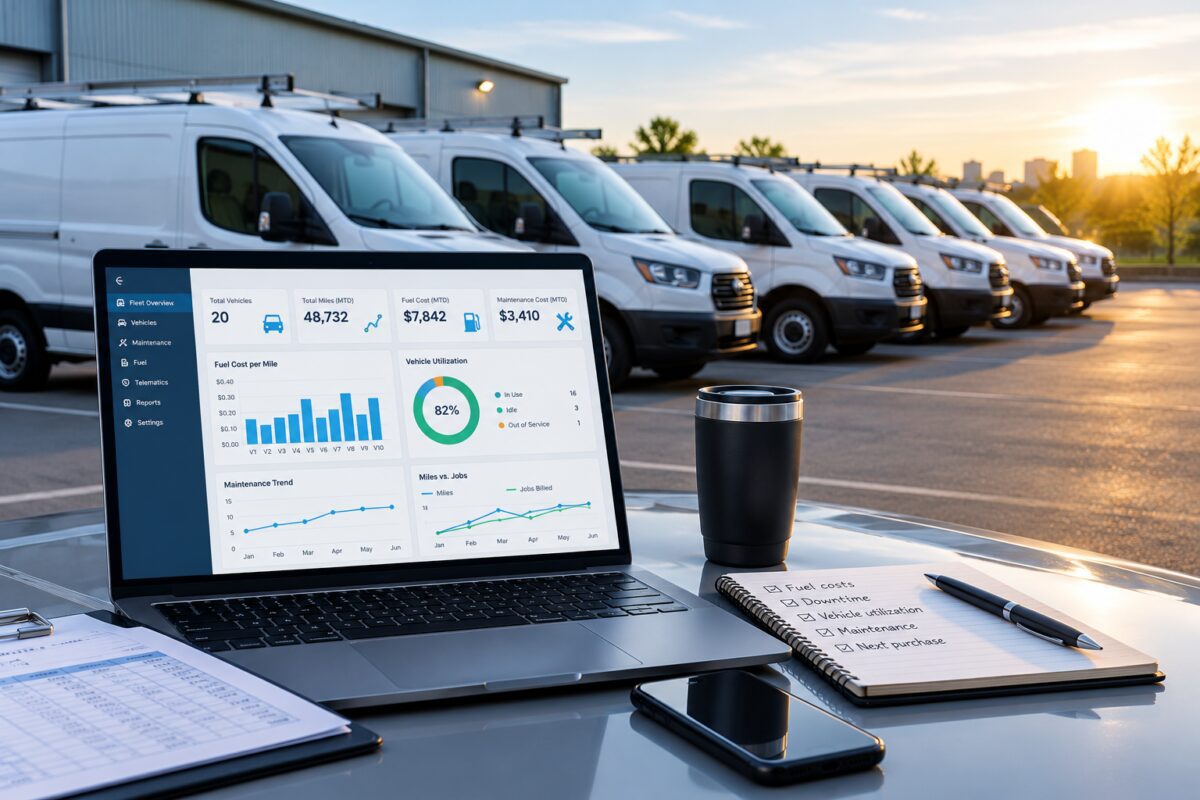
A CEO of a company with twenty service vans usually knows the monthly revenue, the payroll and the cash position without opening a report. The vehicles that carry crews to every job often reach the CEO’s desk only when the insurance renews or a large repair bill needs approval. Between those moments, decisions about the fleet are made one invoice at a time.
Why fleet management belongs on the CEO’s agenda
For a service, delivery or construction business, vehicles decide how many jobs the company can complete in a day, and their running costs come back every month. Good fleet management at the top level rests on a short set of questions that the operations or finance team can answer every month with real figures, while the dashboards and tire checks stay with the team:
- What does each vehicle cost us per mile in fuel? A rising figure points to a route, a driver habit or a vehicle that needs attention.
- How many working days did our vehicles lose last quarter? Reducing vehicle downtime starts with counting it, along with the jobs that were moved or lost.
- Do the miles we drive match the work we bill? Two vans sent to the same neighborhood on the same day show up here.
- What share of our maintenance was planned in advance? A fleet that relies on preventive fleet maintenance can schedule work around the busy season.
- Which vehicles sat unused for most of the month? Low vehicle utilization means the company is paying insurance, registration and depreciation on capacity it does not use.
Each answer leads to a decision the CEO already owns, from the hiring of drivers to the next vehicle purchase.
Where the answers come from
The figures behind these questions usually exist already, spread across fuel card statements, workshop invoices and dispatch records. In a small fleet, a manager can pull them into one spreadsheet once a month. As the fleet grows, fleet telematics collects much of this data automatically: mileage, engine hours and fuel consumption recorded by a device in each vehicle help a team anticipate maintenance and plan vehicle replacements, while diagnostic codes tell technicians what needs fixing. Businesses looking to bring different areas of vehicle management together can explore the services available from Radius, including solutions designed to support fleet visibility and day-to-day operations.
The utilization question links most directly to spending. A practice known as fleet rightsizing reviews the business case for each vehicle and decides whether to reassign, replace or retire it, which can lower fuel and maintenance costs without cutting the work the fleet does. For a CEO weighing a request for two more vans, that review comes before the purchase order.
Fleet questions CEOs often ask
How often should a CEO look at these numbers? A one-page monthly summary covers most needs, with a longer review each quarter before budget decisions on vehicles, staffing or new service areas.
Does a company need telematics to answer the five questions? A fleet of a few vehicles can start with fuel card statements, repair invoices and a shared spreadsheet. Telematics becomes a practical fleet management tool once collecting the same figures by hand starts taking a manager several hours a month.

