
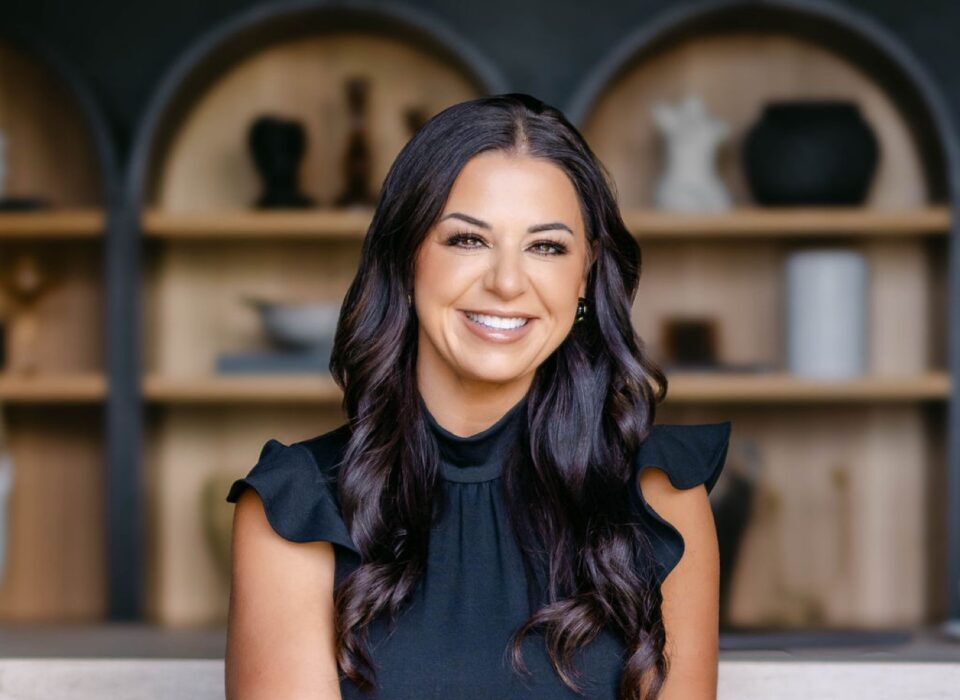
Dr. Elise Rigney is a chiropractor and the founder of Impact Chiropractic, three clinics in Colorado, and ChiroIntensive Consulting Co., where she coaches Chiropractic founders and their teams. She started out as a Chiropractic assistant and built her clinics on simple checklists and written standards instead of memory and exceptions. Her team ran all three clinics for nine months without her in the building, and that system of clear standards, trained people, and real accountability is what she now teaches other practice owners. Through ChiroIntensive and her REWIRE Method, she helps owners improve margins, build team led practices, and run businesses that do not depend on them for every decision. She is a mom of three.
Company: Impact Chiropractic
We are thrilled to have you join us today, welcome to ValiantCEO Magazine’s exclusive interview! Let’s start off with a little introduction. Tell our readers a bit about yourself and your company.
Elise Rigney: I’m Dr. Elise Rigney, a chiropractor and the founder of Impact Chiropractic, three clinics in Colorado, and ChiroIntensive Consulting Co. I started as a Chiropractic assistant, so I have done nearly every job in a Chiropractic office. What I learned along the way is that most practices run on the owner’s memory and a hundred exceptions. I built the opposite: simple checklists and written standards for everything, and a team trained well enough that they ran all three of my clinics for nine months without me in the building. Today I split my time between my clinics and coaching other Chiropractic founders through ChiroIntensive, where I teach the same systems: clearer standards, trained teams, and healthier margins. I am also a mom of three, and everything I build has to work inside a real family life.
What was the moment you realized that complexity was holding your company back, and how did that shift your approach to product, operations, or strategy?
Elise Rigney: Early, when I was working as a Chiropractic assistant. Every office I saw ran the same way, on the owner’s memory and a hundred exceptions. Nothing was written down, so nothing could be handed off. The moment it landed for me was realizing that if the knowledge only lives in the owner, the business owns the owner. That shifted everything for me. When I built my own clinics, I wrote the standards down, turned the work into simple checklists, and trained my team to them, so the business could run on the system instead of on me.
Can you share one specific example of something you simplified (a product feature, process, pricing model, or customer experience) that delivered outsized results?
Elise Rigney: Our clinic operations. Instead of long manuals nobody reads, every job in my clinics runs on a simple checklist and a clear written standard. Scheduling, new patient visits, follow up, all of it is the same simple steps every time, in every office. The result was not small. My team ran all three clinics for nine months without me in the building. The same simplification is now what I teach other founders, because once the daily work is simple and written down, the owner can finally work on the business instead of inside every task.
How do you systematically identify and eliminate complexity across the organization without oversimplifying in ways that hurt quality or value?
Elise Rigney: I use the same pass every time, and it is the core of the method I teach. First, look at the numbers, because complexity always shows up as cost. Second, ask of every process, does this need the owner, and does anyone besides the owner know how it works. If a process cannot be explained by the person doing it, it is not a process yet, it is a habit. Then write it down in the simplest form that still protects quality, train the team on it, and measure whether it is being followed. The clinical standards are never the thing we simplify away. We simplify everything around them.
What’s the biggest resistance you’ve faced when pushing for radical simplicity, and how did you overcome it?
Elise Rigney: The belief that good care cannot run on a checklist. Chiropractic offices pride themselves on winging it, and experienced people hear written standards as an insult to their judgment. I never argued the point in the abstract. I let the results argue. When the clinics ran well for nine months without me, with patients cared for and the team confident, the checklist stopped being an insult and became the reason people could do their jobs without guessing. Standards did not replace judgment. They freed people to use it where it matters, with the patient in front of them.
For other CEOs who struggle with feature bloat, process overload, or confusing customer journeys, what’s the most important principle or first step you would recommend they take?
Elise Rigney: Make one decision before you touch a single process: your business has to be able to run without you. That decision forces every simplification that matters. Then start small and concrete. This week, take the one task that currently lives only in your head, the thing your team always has to ask you about, and write it down as simple steps. Train one person on it and let them run it. If a change does not alter what your team does on Monday morning, it was not a simplification, it was a slogan.