



I’m David Pickard, CEO of Phonexa, a performance marketing and lead generation platform that helps businesses track, manage, and optimize customer acquisition. I’ve spent my career focused on building systems that connect marketing, sales, and data in a way that drives measurable growth. My work sits at the intersection of technology and revenue, where small operational decisions can have a direct impact on business outcomes.
At Phonexa, I’ve led the development of tools that simplify complex processes like lead routing, call tracking, and campaign attribution. I’m particularly interested in how AI and automation can improve efficiency without losing the human element that drives trust and long-term relationships.
My leadership approach is grounded in clarity, accountability, and real-world results. I believe in sharing insights based on what we’ve tested and learned, not just theory. Outside of work, I stay focused on continuous learning and finding better ways to build teams that scale without losing focus.
Company: Phonexa
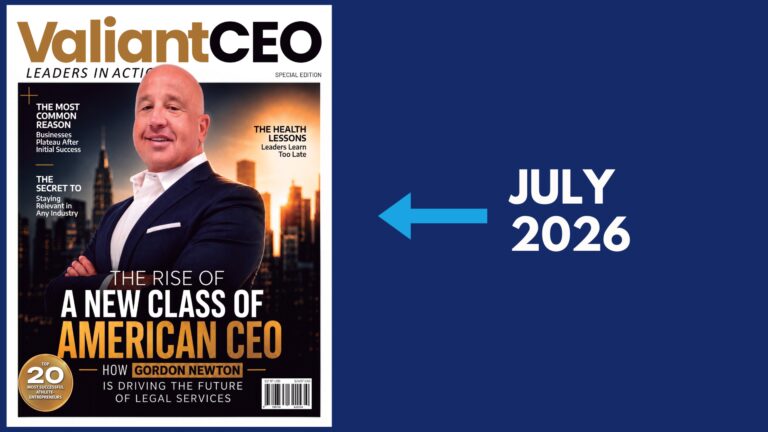
We are thrilled to have you join us today, welcome to ValiantCEO Magazine’s exclusive interview! Let’s start off with a little introduction. Tell our readers a bit about yourself and your company.
David Pickard: I’m David Pickard, CEO of Phonexa, a performance marketing and lead generation platform that helps businesses track, manage, and optimize customer acquisition. I’ve spent my career focused on building systems that connect marketing, sales, and data in a way that drives measurable growth. My work sits at the intersection of technology and revenue, where small operational decisions can have a direct impact on business outcomes.
At Phonexa, I’ve led the development of tools that simplify complex processes like lead routing, call tracking, and campaign attribution. I’m particularly interested in how AI and automation can improve efficiency without losing the human element that drives trust and long-term relationships.
My leadership approach is grounded in clarity, accountability, and real-world results. I believe in sharing insights based on what we’ve tested and learned, not just theory. Outside of work, I stay focused on continuous learning and finding better ways to build teams that scale without losing focus.
What was the defining moment when you decided that strong ethics and high profits were not in conflict, but could actually reinforce each other in your business?
David Pickard: My defining moment came from a client escalation, not a strategy session. We discovered that a portion of leads in a high performing campaign were being misclassified. On paper, the numbers looked strong. Conversion rates were high. Revenue was growing. But when we dug deeper, some of those leads did not meet the client’s qualification standards.
We had two options. Let it run and keep the revenue. Or shut it down and fix it. We paused the campaign immediately. We refunded the client for the affected leads. We rebuilt the validation logic and added stricter filters. Short term, we lost revenue. There was no way around that.
What happened next changed my thinking. The client did not leave. They increased their spend. They trusted the system more because they saw how we handled the problem.
That moment made it clear. Ethics is not a constraint on growth. It is a driver of trust. And trust compounds into long term revenue in a way short term gains never can.
Can you share one specific decision or policy where you chose the ethical path even though it appeared more expensive or risky in the short term, and what was the long-term business impact?
David Pickard: We made a decision to block and refund a high volume traffic source that was generating strong revenue. On the surface, the numbers looked great. Lead volume was high. Revenue was consistent. But our internal audits showed something off. The conversion rate after the first touch dropped sharply. That told us the lead quality was not real demand.
We investigated further. The source was incentivizing clicks in a way that pushed low intent users into the funnel. It was not fraud. But it was not aligned with our standards or our clients’ expectations.
We shut it down. We refunded affected clients. We tightened our traffic validation rules. Short term, we lost a meaningful portion of revenue. It was not a small hit. The long term impact was clear. Clients saw that we protect their budgets, not just our margins. Retention improved. Upsell conversations became easier because trust was already there.
That policy is now standard. If a source does not produce genuine intent, it does not stay in the system.
How do you embed your core values into daily operations and decision-making without sacrificing speed, competitiveness, or profitability?
David Pickard: We embed values by turning them into decision rules. Every team works with a short set of non-negotiables. For us it is data accuracy, client trust, and measurable outcomes. When a decision comes up, the first step is simple. Does this action protect those three things. If the answer is no, the discussion stops. That removes debate and keeps speed.
We also tie values to metrics. Trust is not abstract. It shows up in refund rates, client retention, and dispute resolution time. Accuracy shows up in lead validation scores. When values are measurable, teams do not need constant oversight.
One example is our campaign approval process. Teams can launch without executive sign off if the traffic source passes validation rules and the tracking is clean. That speeds execution. But if validation fails, the system blocks it automatically. No exceptions.
The goal is clarity. When people know the boundaries, they move faster and make better decisions without asking for permission.
What’s the biggest pushback you’ve received from investors, board members, or stakeholders regarding your values-driven approach, and how did you handle it?
David Pickard: The biggest pushback came when we started rejecting high volume traffic sources that still generated revenue. From the outside, it looked like we were walking away from growth. Investors questioned why we would cut off channels that were hitting targets. The concern was simple. Revenue is revenue.
Our view was different. We saw early signs of poor downstream performance. Conversion dropped after the first touch. Client complaints increased. That kind of growth does not last. I handled it by shifting the conversation from top line to lifetime value. We pulled cohort data. We showed how low intent traffic eroded client ROI over time. We compared retention rates between clean traffic and questionable sources.
The numbers made it clear. Short term gains were masking long term risk. We stayed consistent. We kept the policy in place. Within two quarters, retention improved and client spend became more stable. That changed the conversation. Values were no longer seen as a cost. They became part of how we protect revenue over time.
For other CEOs who want to build a values-driven yet highly profitable company, what is the one practical piece of advice you would give them to get started?
David Pickard: Start by defining one rule you are willing to enforce even when it costs you money. Not a mission statement. Not a list of values. One clear rule. For example, we made a rule that we do not accept traffic that does not show real intent, even if it drives revenue.
Then test it early. Apply it in a real situation where there is financial pressure to ignore it. That is where most companies fail. Values break under pressure, not in planning sessions. Once the rule holds, tie it to a metric. Track the impact on retention, refunds, or client lifetime value. Make it visible to the team.
This does two things. It proves that values have a measurable outcome. It also builds trust inside the company because people see consistency between what leadership says and what it does. You do not need a full framework to start. You need one enforced standard. Everything else builds from that.