


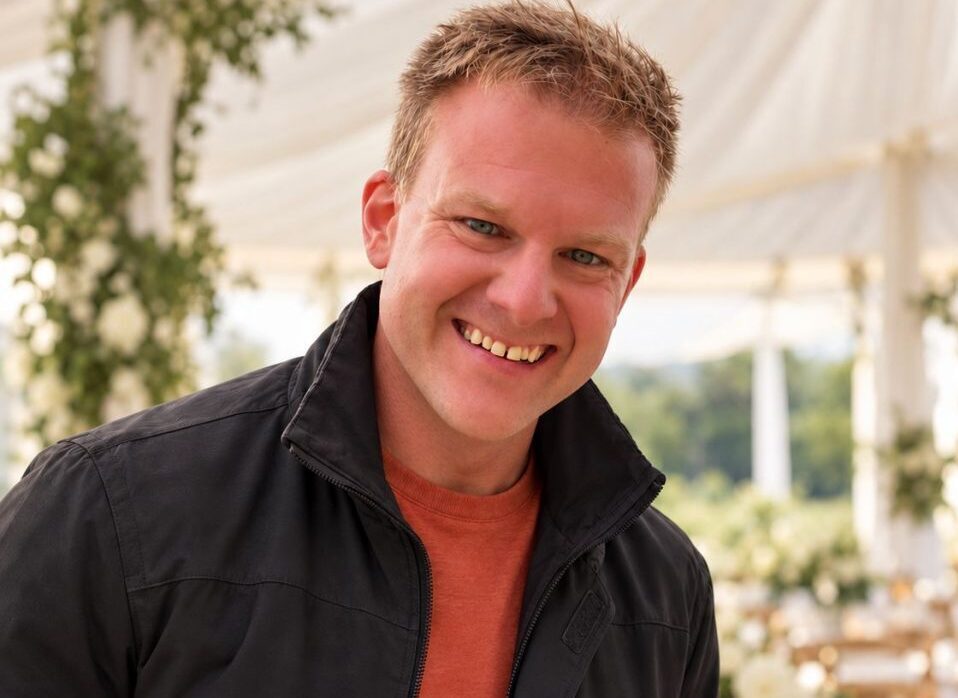
For Brian Casella, entrepreneurship has never been about simply owning a company. It has been about building something from the ground up, learning how to adapt when circumstances change, and creating a business that reflects both creativity and discipline.
As the founder and CEO of Fox Haus Event Production, Casella has spent more than a decade building a company around an industry where the finished product may last only a few hours, but the impression it creates can last far longer.
Today, Fox Haus provides event production services including lighting, fabric installations, staging, dance floors, audiovisual support, and increasingly ambitious experiential installations. Behind those finished environments, however, is a business Casella has spent years learning how to operate, scale, and lead.
Starting With an Entrepreneurial Mindset
Casella entered the event industry in 2012, initially building his own event production company. Like many entrepreneurs, he did not begin with a large organization, a corporate infrastructure, or a detailed roadmap for what the business would eventually become.
He began by doing the work.
That hands on experience became an important part of his approach to leadership. Understanding what it takes to load a truck, install equipment, solve a problem at a venue, meet a deadline, and respond when plans suddenly change has influenced how he manages the company today.
“There is a huge difference between understanding a business on paper and understanding what it actually takes to execute,” Casella says. “I’ve always believed that if I’m going to ask my team to do something, I should understand what goes into doing it.”
Over time, individual events turned into relationships, referrals, larger productions, more equipment, additional employees, and a much more sophisticated operation.
But growth also brought a different challenge: learning when to stop doing everything personally.
Learning to Lead Instead of Simply Doing
One of the biggest transitions for Casella as a CEO has been moving from being the person responsible for nearly every detail to building a team capable of operating without constant involvement from the founder.
For many entrepreneurs, that transition can be surprisingly difficult.
The skills required to start a company are not necessarily the same skills required to lead one as it grows. Early entrepreneurship often rewards independence and the willingness to handle everything yourself. Growth requires almost the opposite: delegation, systems, communication, trust, and accountability.
Casella has worked to make that transition deliberately.
Today, Fox Haus operates with a leadership team that includes experienced people overseeing installation and business operations, allowing Casella to spend more of his time thinking about the company’s direction rather than simply managing its next event.
“The goal shouldn’t be to build a company where everything depends on you,” he says. “You want to build something where talented people have ownership over what they do and know that you trust them to make decisions.”
That philosophy has also changed the way Casella thinks about hiring.
Technical ability matters in event production, but reliability, judgment, attitude, and the ability to remain composed under pressure can be equally important. Events have immovable deadlines. When guests arrive, the work has to be finished.
That reality creates a culture in which accountability is not an abstract management principle. It is an operational necessity.
Creativity Has to Work as a Business
Fox Haus operates at the intersection of creativity and logistics.
A client may see chandeliers suspended over a reception, dramatic fabric installations, a custom dance floor, architectural lighting, greenery overhead, or an outdoor space transformed with hundreds of feet of bistro lighting.
Casella sees something else as well: labor hours, transportation, equipment utilization, installation schedules, inventory, safety, margins, weather contingencies, staffing, and dozens of details that have to align for the creative concept to work.
That combination has shaped his approach as a CEO.
“Creative businesses still have to be good businesses,” he says. “You can create something incredible, but you also have to know what it costs to produce, how many people it requires, how long it takes, and whether it makes financial sense.”
Casella believes one of the mistakes entrepreneurs can make is confusing revenue with success.
As Fox Haus has grown, he has become increasingly focused on profitability, cash reserves, operational efficiency, and understanding which services genuinely create value for both the company and its clients.
That financial discipline is particularly important in the event industry, where seasonality can create dramatic differences between busy and slower periods of the year.
Rather than evaluating the business solely by its strongest months, Casella plans around the entire cycle.
It is a mindset that has made him more conservative in some decisions and more aggressive in others. Maintaining financial strength gives the company the ability to invest when opportunities arise instead of making decisions purely out of necessity.
The Evolution of Fox Haus
Fox Haus has continued to evolve around Casella’s vision of building a creative production company capable of shaping an event environment as a whole.
Rather than being defined by any single service, the company increasingly approaches each project through the lens of the complete experience, considering how lighting, fabric, staging, dance floors, audiovisual elements, suspended installations, greenery, and other creative details can work together to transform a space.
Lighting remains an important part of the company’s foundation, but Casella sees the expansion of Fox Haus as less about offering more services and more about developing greater creative capability.
“The more elements we can thoughtfully bring together, the more cohesive the finished experience becomes,” he says. “I don’t want us to simply provide equipment. I want people to walk into a space and immediately feel that something special happened there.”
That distinction, between providing individual event elements and creating a fully realized environment, has become central to Casella’s vision for the future of Fox Haus. The goal is not simply to do more, but to bring more creativity, intention, and cohesion to every project the company takes on.
More than a decade into entrepreneurship, Casella does not believe there is a point at which a CEO has everything figured out.
Markets change. Employees change. Clients change. Technology changes. Personal priorities change.
The company has to be capable of changing with them.
Casella’s leadership style reflects that willingness to continually reevaluate the business. He is comfortable questioning an existing process, investing in new equipment, expanding into a new service category, or abandoning an idea that no longer makes sense.
He views adaptability as one of the most important advantages of an independently owned company.
Large organizations may have greater resources, but smaller entrepreneurial companies can often make decisions faster.
The challenge is knowing which decisions deserve speed and which deserve patience.
“I’ve learned that not every opportunity is a good opportunity,” Casella says. “Sometimes growth means saying yes. Sometimes it means having enough confidence to say no.”
Leadership Beyond the Numbers
Casella also recognizes that a CEO’s decisions affect more than a balance sheet.
Employees build their lives around the stability of a company. Clients trust the company with significant moments. Vendors depend on relationships. Families depend on the people working inside the organization.
That responsibility has become more apparent as Fox Haus has grown.
It has also changed Casella’s definition of success.
Financial performance matters, but so does building an organization where people can develop professionally, take responsibility, and feel pride in what they produce.
For Casella, leadership is not about pretending to have every answer. It is about setting expectations, making difficult decisions when necessary, and creating enough trust that people can be candid when something isn’t working.
Some of his most valuable lessons have come from mistakes rather than successes.
Hiring the wrong person, pricing a project incorrectly, purchasing equipment that did not produce the expected return, or trying to maintain too much control all become expensive lessons, but useful ones if a leader is willing to learn from them.
“Entrepreneurship will humble you,” Casella says. “You can have a great year and still make bad decisions. You can have a difficult year and make decisions that completely change the future of the company. You have to be willing to look at things objectively.”
What Comes Next
Casella’s vision for Fox Haus is not simply to produce more events.
It is to continue elevating the type of work the company can execute.
That means pursuing increasingly creative installations, expanding its production capabilities, investing in the right equipment and people, and developing a company that can take an idea from concept through installation with fewer limitations.
It also means continuing to build the operational structure behind the creativity.
Casella understands that sustainable growth rarely comes from one dramatic decision. More often, it comes from hundreds of smaller improvements made consistently over time.
Better systems. Better hiring. Better equipment decisions. Better communication. Better financial discipline. Better execution.
After more than a decade as an entrepreneur, his perspective on being a CEO has evolved accordingly.
The title matters far less than the responsibility behind it.
For Casella, being a CEO means being willing to make decisions when the outcome is uncertain, accepting responsibility when those decisions are wrong, sharing credit when they are right, and continuing to build an organization capable of succeeding beyond the founder himself.
Fox Haus may ultimately be in the business of transforming spaces, but Casella’s larger project has been transforming a company—and himself along with it.
And that process, he believes, is never really finished.