
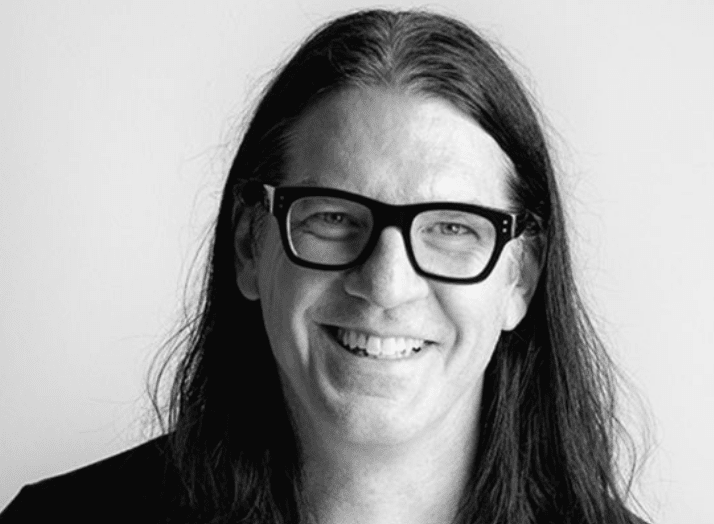
Bradley Skaggs is an entrepreneur, business strategist, and founder of Skaggs Creative, where he helps brands scale through innovative marketing, operational strategy, and revenue-focused growth. With a background in sales leadership and business operations, Bradley has built and led high-performing teams while helping companies streamline processes and expand their market presence.
Known for his hands-on approach to building businesses from the ground up, Bradley specializes in identifying growth opportunities, improving sales systems, and developing strategies that drive sustainable revenue. His work spans creative services, brand development, and operational consulting for businesses looking to scale efficiently.
Bradley is passionate about helping entrepreneurs turn ideas into thriving companies by combining strong leadership, clear strategy, and practical execution.
Company: Skaggs Creative
We are thrilled to have you join us today, welcome to ValiantCEO Magazine’s exclusive interview! Let’s start off with a little introduction. Tell our readers a bit about yourself and your company.
Bradley Skaggs: We’re a New York City-based brand strategy and creative agency. I’m the creative director and co-founder, along with Jonina Skaggs. My background is in architecture, which is probably why we build brands the way architects build buildings: foundation first, structure second, aesthetics last. For 26 years we’ve worked across brand strategy, identity, packaging, and digital, primarily in beauty, from independent founders to Diptyque and Charlotte Tilbury.
What specific areas of your business have been most impacted by AI, and how?
Bradley Skaggs: Two areas, specifically.
First, pre-sale intelligence. Before AI, building a credible preview of a target brand took hours. Now I can produce what we call the “Leak and the Pivot”, the gap between what a brand is worth and what it communicates, in minutes. That makes it possible to build a curated pipeline of brands with genuine, specific observations without burning the budget just getting there. We show up more informed, and sometimes understand their problem better than they do. That’s a different kind of conversation.
The second one is the audit work itself. The 7-Pillar scoring, the forensic observation writing, the perception gap research. Work that previously took weeks now gets drafted in a fraction of that time. What hasn’t changed is what matters most: determining what a brand actually owns versus what it wishes it owned. That process remains entirely human.
How are you ensuring ethical considerations are taken into account in your use of AI?
Bradley Skaggs: AI recognizes patterns and produces evidence. I produce the judgment. That hierarchy is intentional and the guiding structure of our methodology. No client ever receives a recommendation that is the unreviewed output of a model.
The diagnostic work is also honest by design. The Leak Report tells a brand precisely what is wrong, and often, not what it wants to hear. If the output softens the finding, it is wrong on strategic grounds, not just ethical ones. We are also transparent about our process and how we use AI as a tool, putting our time (and their money) into meaningful work.
What advice would you give to other CEOs looking to integrate AI into their business?
Bradley Skaggs: Start with the question, not the tool.
Where in your business is there work that requires broad information gathering before the real judgment can begin? That is precisely where AI accelerates the economics without compromising the quality of the conclusion. The gathering is not where your expertise lives. Your expertise lies in what you do with what’s gathered.
The hierarchy matters more than the capability. AI as a replacement for human judgment produces faster, cheaper, and, I would argue, worse conclusions (AI slop). Combining AI-generated evidence with subsequent human evaluation results in faster, higher-quality work. Be explicitly clear about this to your clients. It is not a liability. It is a reason to trust the output.
How do you see AI evolving in your industry over the next 5 years?
Bradley Skaggs: The first wave is speed and scale, and it’s real. But speed compresses. What takes one agency a week will eventually take every agency an hour. That is not a durable advantage.
What doesn’t compress is judgment based on years of experience. The capacity to look at pattern-recognition output and find the specific thing that is true, exclusive and actionable for this brand, and not for another one. In five years, the agencies doing meaningful work will be the ones that have been deliberate about that distinction. Not “we use AI” as a differentiator, because by then, everyone will. But rather a specific human capability governing the AI output, earned over decades. The industry’s risk is the commoditization of the diagnostic layer. A serviceable audit tells a brand it has a problem. A precise audit with human input tells it exactly what the problem is and what to do about it. That gap is where the work lives, and I don’t think AI closes it (yet).