



The rising cost of veterinary care has become a growing concern in several countries. On March 24, 2026, the U.K.’s Competition and Markets Authority (CMA) released the final report of its investigation into veterinary services for household pets. The investigation highlighted a significant lack of pricing transparency, revealing that fewer than 40% of veterinary practices displayed their prices online. As part of its reforms, practices will be required to publish standard price lists. Although the investigation primarily concerns domestic pets, its findings raise broader questions about transparency, communication, and informed decision-making across veterinary care.
The issue is not limited to the U.K. In the United States, Bureau of Labor Statistics data indicates that veterinary service prices have increased by approximately 5% annually since 1997, almost twice the rate of general inflation. In Australia, consumer organisation Choice has highlighted the absence of standard fees for routine veterinary procedures. Its report also noted that the Australian Veterinary Association does not publish recommended fee schedules. Despite these concerns, much of the public discussion continues to centre on common household pets, particularly dogs and cats.
For horse owners, however, the financial pressures can be considerably greater. Equine veterinary expenses can reach substantial amounts, while the likely outcome of treatment is not always clear. Owners may have to make difficult decisions involving spinal scans, dental procedures, colic treatment, rehabilitation, and ongoing pain management. For some, their horse is a much-loved family member; for others, it represents a valuable business asset. These decisions can arise unexpectedly, sometimes requiring an answer within hours, when owners are already dealing with considerable emotional stress. Without a realistic understanding of the available options, making the right decision can be extremely difficult.
Transparency should therefore involve more than simply displaying treatment prices. It also means explaining what owners can expect before agreeing to a procedure, including what veterinarians know, where uncertainty remains, and what a realistic outcome might involve. A published price list cannot explain whether a particular treatment is likely to resolve the problem or whether further procedures and expenses will follow. More open discussions before treatment begins could help owners make informed choices and avoid unnecessary financial and emotional regret.
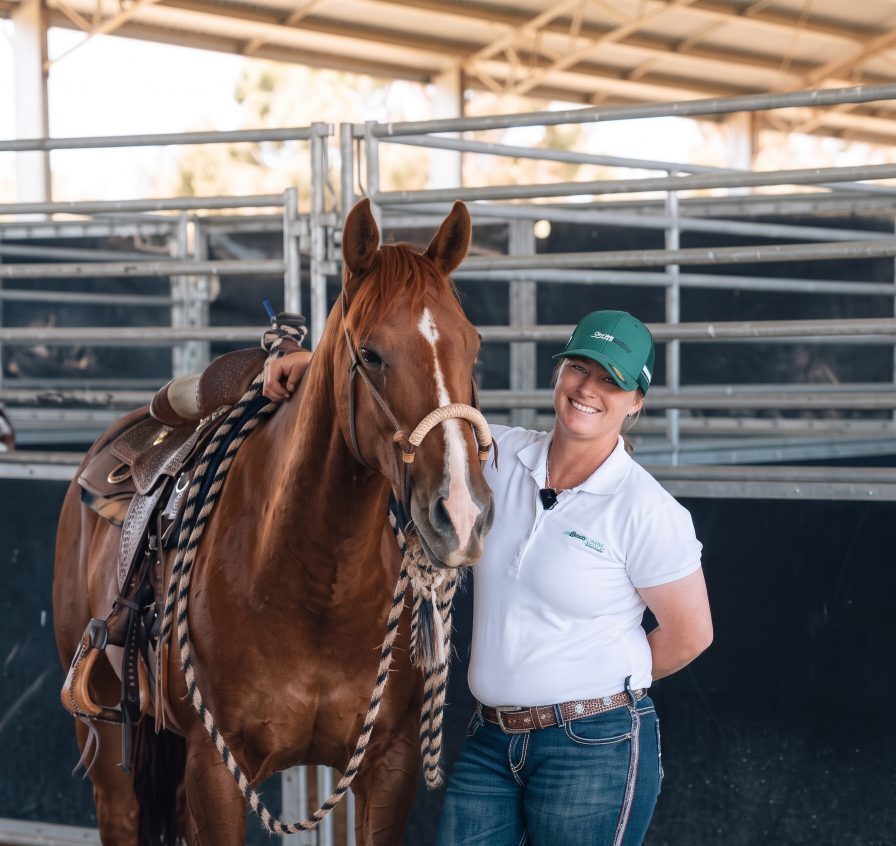
Dr. Sabine Ware, an equine veterinarian based in Victoria, Australia, and founder of Equine HSD, specialises in equine spinal conditions, dentistry, and pain management. Her approach places considerable importance on straightforward communication and realistic expectations. Ware believes owners should receive practical advice that reflects their individual circumstances rather than simply being presented with textbook treatment recommendations.
“I think honesty is what it all comes down to,” Ware says. “Owners deserve an honest assessment of whether a treatment is likely to benefit their horse.”
At her practice, Ware explains the expected costs of the initial stages of treatment when appointments are arranged. She also reminds owners that identifying a problem is only part of the process. Diagnostic investigations do not necessarily improve a horse’s condition, meaning the cost of subsequent treatment must also be considered. Colic, for example, may be resolved with an injection costing around A$20, or it could develop into an emergency requiring surgery costing between A$20,000 and A$40,000. Owners may have only a few hours to make that decision. Ware points out that, unlike in the U.K., where she has previously worked, horse insurance is relatively uncommon in Australia, leaving many owners responsible for the full financial burden themselves.
Ware also believes that owners should consider difficult scenarios before they become emergencies. During the past year, she lost two of her own horses to colic. Despite her professional experience, she made the decision not to proceed with surgery because of the financial implications. She later shared her personal decision-making process with owners during an online seminar. Not long afterwards, one of the participants encountered a similar situation and was able to approach the decision with greater clarity and confidence.
“Thinking it through beforehand means emotions don’t make the decision for you,” she explains.
In Ware’s experience, feelings of guilt and emotional attachment can sometimes encourage owners to commit to expensive procedures before fully understanding the diagnosis or the likelihood of success. She believes owners should never feel uncomfortable admitting that a particular treatment is beyond their financial means. Euthanasia, she explains, can sometimes be a compassionate and appropriate option, while other treatment or management alternatives may also be available.
Her approach is to understand each owner’s individual circumstances and adapt the conversation accordingly, recognising whether the main challenge is emotional, financial, or a combination of both.
“It’s okay to say no,” she says. “As vets, our job is to support owners with alternatives, not to make them feel guilty.”
Before proceeding with veterinary treatment, Ware encourages horse owners to ask three important questions. First, is the recommended procedure expected to resolve the problem, or is it simply the beginning of a longer and potentially more expensive treatment process? Second, are they making the decision based on a clear understanding of the situation, or are emotions influencing their judgement? Finally, what are the likely consequences of declining treatment, and what alternative options are available?
She also emphasises the importance of veterinarians recognising the boundaries of their own knowledge and experience. When a case falls outside their area of expertise, referring the horse to another specialist may be the most appropriate course of action.
Ware believes that owners should feel confident discussing financial limitations, treatment expectations, and end-of-life decisions with their veterinarians. She suggests that improved communication training could help practitioners navigate these particularly sensitive conversations more effectively.
She also encourages owners to recognise that veterinary medicine has limitations. Even human doctors, who can communicate directly with their patients and receive detailed descriptions of their symptoms, do not always have immediate answers. With horses, the challenge is even greater because they cannot explain what they are experiencing.
Ultimately, greater transparency in equine veterinary care requires more than accessible pricing information. Owners need realistic expectations, honest discussions about treatment outcomes, and the reassurance that they can explore alternatives without feeling judged. Better communication can help reduce uncertainty, prevent unnecessary regret, and support decisions that prioritise the horse’s welfare.
A published price list can tell an owner how much a procedure costs. An honest conversation can help them understand whether it is the right decision for their horse.

