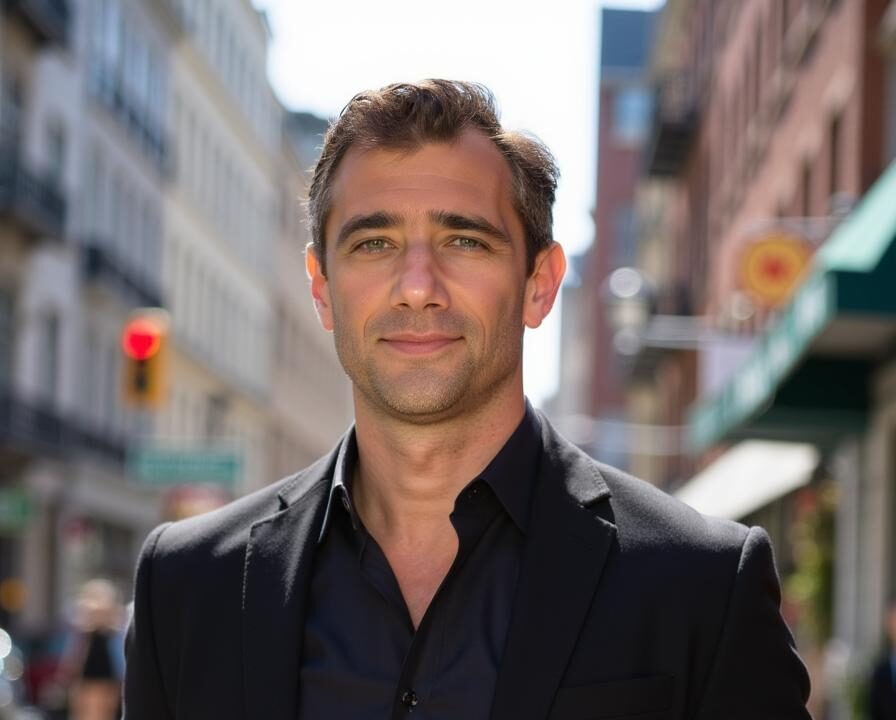
Alex Shvayetsky is Co-Founder and Head of Risk at New Silver, a hard money and DSCR lender serving real estate investors across 40+ US states. He co-founded the company in 2018 alongside Kirill Bensonoff, helping build it into a tech-enabled lending platform recognized on Inc.’s list of fastest-growing companies.
Company: New Silver
We are thrilled to have you join us today, welcome to ValiantCEO Magazine’s exclusive interview! Let’s start off with a little introduction. Tell our readers a bit about yourself and your company
Alex Shvayetsky: I am Alex Shvayetsky, Co-Founder and Head of Risk at New Silver. New Silver is a technology-driven private lender focused on residential real estate investment financing, and we serve real estate investors across 40 plus US states with fix and flip, ground-up construction, and rent or refinance loans. Our core idea is speed and flexibility: we use data and technology to streamline approvals so investors can move quickly on projects that traditional lenders may not finance.
Can you take us back to the beginning – what inspired your startup, and what were those early days like?
Alex Shvayetsky: New Silver was inspired by a concrete gap I saw in real estate investment lending: investors with solid fix and flip or construction deals were losing properties because traditional lenders moved too slowly and imposed rigid documentation requirements. We founded New Silver in the West Hartford, Connecticut area in 2018 and 2019 to be a technology-driven private lender that could review a borrower quickly, often with a five-minute online approval, and fund in as little as five to ten days while still pricing risk properly.
The early days were hands-on and operationally tight. A small team handled borrower intake, property review, and underwriting manually, and we built our data processes and risk standards while closing individual loans. We focused first on residential investment projects we understood well, mainly fix and flip, and used each deal to refine our approval logic and documentation before expanding into more states and products like ground-up construction and rent or refinance loans.
What was the biggest turning point or breakthrough that helped you scale from a small operation to a growing business?
Alex Shvayetsky: The biggest breakthrough was standardizing our underwriting into a data-driven risk playbook that could be applied consistently across many states instead of relying on one-off manual reviews. We encoded the key borrower, property, and loan criteria into our approval process, automated the initial screening, and kept human risk review focused on exceptions and complex files. That change let us increase volume without abandoning risk discipline, and it is the operational reason we have been able to process over $1 billion in loan applications and close over $300 million in loans across 40 states.
How did you handle the toughest challenges during your growth phase – whether financial, operational, or personal?
Alex Shvayetsky: The toughest challenge was operational: scaling approvals and funding speed without loosening risk controls as loan volume and geographic coverage grew. We handled it by building a formal risk function with tiered review levels, a documented exception process, and ongoing monitoring of borrower and property performance, so routine files could move quickly while unusual or higher-risk deals received deeper scrutiny. That structure let the team grow without turning every loan into a bottleneck or letting speed override credit quality.
As your company grew, how did your leadership style evolve to meet the demands of scaling?
Alex Shvayetsky: My leadership style shifted from being a hands-on operator who personally reviewed deals to being a system builder who designs decision rights, standards, and guardrails the team can execute without me in every file. In the early days I was deep in individual underwriting and property review, but as New Silver expanded across 40 plus states and added products like ground-up construction, that model would have made me the bottleneck and would have made risk quality depend on my personal availability.
The concrete change was building a tiered risk function with a documented exception process, clear approval thresholds, and a data-driven underwriting playbook, then training the team to own routine decisions while escalating only complex or higher-risk files. That let me focus on monitoring portfolio performance, refining credit policy, and developing people, which is how I could scale volume without loosening risk discipline or slowing funding speed.
What advice would you give to entrepreneurs currently in the “garage” stage, dreaming of going global?
Alex Shvayetsky: My advice is to prove one narrow, repeatable customer problem with real paying customers and documented unit economics before you spend any energy on geography. At New Silver, we did not start by trying to lend in 40 states. We focused first on residential fix and flip deals we understood, closed individual loans, and used each one to refine our underwriting criteria, pricing, and funding process. That gave us evidence that the model worked before we expanded into more states and added construction and rent or refinance products.
Going global is an operational replication problem, not an ambition problem. Before you expand, you should be able to write down exactly how you source customers, approve them, deliver the product, and make money, and then show that someone else on your team can execute that same playbook without you in every decision. If you cannot reproduce your results in one market with a documented process, adding new markets will multiply your mistakes rather than your revenue.